Tiny but Mighty: The World’s Smallest Horse Breeds
The smallest horse breed in the world is the Falabella of Argentina, which our breed database lists at 6.1–7 hands: roughly 25 to 28 inches at the shoulder, a little taller than a Labrador. The smallest individual horse ever measured was a mare called Thumbelina, who stood 44.5 cm (17.5 inches). Everything else on this page is a giant by comparison.

How do you measure something this small?
Horses are measured in hands (four inches to a hand) at the withers, the bump where neck meets back. Miniature horse registries do it differently: they work in inches, and they measure to the base of the last hairs of the mane rather than to the top of the withers. The American Miniature Horse Association’s rule is that a mature horse must not exceed 34 inches at that point.
Also, a note on words. A pony is a small equine of pony build: stocky, short-legged, thick-coated. A miniature horse is bred to look like a full-size horse seen through the wrong end of a telescope. Both are the same species as a Shire, which is the fun of it. For the other end of the scale, see the biggest horse breeds on earth.
The smallest breeds, by height
Every height here is the one on that breed’s page in our encyclopedia.
| Breed | From | Height |
|---|---|---|
| Falabella | Argentina | 6.1–7 hands |
| Bergmann pony | Argentina | 6.3–7.3 hands |
| Brazilian pony | Brazil | 8.1–9.3 hands |
| Dutch Mini | Netherlands | up to 9 hands |
| Guoxia | China | 9–10 hands |
| Skyros pony | Greece | 9.2–10.3 hands |
| Debao pony | China | 10 hands |
| Noma | Japan | 10.1–10.3 hands |
| Shetland pony | Scotland | 10.2 hands |
| Miniature Horse of Rhodes | Greece | 9.2–11.1 hands |
| Kerry Bog pony | Ireland | 10–11.2 hands |
| Caspian | Iran | 10–12 hands |
| Yonaguni | Japan | 10–12 hands |
The American Miniature is missing from the table only because it is defined in inches, not hands: Division A minis stand up to 34 inches and Division B between 34 and 38.
Falabella
The Falabella is not a pony that happened to be small. It was made on purpose in Argentina, starting in the mid-1800s with some unusually small horses from the pampas, by a family who spent generations breeding the smallest to the smallest and adding Shetland, Criollo and Thoroughbred blood for shape. The result has horse proportions at toy scale. The American registry notes there is no official height limit; most stand somewhere between 28 and 34 inches. Our database tags the breed as at risk: there have never been many.
American Miniature
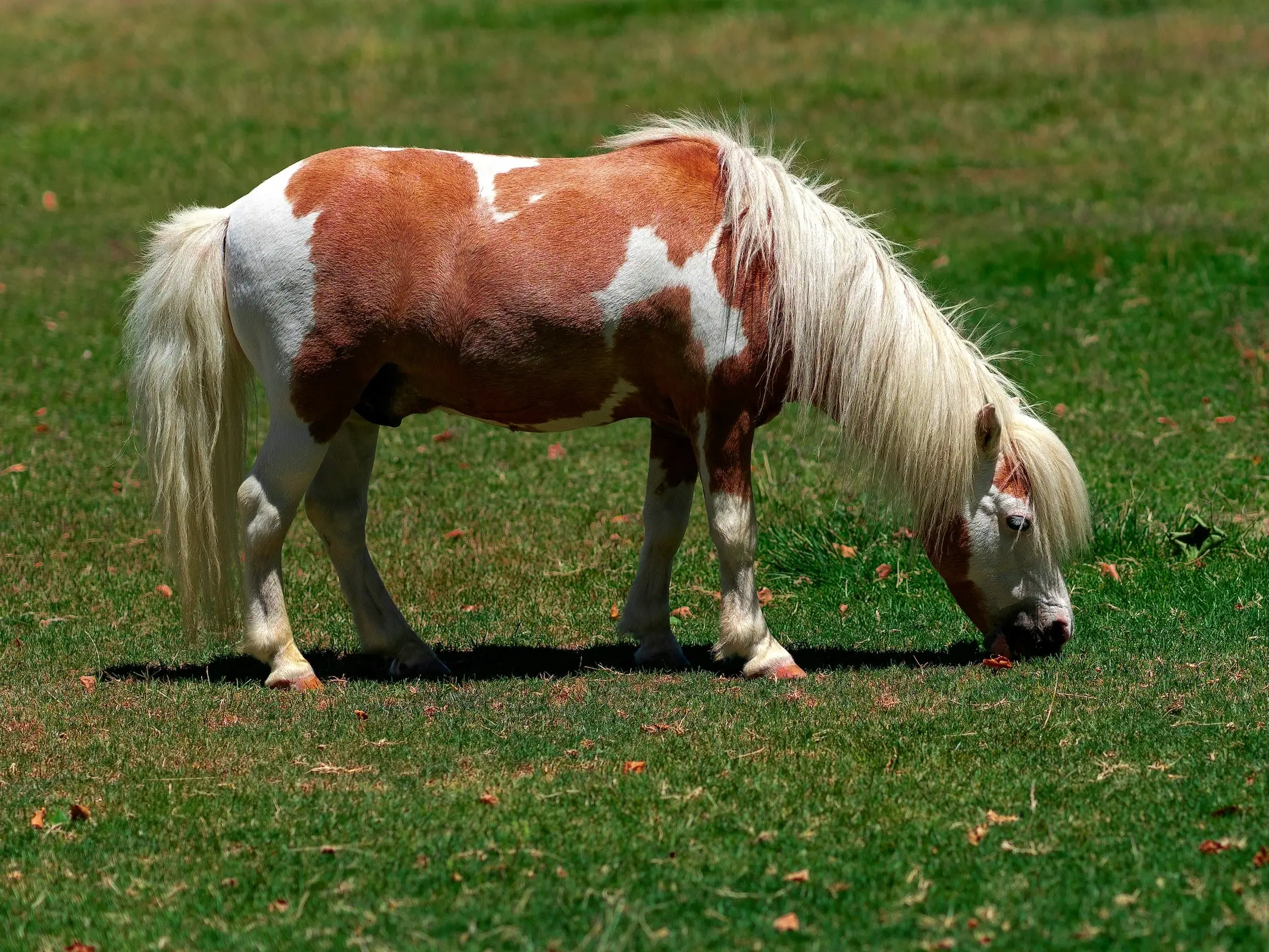
American Miniature

Dutch Mini foal
America’s minis descend from small British and Dutch ponies imported in the 19th century, many of which worked underground in Appalachian coal mines. Breeders later refined them toward a horse in miniature. Today they are shown in hand, driven in harness (a mini can pull an adult in a cart with no trouble), and a few are trained as guide and therapy animals. What they are not is a riding horse for anyone bigger than a small child.
Shetland pony

The classic. Shetlands lived for thousands of years on islands with a lot of wind and not much to eat, which produced a pony that is short, wide, double-coated and unimpressed by weather. The Shetland Pony Stud-Book Society sets the limit at 42 inches (107 cm), and says of them that for their size they are the strongest of all horse breeds. Nobody who has tried to lead one past a patch of clover will argue. Their American cousin, the American Shetland, is a finer, leggier pony at 11.2 hands; we have a whole spotlight on it.
The Chinese fruit-tree ponies

Guoxia
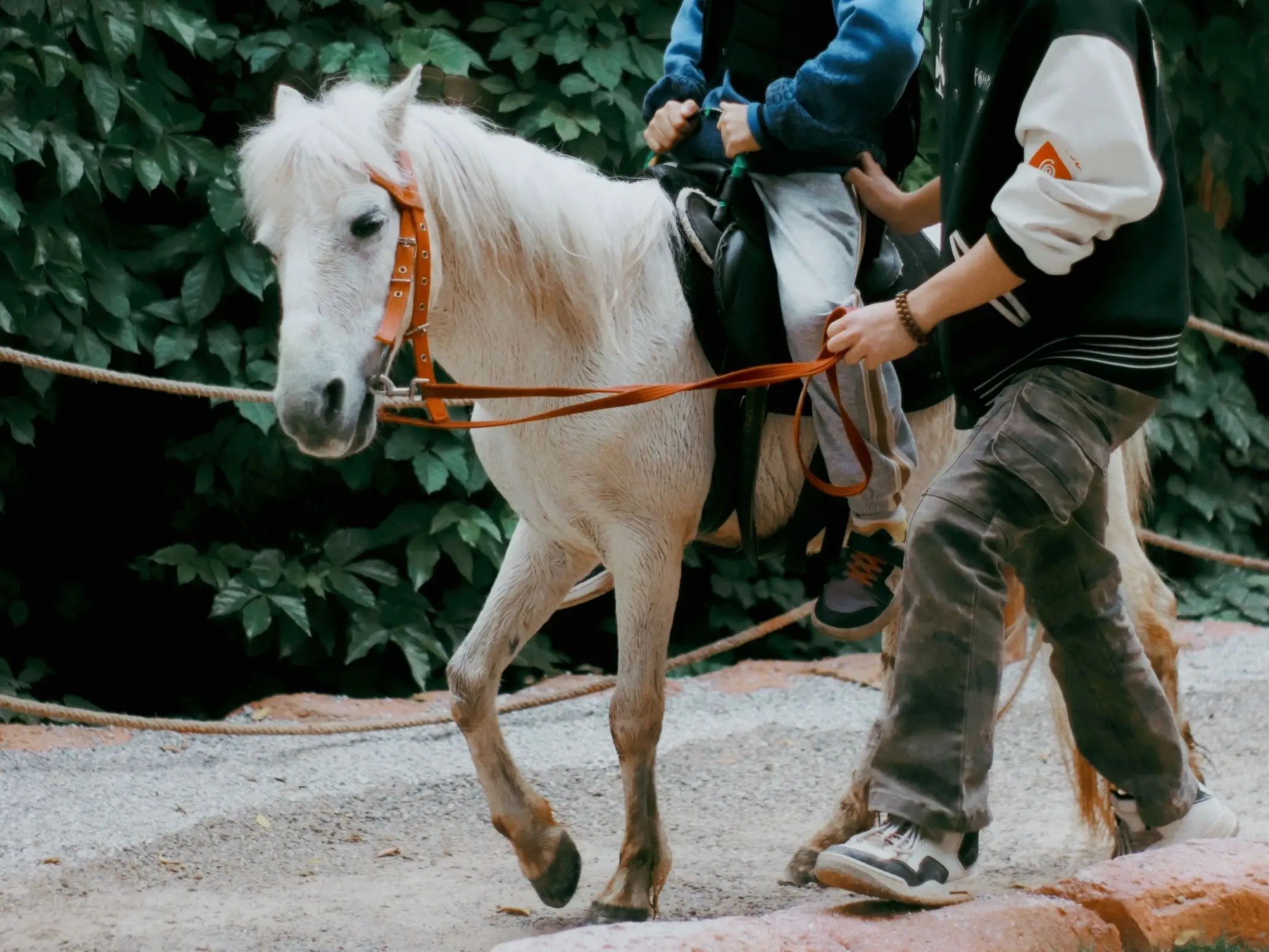
Debao
The Guoxia of southwest China has the best name in the business: it means “under fruit tree horse”, from its old job of standing beneath the branches with baskets at harvest. It was thought to be extinct until a herd was found in the mountains in 1981. The Debao, from the same region, is its close relative, and is described on its page as incredibly strong for its size. That is a theme with small horses.
Skyros, Noma and the island effect

Skyros, Greece
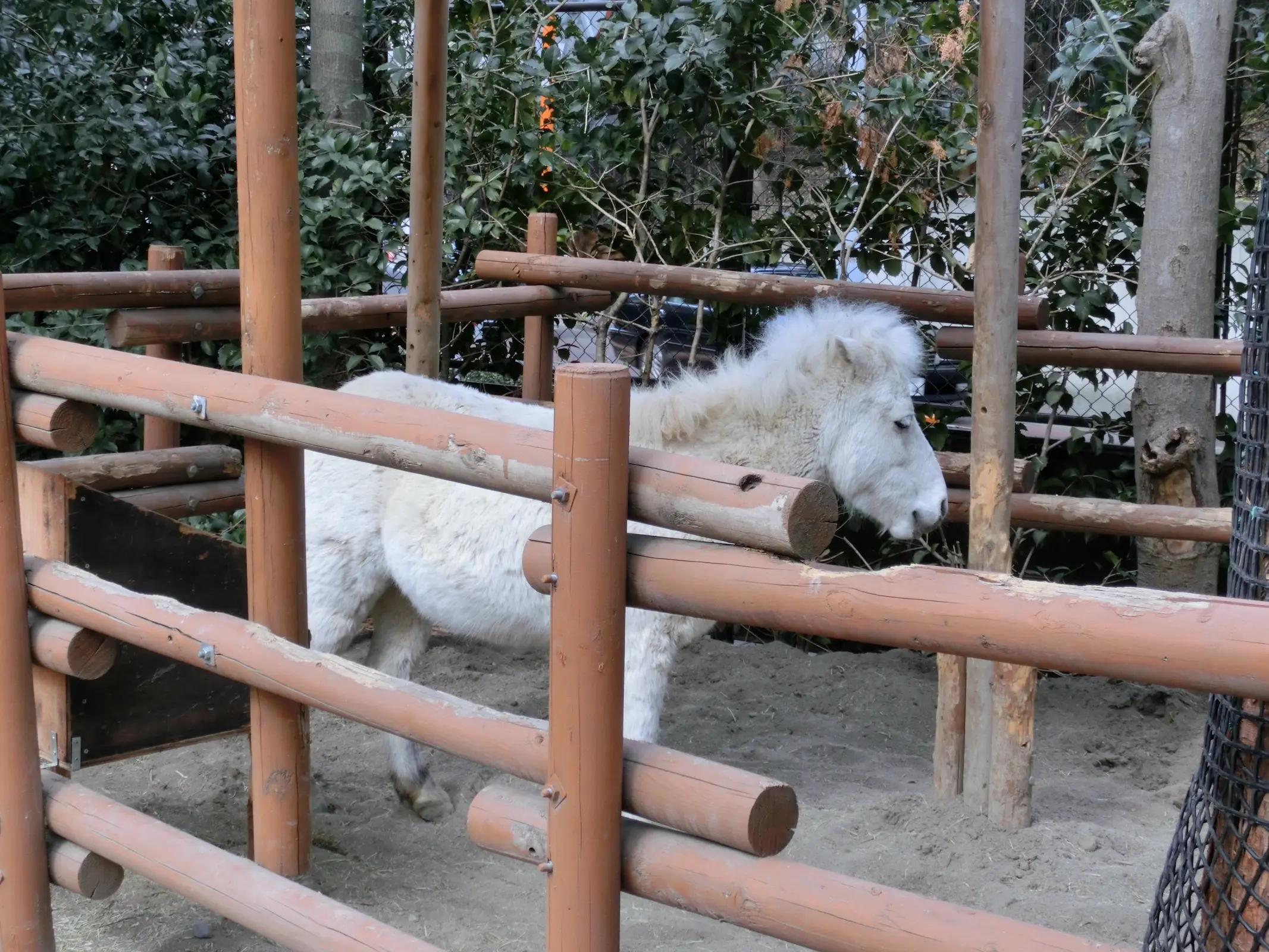
Noma, Japan

Yonaguni, Japan
Put horses on a small island with thin grazing and wait a few centuries, and they tend to get smaller. The Skyros pony of Greece, the Noma and Yonaguni of Japan, the little horse of Rhodes and the Shetland itself all got small the same way. Several of them are now on the list of the world’s rarest breeds, because a breed that fits on one island can also disappear from one island.
The Caspian of Iran is the odd one out: small (10–12 hands), but narrow, fine-boned and quick, a real horse at pony height. It turns up again in our piece on ancient breeds.
The record holders
The shortest horse ever recorded, Thumbelina, was 44.5 cm tall. A greyhound stands about 70.
Thumbelina was a dwarf miniature mare from Goose Creek Farms in St. Louis, Missouri. Guinness World Records lists her as the shortest horse ever at 44.5 cm (17.5 inches); she weighed around 57 pounds. She died in 2018.
Bombel, from a stud farm in Łódź, Poland, was confirmed in 2018 as the shortest living male horse at 56.7 cm.
Pumuckel, from Breckerfeld in Germany, took that title from him: he was measured at 52.6 cm to the withers in August 2025, and Guinness announced the record that November.
One caution about the very smallest horses. Thumbelina was small because she had dwarfism, and dwarfism in miniature horses is a health problem, not a goal. A 2018 study in Animal Genetics identified four recessive variants of a gene called ACAN behind it. A foal that inherits two of them is a dwarf, and affected foals range from those lost before birth to live foals with malformed legs, jaws and airways. The same study estimated that about a quarter of Miniature horses carry one variant. Carriers are perfectly healthy; the point of testing is to avoid breeding two of them together.
Living with a small one
Small does not mean easy. Ponies and minis evolved on poor grazing, so on good pasture they get fat with alarming efficiency, and fat ponies are the ones that get laminitis. They need their feet trimmed and their teeth checked like any horse, and if one stops eating, call your vet promptly: small equines can get into serious trouble quickly when they go off their feed. Our weight calculator and feeding calculator will give you a starting point, and the rider weight tool will tell you, kindly, whether you should be the one in the saddle.
If you’d rather just look at them, there is a 2008 post in our archive called Odd Horses: The World’s Smallest Horse, and every breed above has its own page with more pictures. Or see where they all come from on the breed map.