Ancient Horse Breeds That Haven’t Changed in Thousands of Years
The honest answer first: no horse breed has gone unchanged for thousands of years. Ancient DNA shows that every domestic horse alive descends from a population domesticated on the steppes of what is now southern Russia a little over 4,000 years ago. What is truly old is not any breed but certain types of horse, kept in the same places by the same kinds of people for a very long time. Some of the famous “ancient breeds” hold up well by that standard. A few do not hold up at all.
What “ancient” can and can’t mean
A breed, in the modern sense, is a closed population with a studbook, and almost all of them are less than 300 years old. Before that there were types: the small tough horses of one island, the fine fast horses of one desert. Types can be very old, but they were never sealed: horses were traded, captured and crossed constantly.
Two big studies frame everything below. In 2021 a large ancient-DNA study located the homeland of all modern domestic horses on the Western Eurasian steppe, around the lower Volga and Don rivers. From about 2000 BC that lineage spread across Europe and Asia with chariots and replaced nearly every other horse population. A 2024 follow-up dated the start of controlled breeding of that lineage to about 2200 BC. And a 2019 study in Cell found that modern breeding has changed the horse’s genetic diversity more dramatically than all the thousands of years of human management before it.
So: one origin, about 4,200 years ago, and a great deal of change since. With that in mind, here are the usual suspects.
Przewalski’s horse: older than breeds, but not an ancestor
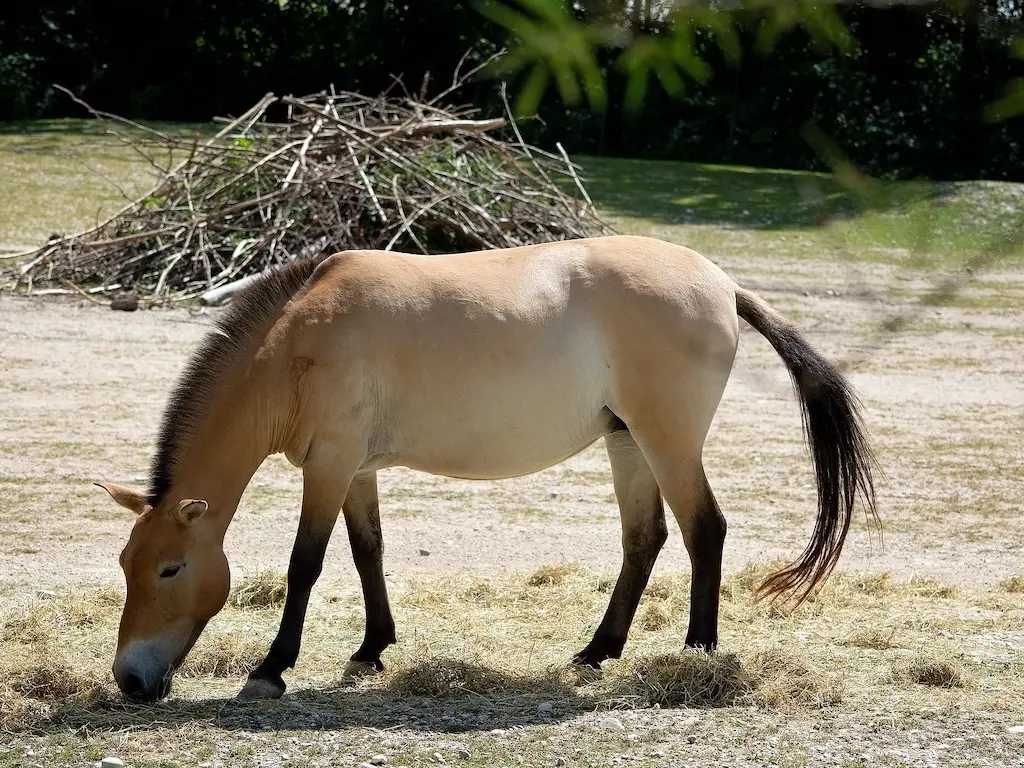
The Przewalski’s horse of Mongolia is the one everybody reaches for, and the most misunderstood. It is a separate lineage, with 66 chromosomes where domestic horses have 64, and for years it was assumed to be the wild stock from which tame horses were bred. Then a 2018 study in Science sequenced horses from Botai, a 5,500-year-old site in Kazakhstan with the earliest known signs of horse herding. The Botai horses turned out to be the ancestors of Przewalski’s horses, and to have contributed almost nothing, about 2.7 percent, to later domestic horses. The authors’ conclusion was that Przewalski’s horses are the feral descendants of horses once herded at Botai.
That last part is disputed. A 2021 paper argued that the Botai people were hunting wild horses rather than keeping them, in which case the Przewalski was wild all along. What nobody disputes any more is the family tree: Przewalski’s horses and domestic horses are cousins, not parent and child.
They were lost from the wild in the twentieth century and survived only in zoos. Every one alive descends from about a dozen captured founders, and since the 1990s they have been living free again in Mongolia and China.
Mongolian horse: an old type, never closed

The Mongolian horse (12–14 hands) is the best living picture of what “ancient” really looks like. There is no studbook and no closed gene pool, just a great many horses living outside all year in herds, bred by herders who select for toughness and leave the rest to the winter. The horses have surely changed over the centuries. The way of keeping them has changed very little, and that is why the type endures.
Arabian: old in the Middle East, mixed like everyone else

The Arabian is routinely called the oldest breed in the world, with figures of 4,500 years attached. A 2020 genome study of 378 Arabians from twelve countries supports the part that matters, an origin in the Middle East, and complicates the rest. It found a great deal of genetic variation and a “complex ancestry” rather than one pure line. It also overturned two favorite stories at once: it found no significant Arabian contribution to the genome of the Thoroughbred, and it found that Arabians bred for flat racing have recently been crossed with Thoroughbreds.
The Cell study adds the long view: horses of Persian-related ancestry spread across Europe and Asia after the Islamic conquests of the seventh century and later. The desert horse of Arabia is genuinely old as a type. As a sealed, unchanged bloodline it is not.
Akhal-Teke and the Turkoman
Our breed page gives the Akhal-Teke an age of more than 3,000 years, and that is the tradition: the long, lean horse of the Turkmen oases, heir to the extinct Turkoman. No ancient DNA ties today’s Akhal-Teke to a horse of 1000 BC. What the genetics does show is its influence: studies of the Y chromosome have traced the male lines of most modern breeds, the Thoroughbred included, to a small number of “Oriental” stallions of Arabian and Turkoman type imported within the last few centuries.
Caspian: rediscovered in 1965

The little Caspian (10–12 hands) was unknown to the outside world until 1965, when Louise Firouz, an American-born breeder living in Iran, found small, fine horses near Amol by the Caspian Sea and began to breed them. Because they resemble the tiny horses carved on the walls of Persepolis, the Caspian has been presented ever since as a survivor of the royal horses of ancient Persia.
It may be. But the argument rests on the resemblance, and resemblance is not descent. As a recorded breed the Caspian is sixty years old. As a type it could be very old indeed, and it is rare enough that it is also on our list of the world’s rarest breeds.
Icelandic: a thousand years alone
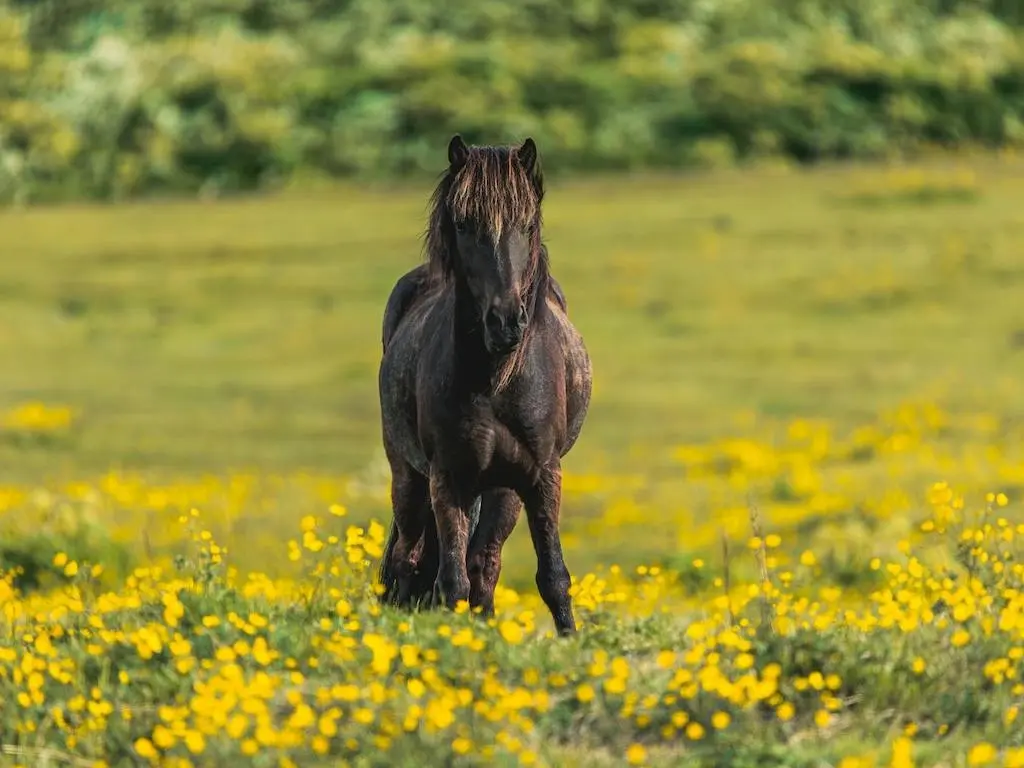
If the question is which breed has been isolated longest, the Icelandic has the best claim. Norse settlers brought horses in the ninth and tenth centuries, imports were then forbidden, and the population has been closed for most of a millennium. That is a longer pedigree than any studbook.
Isolated is not the same as unchanged: a thousand years of Icelandic winters and Icelandic breeders will reshape any population. But if you want to ride something close to a Viking-age horse, this is as near as you will get.
Exmoor: a thousand years on the moor, not a hundred thousand
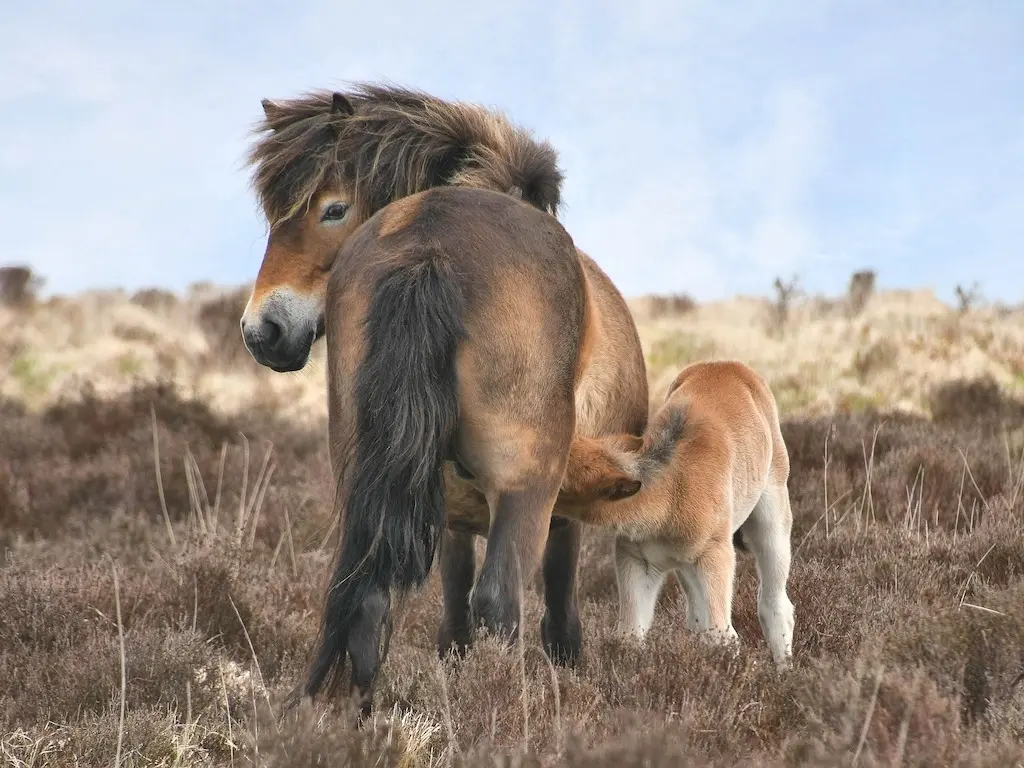
The Exmoor pony looks the part: brown, mealy-muzzled, toad-eyed, built like the horses in cave paintings. The traditional account, which our own breed page repeats, makes it the nearly pure descendant of the wild ponies of Ice Age Britain.
The DNA has not backed that up. The Exmoor’s maternal lines are shared with many other breeds and its Y chromosome is the same as most domestic horses’; no study has connected it to prehistoric British remains. What is well documented is impressive enough. Ponies are recorded on Exmoor in 1086, and the herds have run on the moor ever since under natural conditions that keep the wild-type color and the weatherproof coat firmly in place.
Konik and the tarpan

Konik
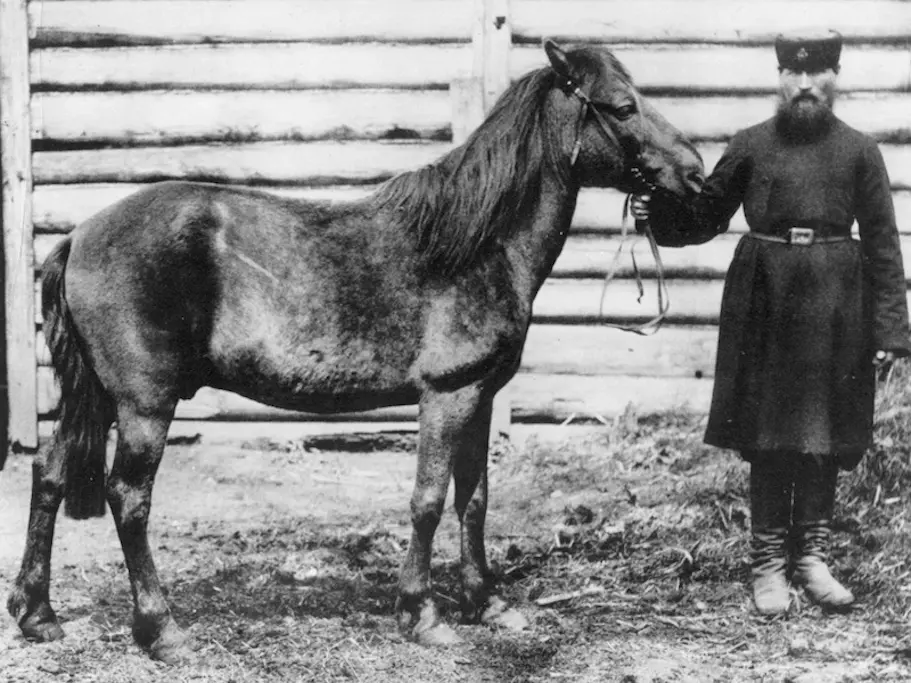
A nineteenth-century photograph said to show a tarpan
The Tarpan was the wild horse of the European steppe, extinct since the late 1800s. The Konik of Poland, a mouse-dun pony with a dorsal stripe, has long been described as its direct descendant, and the Heck was bred in Germany in the twentieth century to look like one.
Genetic studies of the Konik contradict the romantic version. Its maternal lines are a mixture shared with domestic breeds across the world, which is what you would expect from a farm pony, and not from a relict wild horse. The Konik is a hardy domestic horse that looks like a tarpan, which is not the same thing as being one.
The dun Sorraia of Portugal is a similar case. It has been promoted as the ancestor of the Iberian breeds and a last remnant of southern Europe’s wild horses. Studies of its maternal DNA found very little variation, the mark of a tiny group of founders, and no genetic study has shown it to be the ancestor of the Lusitano or the Andalusian. It is a precious, nearly extinct population of primitive type; the rest is unproven.
Yakut: the “ancient” horse that isn’t
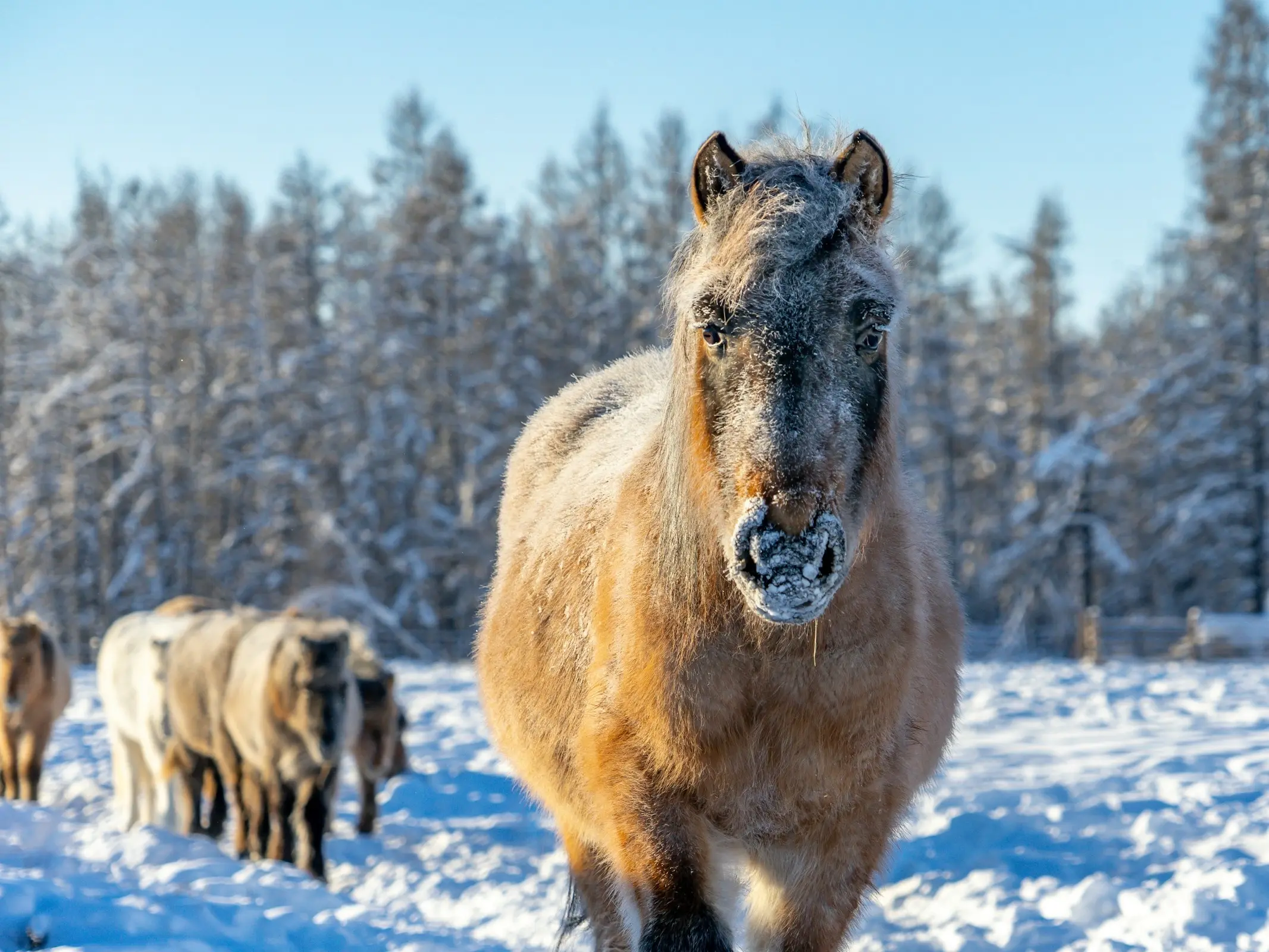
Here is the one that should make everybody cautious. The Yakut horse of Siberia looks more prehistoric than any of them: small, stocky, and furred like a mammoth. Wild horses lived in Yakutia for tens of thousands of years, so the natural assumption was that the Yakut descended from them.
It does not. A 2015 genome study showed that Yakut horses are ordinary domestic horses, brought north by the Yakut people within the last several centuries, and that their Arctic adaptations evolved in that short time. The horse that looks the oldest is one of the youngest. Looking primitive tells you about climate and selection, not about age.
The same goes for the Riwoche pony of Tibet, reported around the world in 1995 as a possible “living fossil”. By the expedition leader’s own later account, testing found nothing to separate it from other domestic horses.
The scorecard
| Horse | The claim | What the evidence supports |
|---|---|---|
| Przewalski’s horse | Wild ancestor of domestic horses | A separate lineage; not an ancestor |
| Mongolian | Oldest true breed | A very old type in an unbroken herding tradition |
| Arabian | Pure for 4,500 years | Middle Eastern origin; diverse and mixed ancestry |
| Akhal-Teke | 3,000 years old | Old Oriental type; age is tradition, not tested |
| Caspian | Royal horse of ancient Persia | Recorded since 1965; the link is a resemblance |
| Icelandic | Unchanged since the Vikings | Isolated for about 1,000 years; the strongest case |
| Exmoor | Ice Age survivor | On the moor since at least 1086; no DNA link to prehistoric ponies |
| Konik | Descendant of the tarpan | A domestic landrace of primitive type |
| Sorraia | Ancestor of Iberian horses | A tiny, distinct population; ancestry unproven |
| Yakut | Descendant of Siberian wild horses | Arrived a few centuries ago |
None of this makes these horses less worth keeping. Old types may carry variation that the big modern breeds have lost, and several of them are down to a few hundred animals. They are worth saving for what they are, which is interesting enough without the extra thousand years.
See where each of them comes from on the breed map, or read on: the rarest horse breeds in the world and the smallest include several of the same names.