Famous Horses in History That Changed the World
Famous horses collect legends the way a grey collects stable stains. Here are ten that really did change something (a battle, a breed, a sport, a science), with what the records say kept apart from what people have added since.
| Horse | Lived | Known for | Type |
|---|---|---|---|
| Bucephalus | died 326 BC | Alexander the Great’s war horse | Not recorded |
| Marengo | about 1793–1831 | Napoleon’s grey charger | Arabian |
| Copenhagen | 1808–1836 | Carried Wellington at Waterloo | Mostly Thoroughbred |
| Figure | 1789–1821 | Founded the Morgan breed | The first Morgan |
| Eclipse | 1764–1789 | Unbeaten; ancestor of most racehorses | Thoroughbred |
| Comanche | died 1891 | Survivor of the Little Bighorn | Not recorded |
| Clever Hans | active 1904 | Taught science to test blind | Russian trotter |
| Seabiscuit | 1933–1947 | The match race of 1938 | Thoroughbred |
| Sergeant Reckless | died 1968 | Decorated US Marine | Halla |
| Secretariat | 1970–1989 | The 1973 Triple Crown | Thoroughbred |
Bucephalus
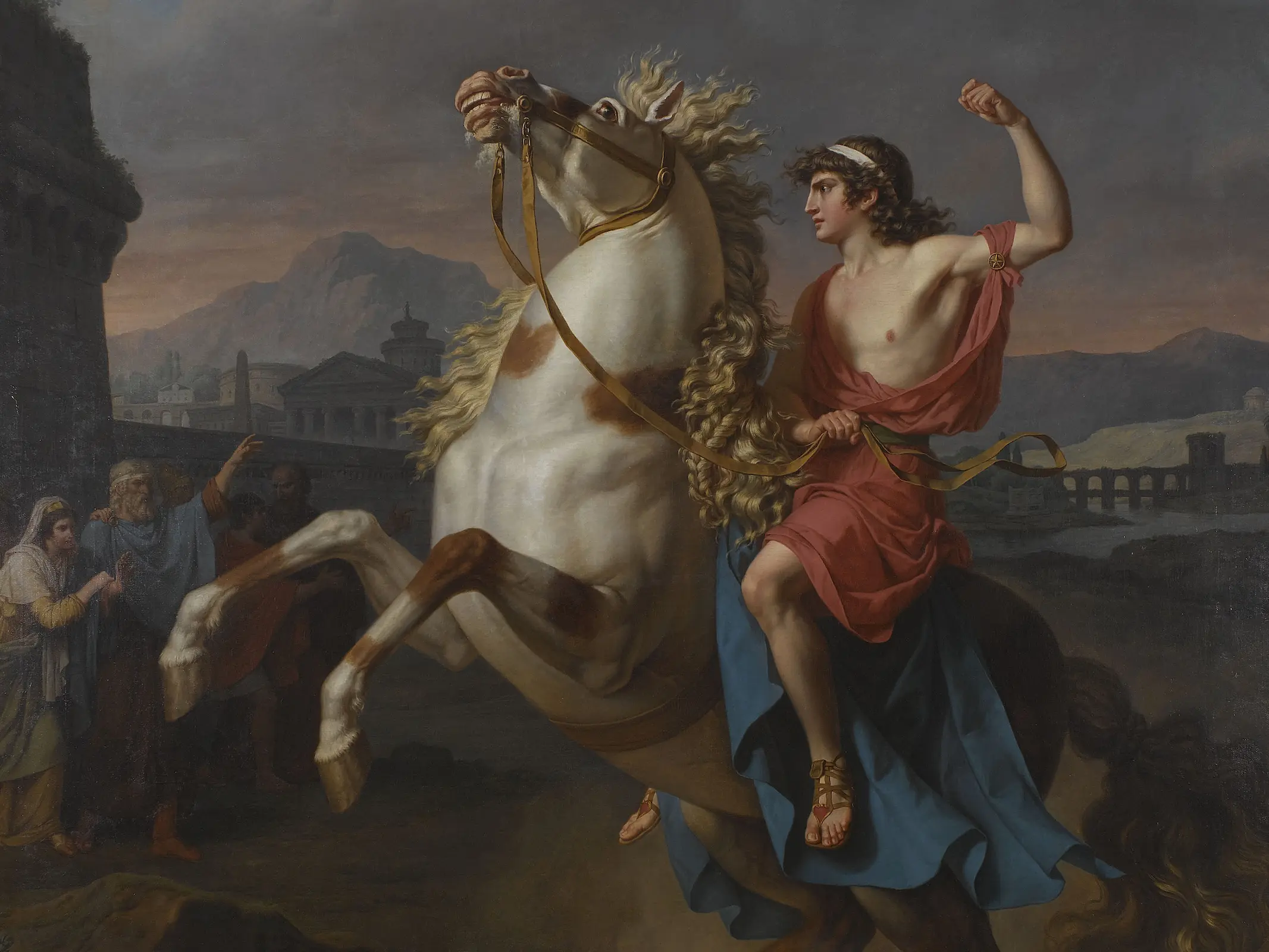
Documented: As documented as anything can be when the surviving accounts were written about four centuries later. Plutarch says a Thessalian dealer offered the horse to Alexander’s father, Philip, for the huge sum of thirteen talents, that nobody could ride him, and that the young Alexander noticed the horse was shying at his own shadow and turned him to face the sun. Plutarch and Arrian agree that he died around the time of the battle of the Hydaspes in 326 BC, aged about thirty, and that Alexander founded a city, Bucephala, in his memory.
Legend or disputed: How he died. Plutarch reports that most writers said battle wounds; Arrian says flatly that it was age and exhaustion. The stories that he ate men and was born on the same day as Alexander come from the later, largely fictional Alexander Romance. Neither ancient author names a breed, so “Thessalian” describes the seller rather than the horse. We have more on the pair here.
Marengo
Documented: The National Army Museum in London holds the skeleton of a small grey Arab stallion, about 14 hands, taken to England after Waterloo in 1815, where he lived until 1831. The museum’s account is that Napoleon acquired him in Egypt in 1799 and named him after his victory at Marengo, and that the horse was wounded eight times in his career.
Legend or disputed: Whether Napoleon ever had a horse called Marengo. The author Jill Hamilton, who wrote a book on the question, points out that the name does not appear in the registers of the imperial stables and suggests the skeleton belongs to a horse recorded under another name. Napoleon rode a great many grey Arabians; this was very probably one of them. The name may have been a later flourish.
Copenhagen
Documented: Foaled in 1808, a grandson of Eclipse (below) through his sire Meteor, Copenhagen had a short and unremarkable racing career before being taken out to the Peninsular War, where the Duke of Wellington bought him. The Duke rode him for the whole day at Waterloo. He died at the Duke’s estate, Stratfield Saye, in 1836, aged 28, and was buried there with military honours.
Legend or disputed: Exactly how long the Duke was in the saddle. Sixteen, seventeen and eighteen hours all appear in print; “all day” is the honest version. He is often called a Thoroughbred, and mostly he was, but his granddam was by an Arabian out of a hunter mare, which cost him his place in the stud book.
Figure
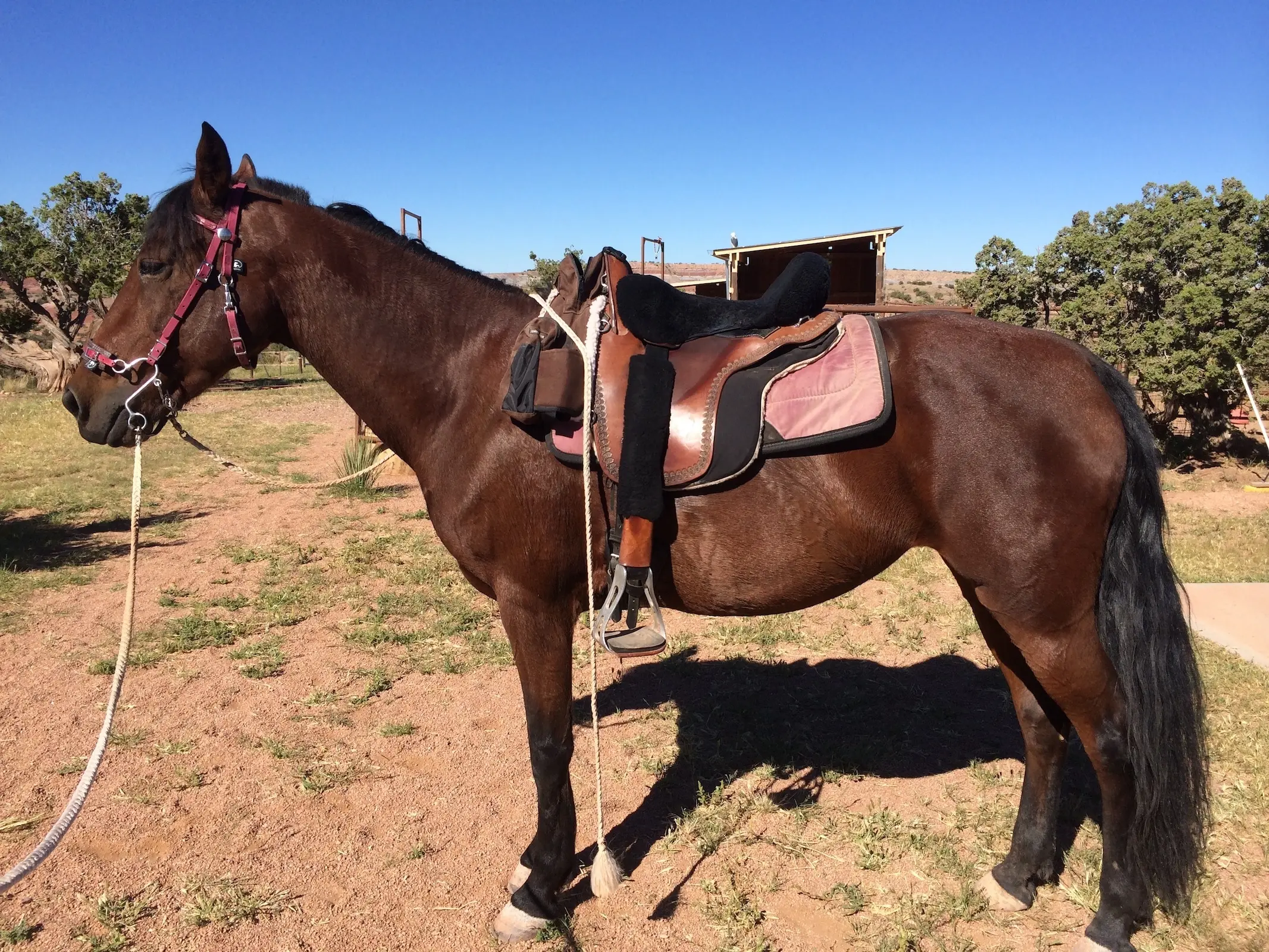
A modern Morgan. Every one of them traces back to a single small bay stallion.
Documented: A bay colt foaled in New England in 1789 came into the hands of Justin Morgan, a teacher and composer in Randolph, Vermont. Figure passed through many owners, worked for his living and died in Vermont in 1821 after a kick from another horse went untreated. Through three sons in particular (Sherman, Bulrush and Woodbury) he founded the Morgan, one of the first American breeds, which went on to shape the Standardbred, the American Saddlebred and the Tennessee Walker.
Legend or disputed: His parentage. The sire is traditionally given as a horse called True Briton, but the American Morgan Horse Association itself says the question remains open. Stories of the tiny horse out-pulling and out-running everything in Vermont were written down decades later and have improved with age.
Eclipse
Documented: Foaled in 1764, the year of a solar eclipse, he ran eighteen times and was never beaten, several of those wins being walkovers because nobody would turn up to race him. At stud he sired hundreds of winners. His skeleton is kept at the Royal Veterinary College in London, and a 2012 study by Cambridge and RVC researchers concluded that most of it, including the skull, is genuinely his.
Legend or disputed: The famous prediction that he would finish first with the rest “nowhere” is credited to the gambler Dennis O’Kelly; it is tradition rather than record. The often-quoted figure that 95% of Thoroughbreds descend from him needs care: genetic work shows about 95% of male lines go back to one founding stallion, the Darley Arabian, and almost all of those run through Eclipse.
Comanche
Documented: Comanche was the mount of Captain Myles Keogh of the 7th Cavalry at the Little Bighorn in June 1876. Two days after the battle, soldiers found him badly wounded on the field. He was nursed back to health and lived out his days with the regiment until he died in 1891. His mounted body is still on display at the University of Kansas Natural History Museum.
Legend or disputed: That he was the only survivor of the battle. He was not: thousands of Lakota, Cheyenne and Arapaho survived it, and so did many cavalry horses, most of which left with the victors. Comanche was the only living thing the Army recovered from Custer’s part of the field. His breeding was never recorded; he is usually described as part mustang, and anything more exact is guesswork.
Clever Hans
Documented: In Berlin in 1904 a retired teacher, Wilhelm von Osten, showed the public a horse that tapped out the answers to sums with his hoof. A commission of thirteen experts found no trickery. Then the psychologist Oskar Pfungst ran the tests properly. When the questioner knew the answer, Hans got nearly all of them right; when the questioner did not, or stood out of sight, he got almost none. Hans was reading tiny, involuntary movements of the person’s head and stopping his taps on cue.
Legend or disputed: That he was a fraud. Nobody was cheating, and reading a human that closely is clever in its own right. The “Clever Hans effect” is the reason experiments on animals (and people) are now run blind. Pfungst called him a Russian trotting horse; he is usually identified as an Orlov Trotter.
Seabiscuit
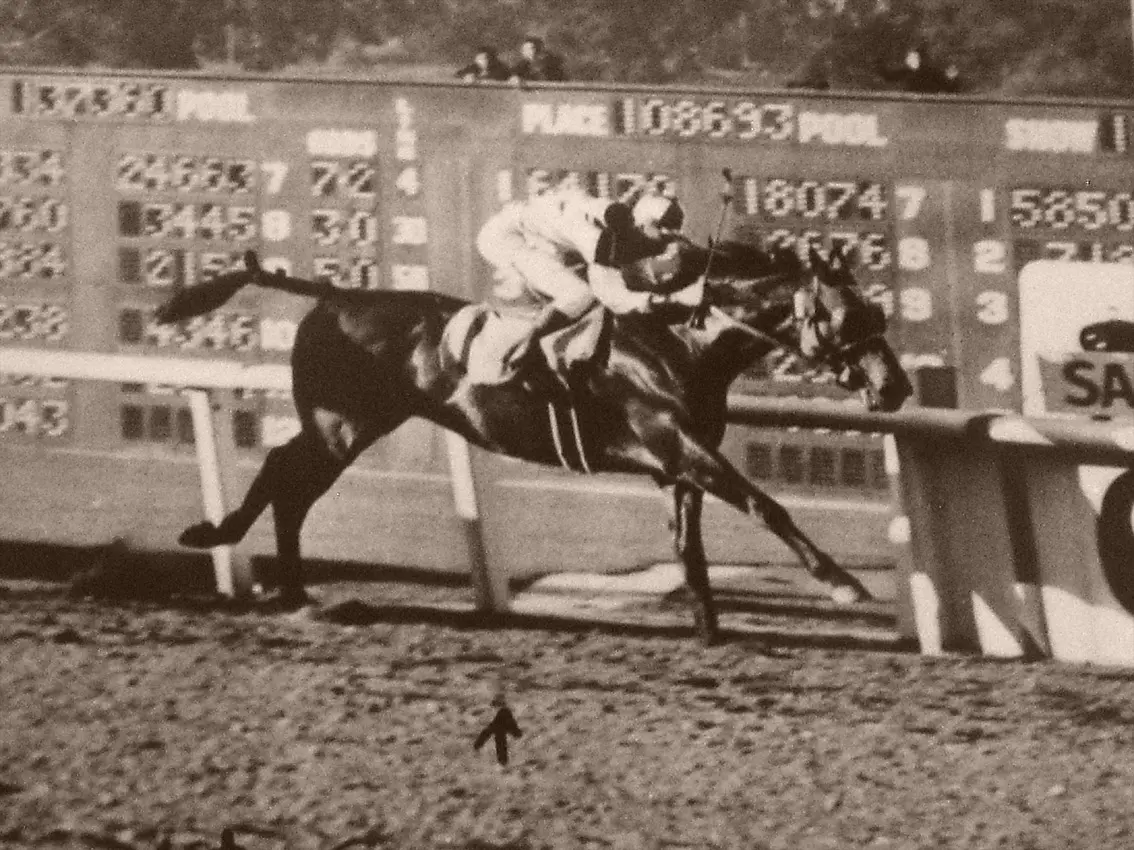
Documented: Foaled in 1933, he was slow to find his form and finished a long career with 33 wins from 89 starts. On 1 November 1938 he beat the Triple Crown winner War Admiral by four lengths in a two-horse match race at Pimlico, in track-record time, and was named Horse of the Year. After a serious leg injury he came back to win the 1940 Santa Anita Handicap, which made him the leading money-winner in racing at the time.
Legend or disputed: Very little, which is unusual. The Depression-era underdog story is largely true, though he was a well-bred grandson of Man o’ War, not a horse from nowhere. We have told his story and the match race at more length.
Sergeant Reckless
Documented: In October 1952 a US Marine lieutenant bought a small chestnut mare at the Seoul racecourse for $250 of his own money, to carry ammunition for a recoilless rifle platoon of the 5th Marines. During the battle for Outpost Vegas in March 1953 she made 51 trips in a single day, most of them alone, carrying 386 rounds weighing more than 9,000 pounds over some 35 miles of hill under fire. She was wounded twice, promoted to sergeant in 1954 and later to staff sergeant, retired to Camp Pendleton in California and died in 1968. In 2016 she was awarded the PDSA Dickin Medal.
Legend or disputed: Her breed. She is often called a Mongolian pony, but the National Museum of the Marine Corps describes her as a Halla horse: the Korean racing cross of the native Jeju pony and the Thoroughbred. Her Korean name is usually translated as Flame of the Morning.
Secretariat
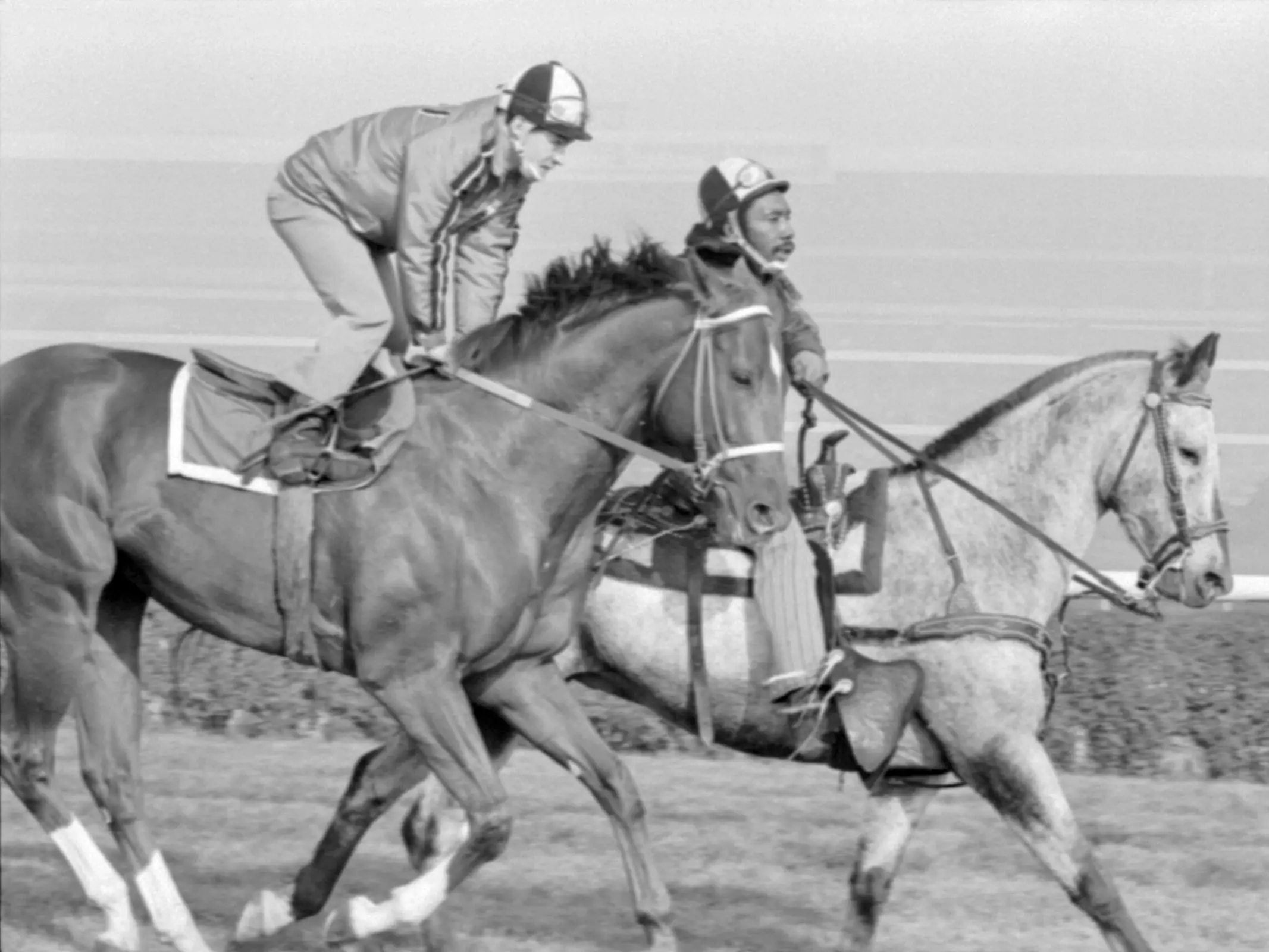
Documented: In 1973 he became the first Triple Crown winner in 25 years. His Kentucky Derby time of 1:59.40 is still the fastest ever run, and so is his Belmont Stakes: a mile and a half in 2:24, won by 31 lengths. His Preakness time was disputed for decades because the track timer malfunctioned; in 2012 the Maryland Racing Commission reviewed the film and made it 1:53 flat, a record at the time he ran it. He died in 1989.
Legend or disputed: The 22-pound heart. The vet who performed the necropsy, Dr Thomas Swerczek, described a healthy heart far larger than any he had seen, but he did not weigh it. The figure is his estimate. There is more about him here.
Two that didn’t quite make the list
- Incitatus, Caligula’s racehorse, was never made a consul. The ancient writers say only that the emperor was said to have planned it, and they were not admirers of his.
- Warrior, a Thoroughbred who carried General Jack Seely through four years on the Western Front and came home, received an honorary Dickin Medal in 2014 on behalf of all the animals that served in the First World War.
For more of the same, see famous racehorses, Phar Lap and his big heart and the horses of myth, where the fact-checking is easier.