Bay, Chestnut or Black? How Horse Coat Color Genetics Actually Work
Underneath the palominos, the greys and the spotted blankets, every horse is one of three colours: bay, black or chestnut. Two genes decide which. Everything else is a further gene that dilutes that base, mixes white hair into it or covers part of it with white. Learn the two base genes and half a dozen extras, and you can predict most foals.
That is exactly what our foal colour calculator does. You tell it what each parent carries; it works out every combination the foal could inherit and how likely each is. This page explains the reasoning, so the percentages make sense.
One idea first. A horse has two copies of every gene, one from each parent, and passes one of the two, at random, to each foal. A dominant version shows with one copy. A recessive version shows only when both copies match. Geneticists write dominant versions with a capital letter.
Step one: red or black (Extension)
Horses make two pigments, black and red. The Extension gene decides whether a horse can put black pigment into its coat at all.
- E (dominant): can make black.
- e (recessive): cannot. A horse with two copies, ee, is red all over: a chestnut, or sorrel if you ride Western.
Because chestnut is recessive, a chestnut has only e to give. Two chestnuts bred together will always produce a chestnut. It is the nearest thing to a certainty in horse breeding.
Step two: where the black goes (Agouti)
If a horse can make black, the Agouti gene decides where.
- A (dominant): black is pushed out to the points (mane, tail, lower legs and ear rims), leaving the body red-brown. That is a bay.
- a (recessive): with two copies, aa, black covers everything. That is a black horse.
A chestnut carries Agouti too, but with no black pigment to arrange you cannot see it. This is how two chestnuts can never throw a bay, yet a chestnut and a black sometimes do: the chestnut was hiding an A.
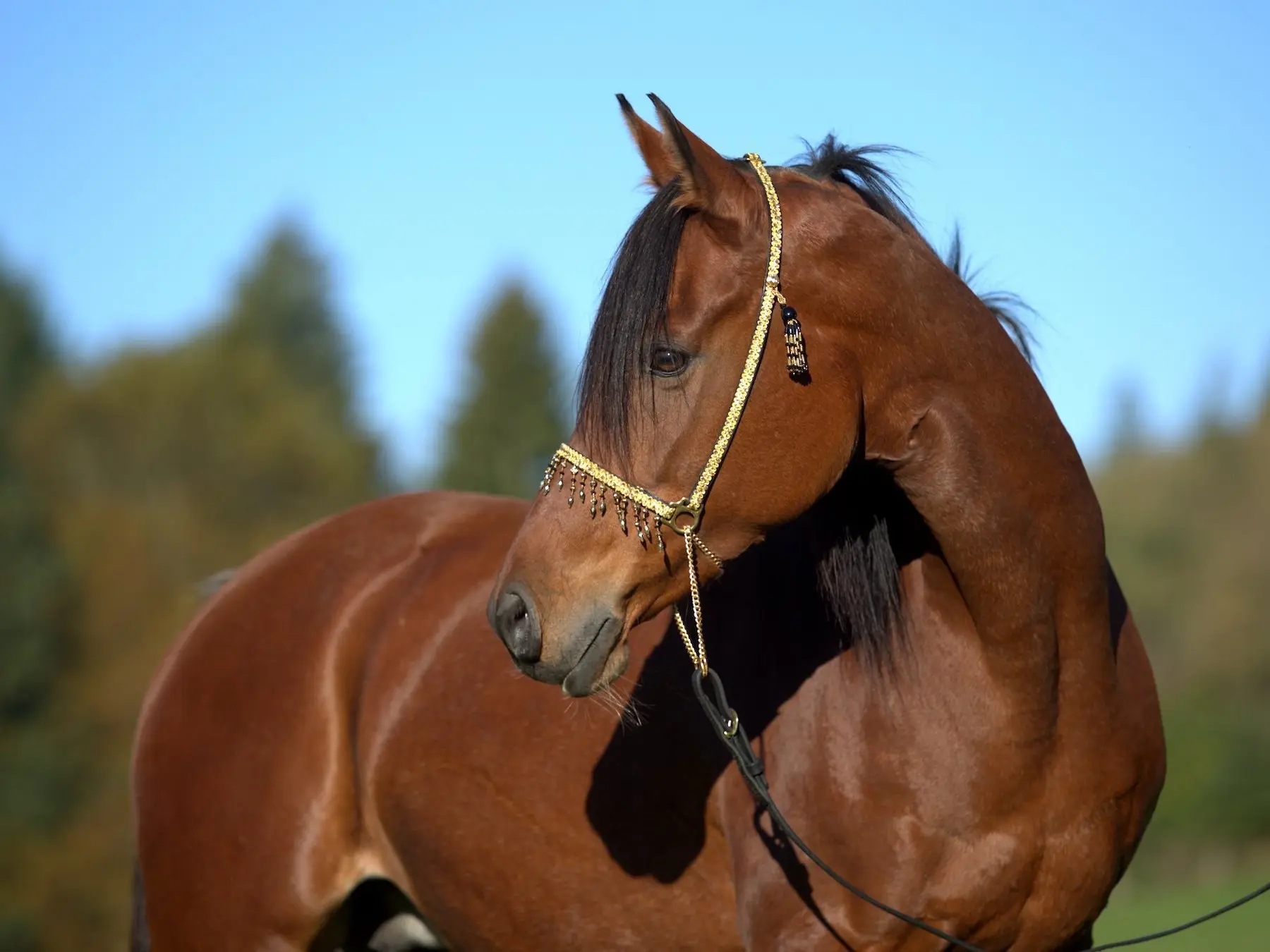 Bay: E, with A
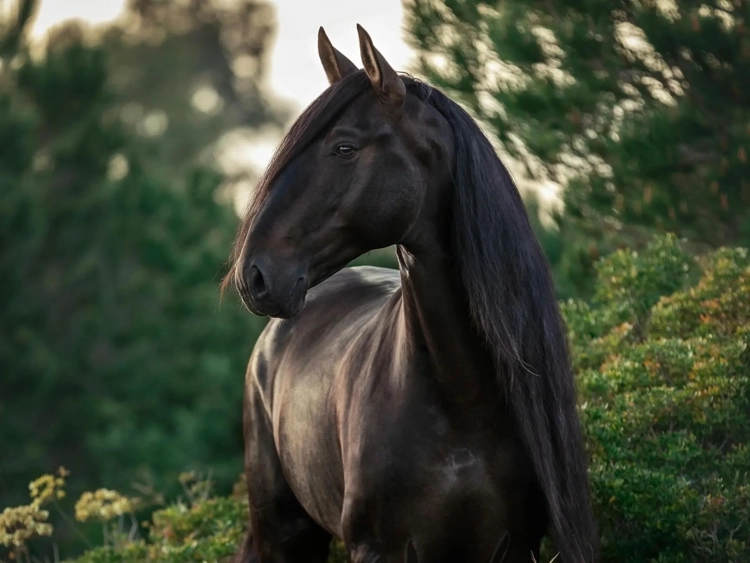 Black: E, with aa
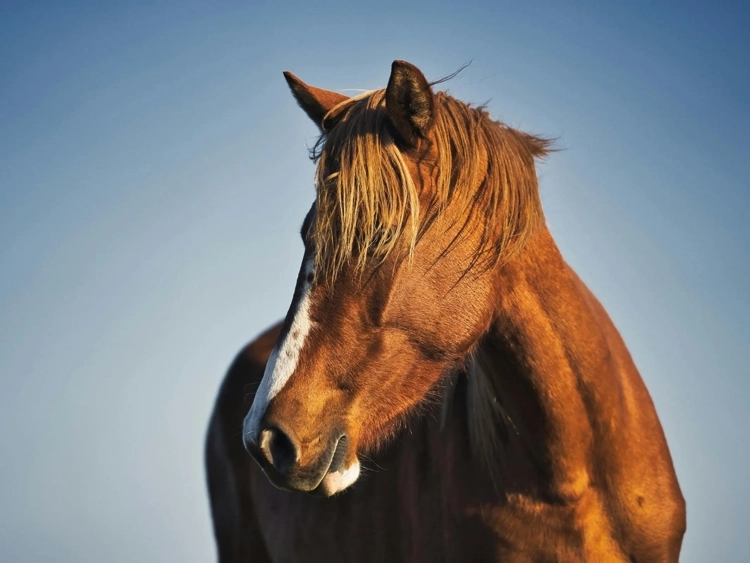 Chestnut: ee
So every combination of those two genes gives one of just three base colours:
| Extension | Agouti | Colour |
|---|---|---|
| EE or Ee | AA or Aa | Bay |
| EE or Ee | aa | Black |
| ee | anything | Chestnut |
A worked example. Take two bays that each carry one hidden red and one hidden black: both Ee Aa. For each gene, the foal has a one-in-four chance of getting the recessive pair. So a quarter of the foals are ee, chestnut, whatever else they carry. Of the remaining three quarters, a quarter are aa, black. The odds are 56.25% bay, 18.75% black and 25% chestnut: three colours from two bay parents. Put those parents into the calculator and it returns those figures.
Step three: dilutions
A dilution gene lightens the base colour.
Cream is the best known, and it is unusual in that one copy and two copies look different.
| Base | One cream copy | Two cream copies |
|---|---|---|
| Chestnut | Palomino | Cremello |
| Bay | Buckskin | Perlino |
| Black | Smoky black | Smoky cream |
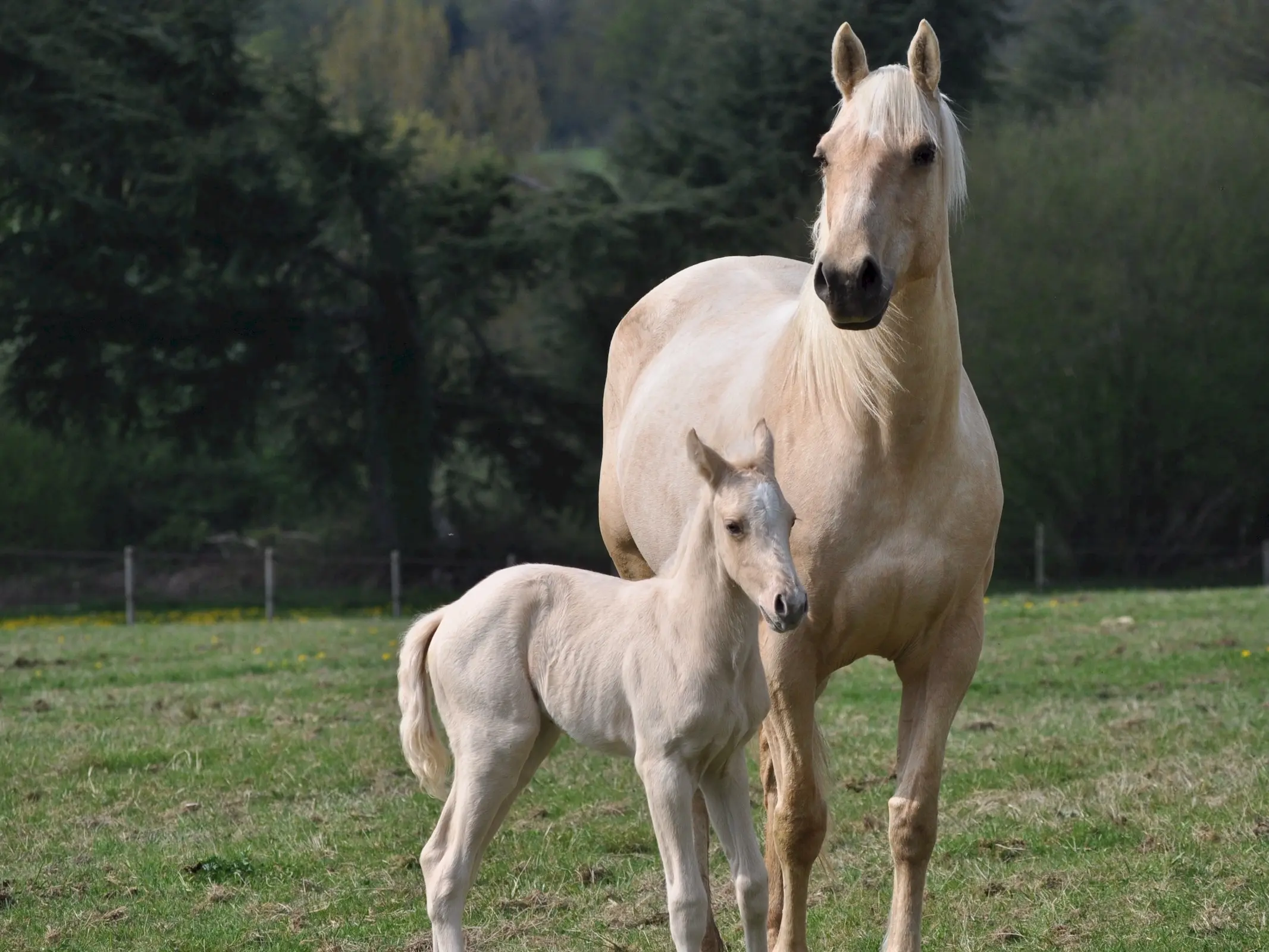
One copy lightens red pigment to gold and barely touches black, which is why a buckskin keeps its black points and a smoky black can pass for a plain black. Two copies wash nearly everything out to cream, with pink skin and blue eyes. The neat consequence: a palomino bred to a palomino gives, on average, one chestnut, two palominos and one cremello in every four foals, while a cremello bred to a chestnut gives a palomino every time. There is more on the cream gene pages.
Dun is dominant, and it is the original wild colouring: it is the horses that are not dun that carry the mutation. Dun lightens the body but leaves the head, legs, mane and tail darker, and it always comes with “primitive markings”, a dark stripe down the spine and often zebra-like bars on the legs. On bay it gives the classic yellow dun, on chestnut red dun, and on black the mouse-grey grullo. Dun and buckskin are constantly confused; the dorsal stripe settles it. See the dun pages.
 Cream on bay: buckskin
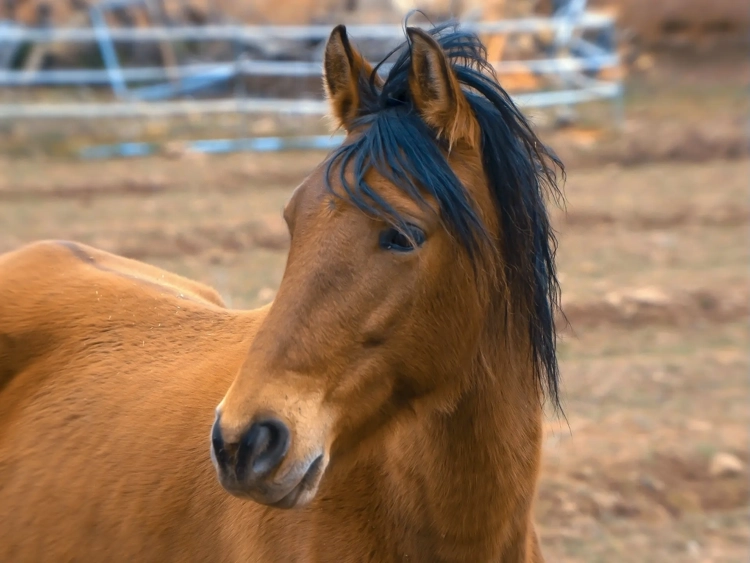 Dun
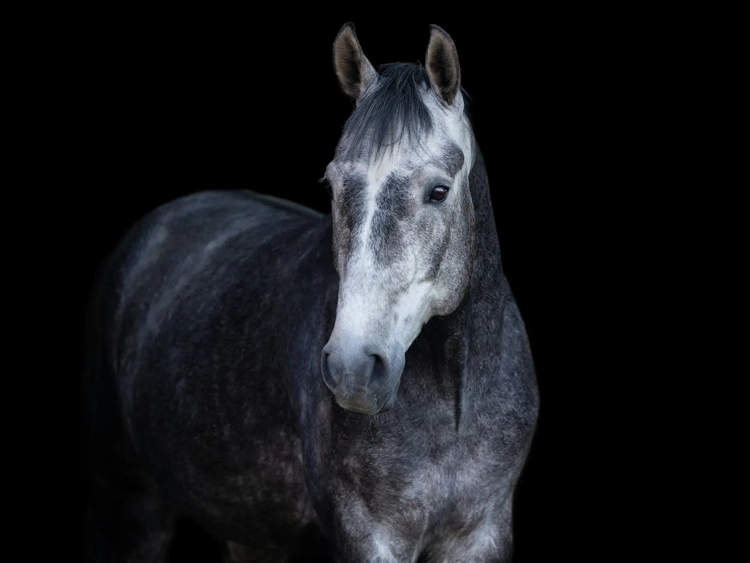 Grey
Rarer dilutions work on the same principles: champagne (dominant), silver (dominant, but it only acts on black pigment, so a chestnut can carry it unseen) and pearl (recessive, and a variant of the same gene as cream).
Step four: grey
Grey is not a colour so much as a process. A grey foal is born bay, black, chestnut or anything else, and then loses pigment from its hair year by year, passing through steel or rose grey and dapples to white or flea-bitten. The skin stays dark.
Grey is dominant, so one copy is enough, and it overrides whatever is underneath. Two rules follow. A grey horse always has at least one grey parent. And a horse with two copies of grey (GG) will have grey foals whatever it is bred to. Grey horses are also prone to melanomas as they age; ask your vet to check any lumps under the tail or around the head.
Step five: white patterns
These genes do not change the colour. They add white on top of it.
- Roan (dominant) mixes white hairs evenly through the body but leaves the head and legs solid. Unlike a grey, a roan is born roan or shows it with the first coat change, and does not fade with age. It was long said that two copies of roan were fatal to the embryo; healthy horses with two copies have since been identified, so that claim is now doubted.
- Tobiano (dominant) gives large, smooth-edged white patches that usually cross the back, with white legs and a mostly coloured head.
- Frame overo gives ragged white patches along the sides that seldom cross the back, often with a lot of white on the face. One copy makes the pattern. Two copies cause lethal white foal syndrome: the foal is born white with a gut that does not work, and cannot survive. Two frame carriers should never be bred together, and because the pattern can be so minimal it goes unnoticed, a DNA test is the only safe way to know.
- Splashed white looks as though the horse was dipped feet-first in white paint, often with blue eyes. Some splashed horses are deaf.
- Sabino and dominant white cover a range from high socks and a blaze to an entirely white horse. Dominant white is a large family of separate mutations in a single gene, KIT; the causes of many sabino-type patterns are still unknown.
- Leopard complex, the gene behind Appaloosa spotting, is the odd one out. One copy tends to give a white blanket or body with dark spots; two copies give a few-spot or snowcap with hardly any spots at all. Horses with two copies are also night-blind from birth.
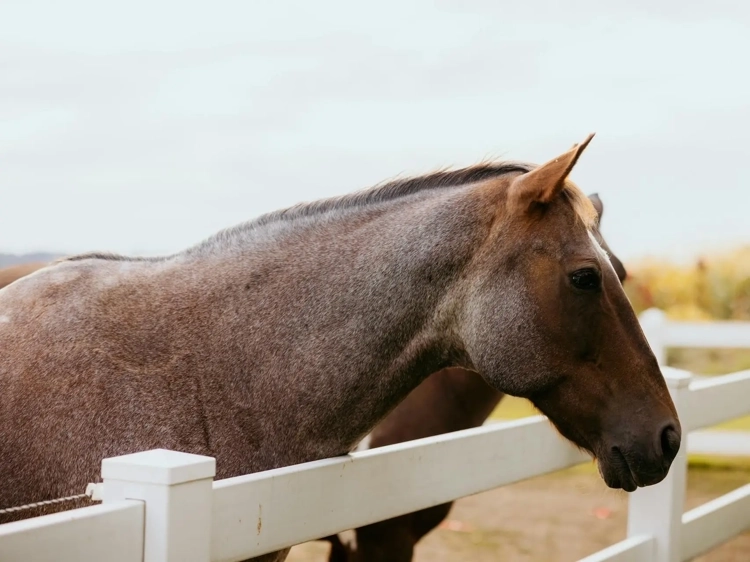 Roan
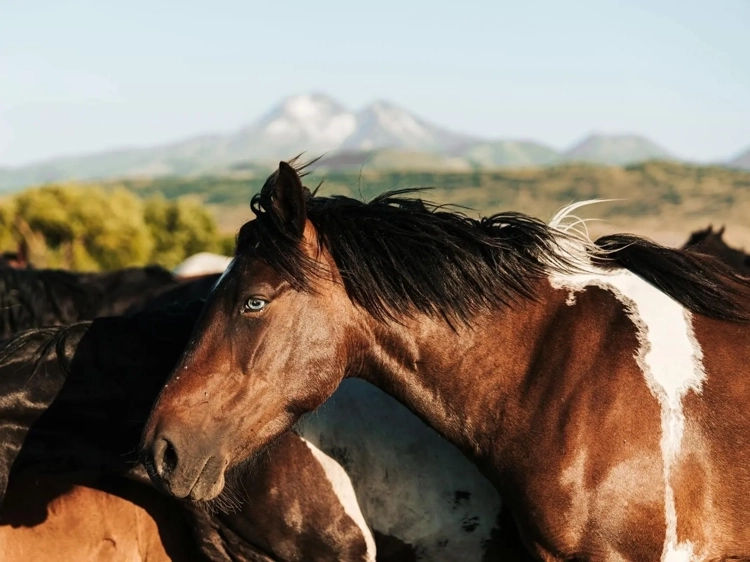 Pinto patterns
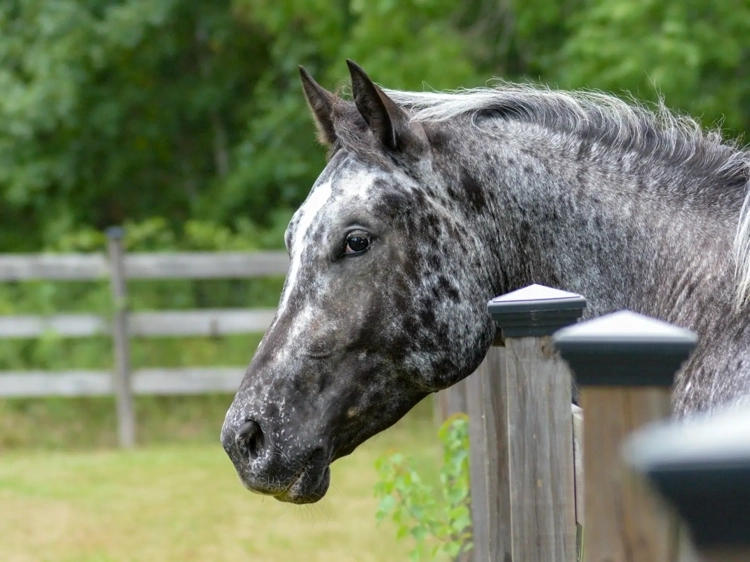 Leopard complex
A horse can carry several of these at once, and they stack. A buckskin tobiano is bay, plus one cream, plus tobiano. A grey can be hiding all of it.
What the calculator covers, and what it cannot
The foal colour calculator works with the two base genes plus cream, grey, dun and tobiano, and multiplies the odds for each. The Foal Forecast game runs on the same rules, with roan and leopard spotting added, and lets you breed a herd over generations to see how a hidden recessive resurfaces. If you have ever wondered why your two bays produced a chestnut, twenty minutes with either will make it obvious.
Three limits are worth knowing:
- The maths needs the genes, not the look. A bay may be EE or Ee, and you cannot tell which by eye. A DNA test, or a chestnut foal, will tell you.
- Shade is not in the model. Why one chestnut is pale and another liver, or why some bays are nearly black, involves sooty, flaxen, pangare and other influences that are only partly understood. The exact cause of seal brown is still not settled.
- Odds are not promises. A 25% chance of chestnut is the chance for each foal, every time. The dice have no memory.
And one myth to retire: there are no albino horses. White horses are white because of the pattern genes above, and cremellos because of cream; all of them still make pigment.
To see every colour mentioned here, with photographs, start at the colours index.