English Saddles
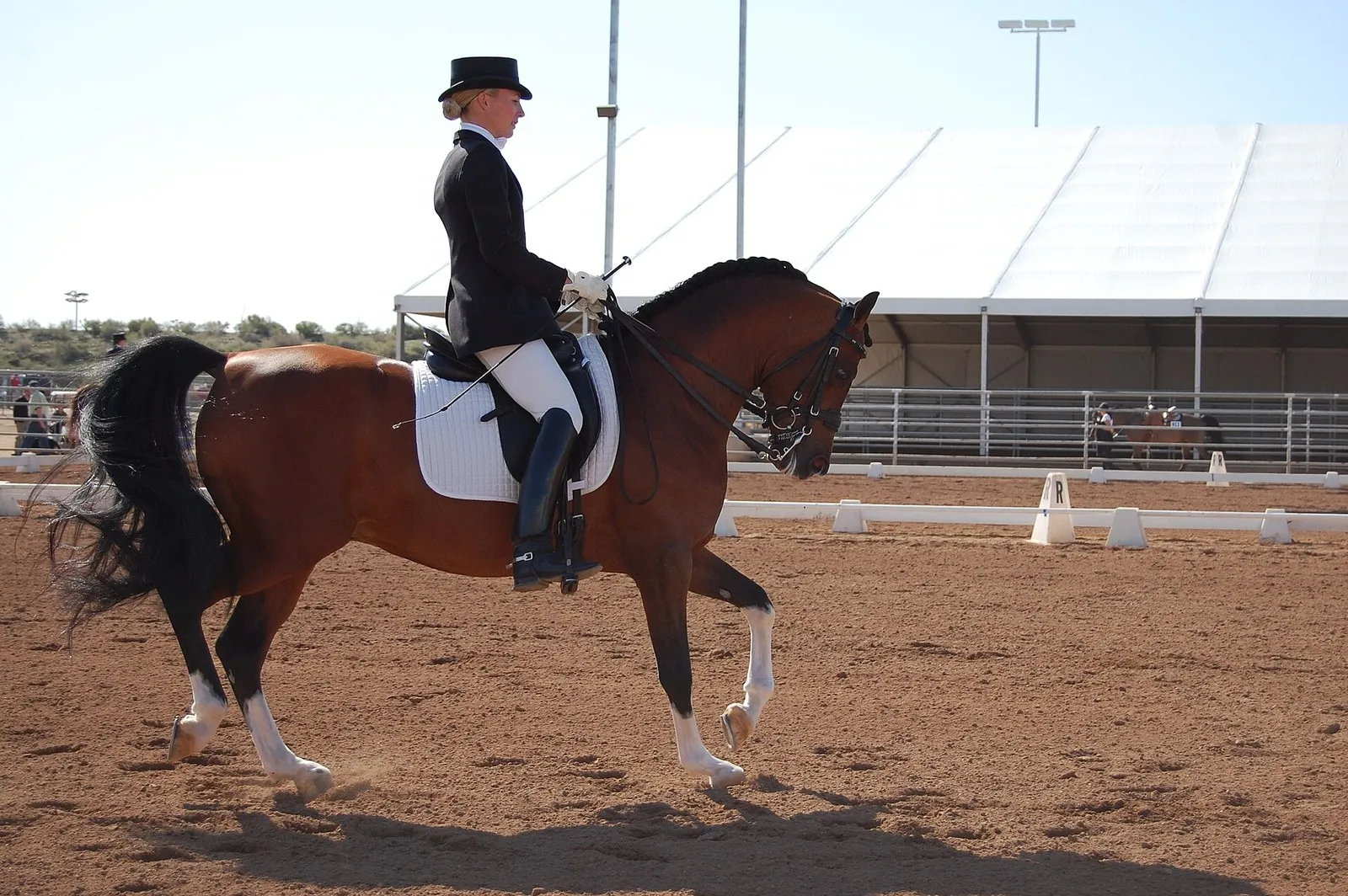
An English saddle is the light, flat saddle with no horn that is used for dressage, show jumping, eventing, hunting and everyday riding; it is the saddle of every Olympic riding sport. It sits close to the horse, so the rider can feel its back move and give clear signals with seat and legs.
Parts of an English saddle
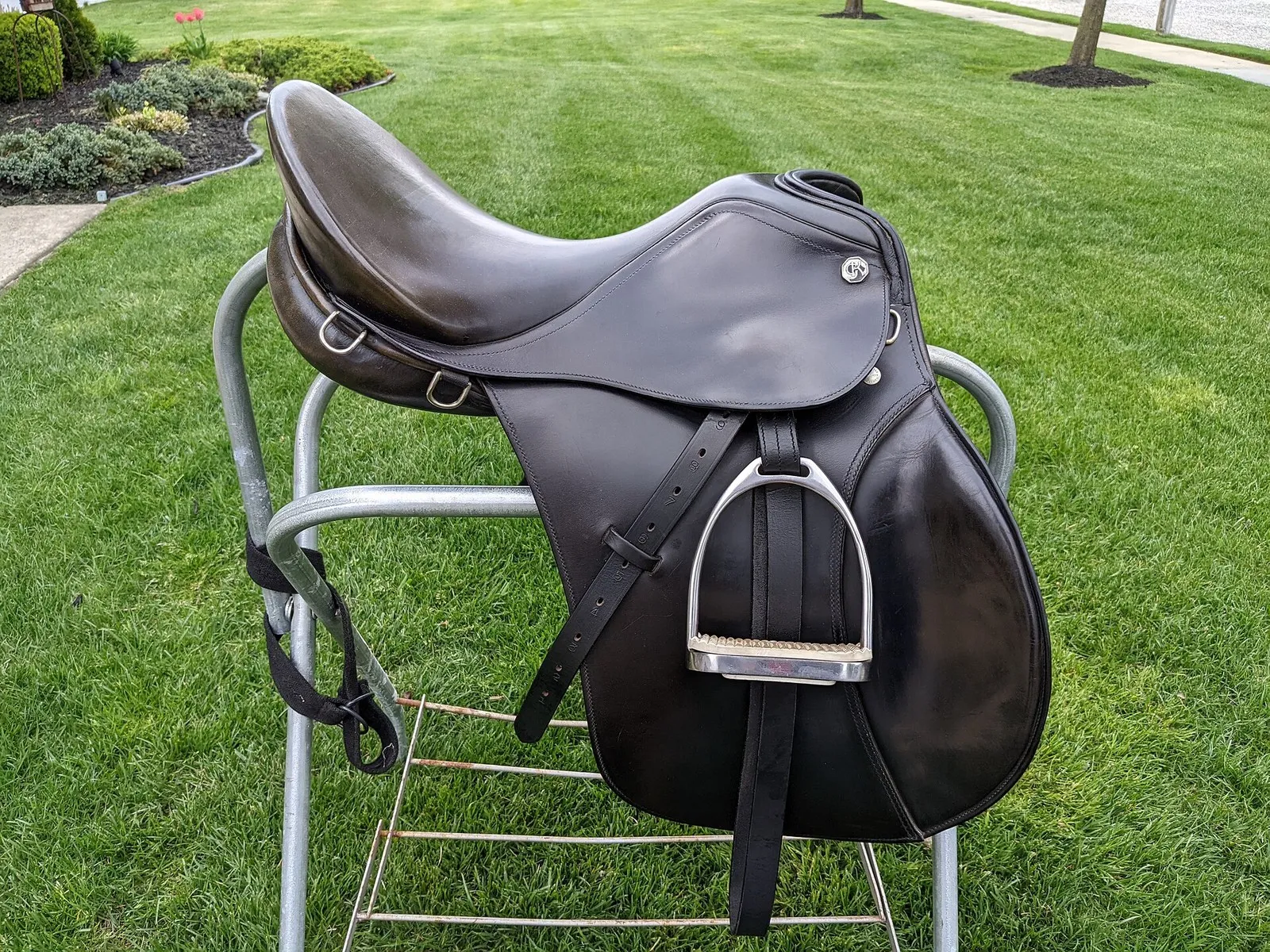
- Tree: the frame inside, usually laminated wood strengthened with steel, or a synthetic. In a spring tree, strips of spring steel run from front to back so the frame gives a little under the rider.
- Seat, pommel and cantle: the seat is the lowest point, the pommel the raised front and the cantle the raised back. The twist, or waist, is the narrow part just in front of the seat; its width makes a big difference to the rider’s comfort.
- Panels: two cushions under the seat, stuffed with wool flock, foam or air, that rest on the horse either side of the gullet, the channel that keeps the saddle off the spine. A saddler can add or remove wool flocking to fine-tune the fit.
- Flaps: the large saddle flap lies under the rider’s leg; a smaller sweat flap beneath it sits between the girth buckles and the horse’s side. Knee rolls or blocks are padding that steadies the leg.
- Billets: usually three straps under the flap, to which the girth buckles.
- Stirrup bars: metal hooks on the tree that hold the stirrup leathers. Each has a small safety catch at the end. Ride with it down, or open, so that if you fall with a foot caught in the stirrup, the leather can slide off the bar instead of dragging you.
- D-rings: small rings at the front for a breastplate or a strap to hold.
Types of English saddle
| Type | What it is for |
|---|---|
| General purpose (all-purpose) | A compromise for flatwork, small jumps and hacking (riding out for pleasure); a common first saddle |
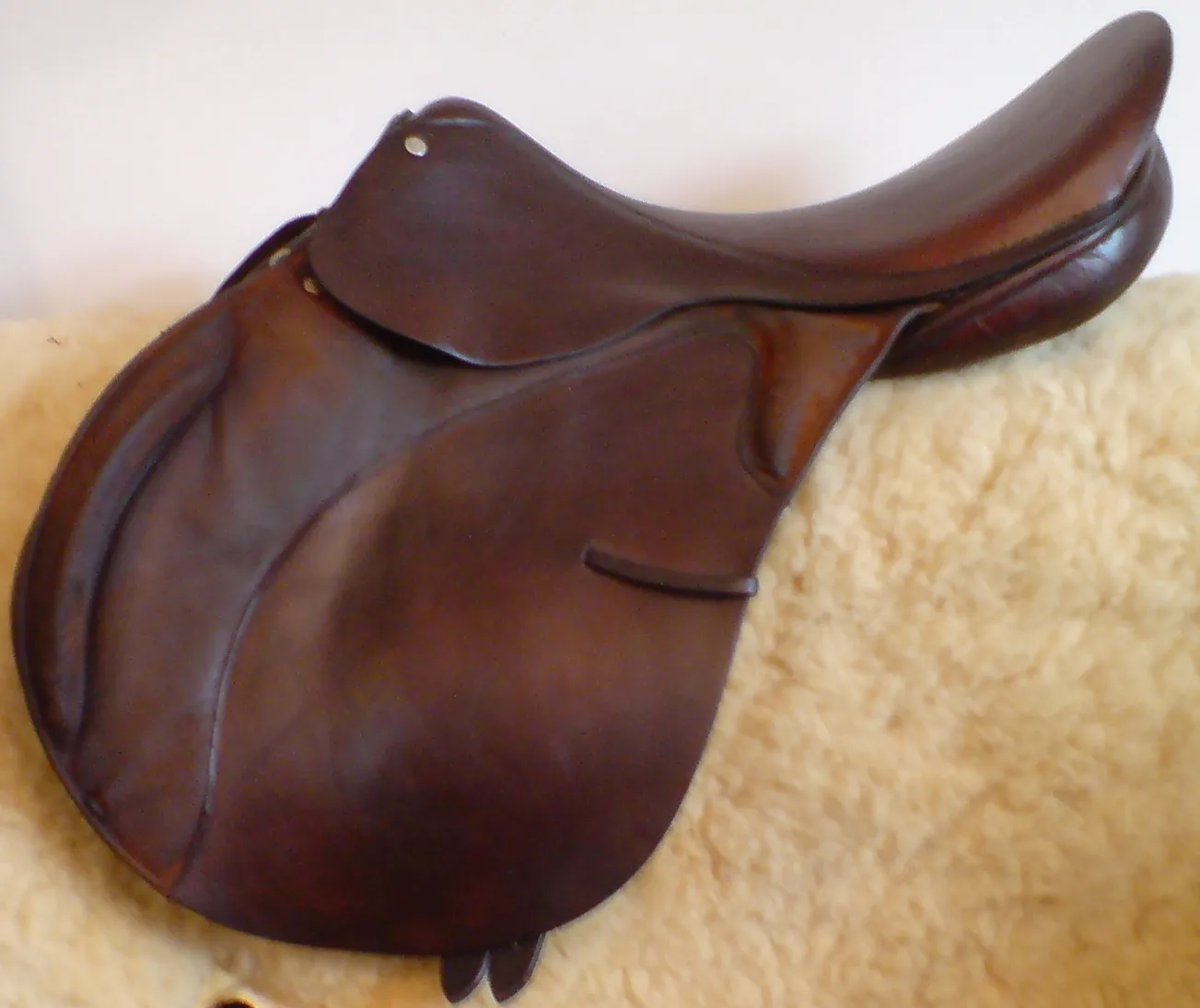
| Close contact (jumping) | Flatter seat and flaps cut well forward, to suit the shorter stirrups used over fences |
| Dressage | Deep seat, long straight flaps and long billets, so the rider’s leg can hang long and close to the horse |
| Saddle seat (cutback) | A long, flat seat with the pommel cut back; ridden with very long stirrups on high-stepping breeds in North America, such as the American Saddlebred and Morgan |
| Showing | A straight-cut flap and little padding, so the judge can see the line of the horse’s shoulder |
| Racing | Tiny and extremely light, for jockeys riding with very short stirrups |
| Polo | Flat seat and little padding at the knee, leaving the rider free to lean and swing the mallet |
| Endurance | A wider bearing surface, a padded seat and plenty of rings for carrying gear over long distances |
Fitting horse and rider
For the horse, the width of the tree matters most. A tree that is too narrow pinches at the withers, the bony ridge at the base of the neck; one that is too wide sinks down onto them. With you in the saddle, there should be two or three fingers of room between the withers and the pommel, and the gullet should be clear of the spine from front to back. The panels should lie evenly along the back without rocking or bridging (touching only at the front and back). The saddle should sit just behind the shoulder blade and end before the last rib. A saddle that presses in the wrong places can leave dry patches in the sweat, white hairs, sore backs and wasted muscle behind the withers.
For the rider, seat size is measured from the nailhead, the small stud beside the pommel, to the middle of the cantle. Standard adult sizes run from 16½ to 18 inches. The length and angle of the flap matter as much as the seat: your knee should rest on the saddle, not slip past the front of the flap. Have a qualified saddle fitter check the saddle on your horse at least twice a year, and sooner if the horse changes shape. See also our guide to fitting a saddle and the English tack glossary.
Safety and care
Before every ride, check the stitching on the billets and stirrup leathers, and that the stirrup bar catches are down. After riding, wipe off sweat, and clean and condition the leather regularly so it stays supple. Wool panels pack down and go lumpy with time, so ask a saddler to restuff them when they no longer feel even. Store the saddle on a rack in a dry place. See how to clean tack and caring for saddles.
Worth knowing
The English saddle grew out of the hunting field. As fox hunting grew in England after the Civil War of the 1640s, riders wanted a low, flat saddle that let them gallop and jump hedges, rather than the high-fronted saddles of the riding schools. In the early 1900s the Italian cavalry instructor Federico Caprilli taught riders to shorten their stirrups and lean forward over fences. Saddle makers answered with forward-cut flaps, knee rolls and recessed stirrup bars: the modern jumping saddle.
Related tack
An English saddle needs a saddle pad, a girth and stirrups; for how all saddles work, see saddles.
Top image from fallingdominos under the CC BY 2.0 license

Image from Fvanhoof under the CC BY-SA 4.0 license

Image from ThatPeskyCommoner under the CC BY 3.0 license
