Saddle Pads
A saddle pad is the layer of cloth, felt, fleece or foam that goes between the saddle and the horse's back. It soaks up sweat, softens the pressure of the saddle, and protects both the horse's skin and the underside of the saddle. In Britain a shaped pad is called a numnah and a square one a saddlecloth; western riders also say saddle blanket.
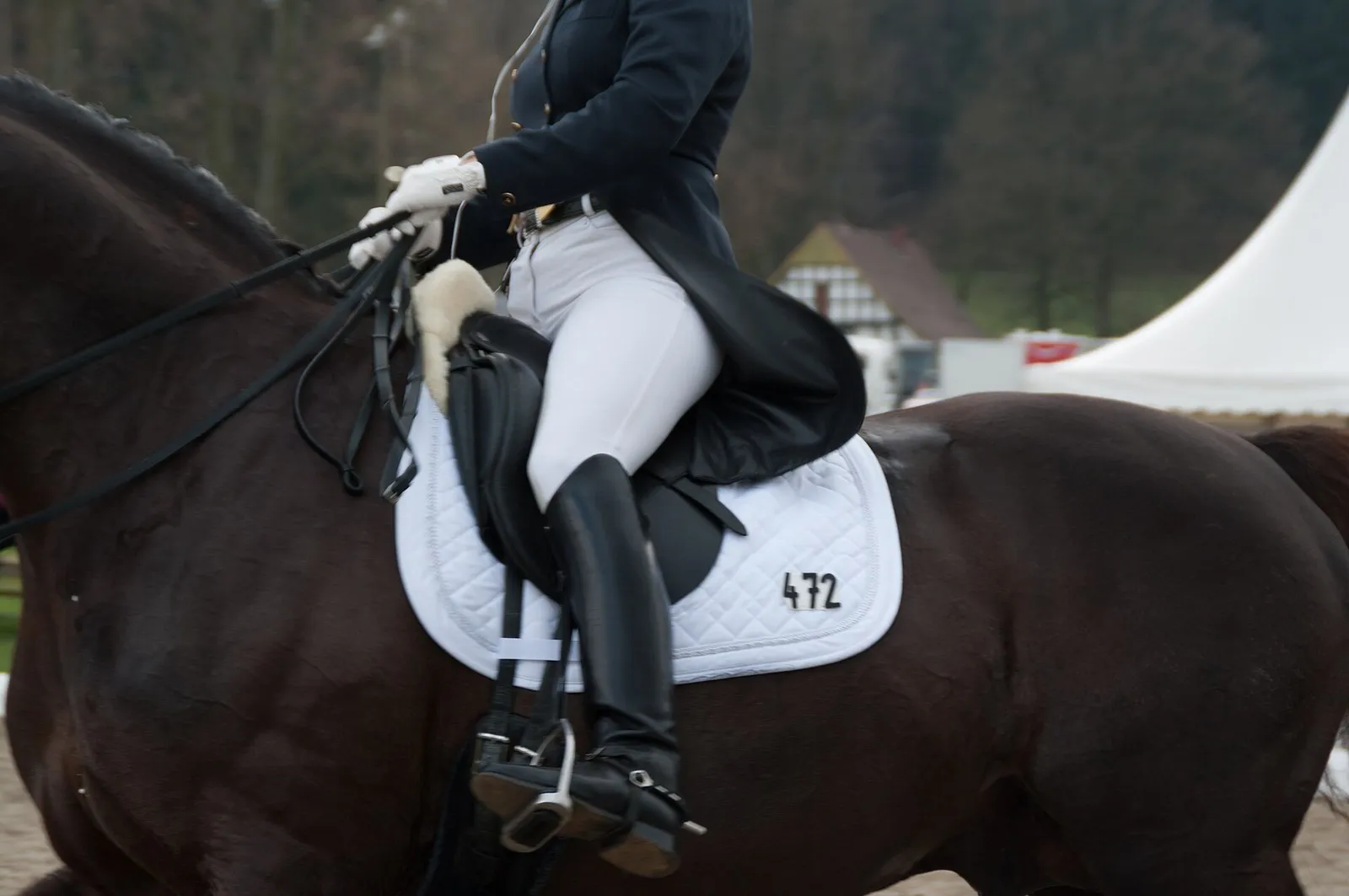
What a pad can and cannot do
A good pad keeps the saddle clean, wicks sweat away from the skin, and takes the edge off small bumps and jolts. What it cannot do is turn a badly fitting saddle into a good one. When researchers put pressure mats under a saddle that was too wide and tried several different pads, each pad helped some horses and not others; their advice was to choose for the individual horse. And a thick pad under a saddle that is already too narrow only squeezes the horse harder. If you find yourself adding layers to make a saddle comfortable, ask a qualified saddle fitter to look at the saddle instead.
Types of saddle pad
| Type | What it is for |
|---|---|
| Square pad (saddlecloth) | A quilted cotton or synthetic rectangle for everyday English riding; dressage squares are longer and deeper to suit the long flaps |
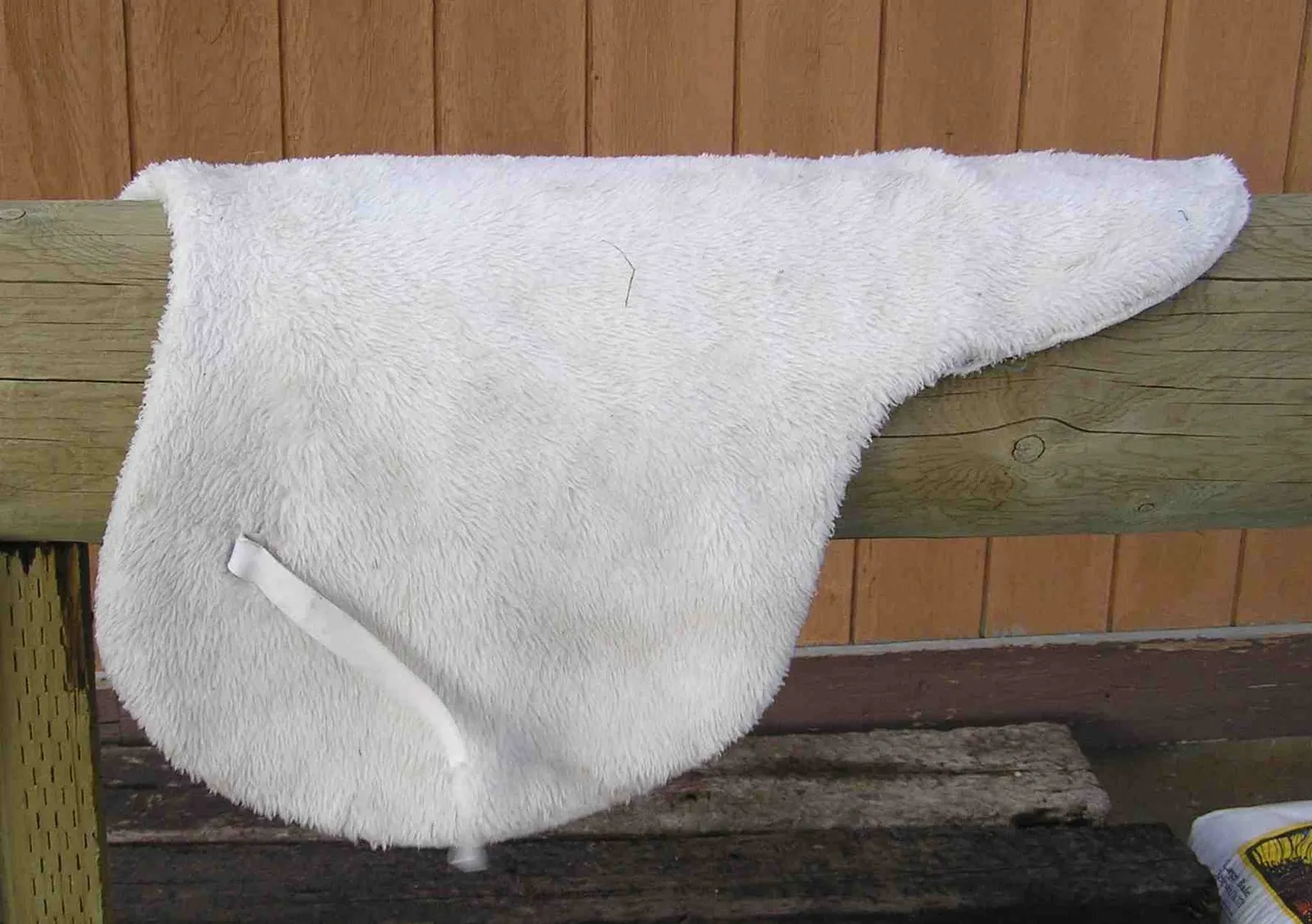
| Fitted pad (numnah) | Cut to the outline of the saddle, often in fleece or sheepskin |
| Half pad | A small pad under the seat area only, for extra cushioning or, with thin removable inserts called shims, to adjust the fit for a while as a horse gains or loses muscle; best chosen with a saddle fitter |
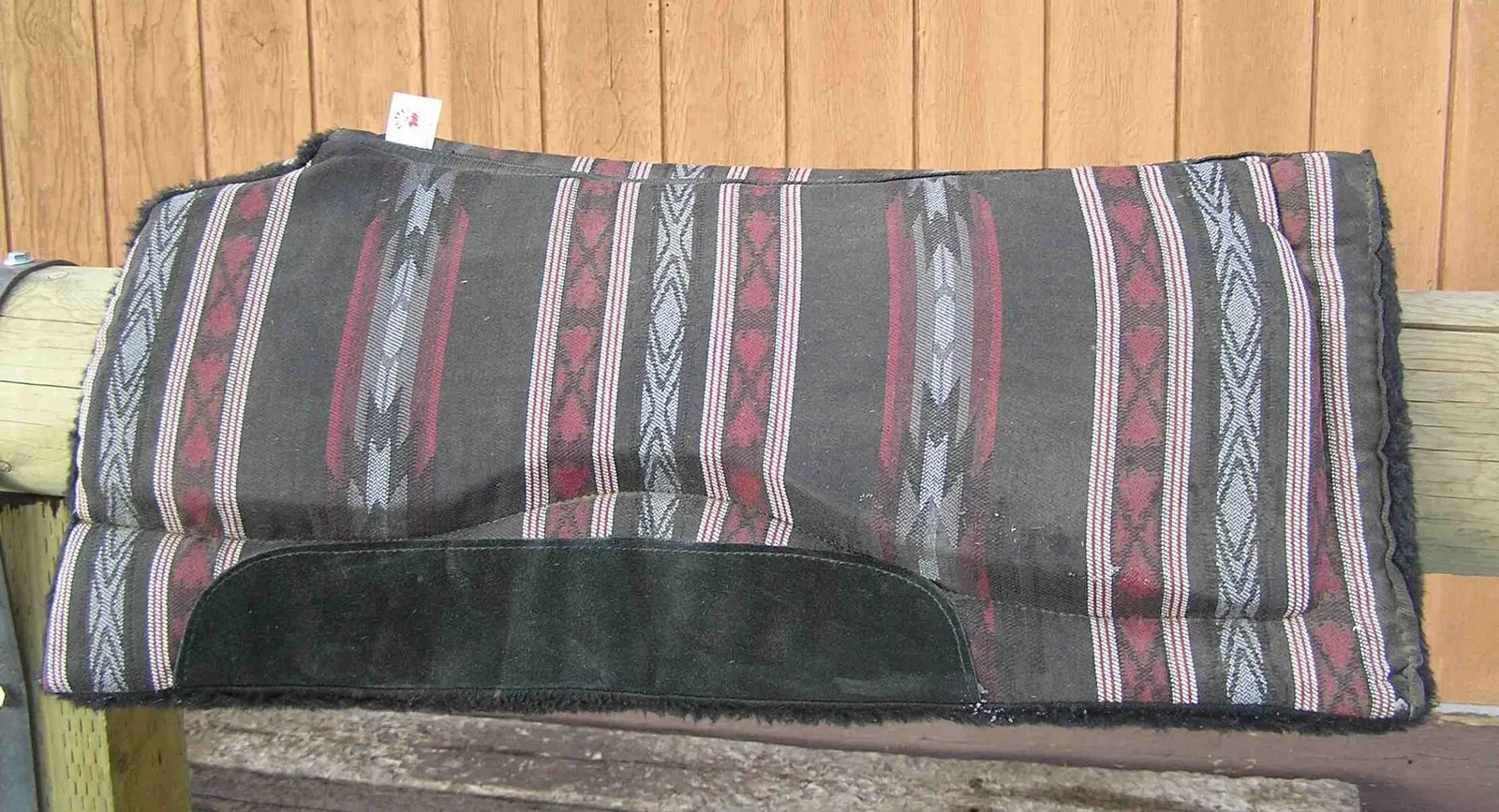
| Western pad | A thick pad of felt, wool, fleece or foam, square or shaped, often with leather patches where the cinch and fenders rub |
| Saddle blanket | A woven wool or cotton blanket, used on its own or over a pad; the traditional western choice |
| Show and racing cloths | Thin cloths worn for looks or to carry a number |
Materials
- Wool felt and woven wool wick sweat well and, over time, mold to the shape of the horse and saddle they are used with.
- Sheepskin is soft and breathable; synthetic fleece looks similar, costs less and is easier to wash.
- Foam and gel add cushioning, but some trap heat, and a gel pad can concentrate pressure rather than spread it. In a 2021 study of half pads under correctly fitted dressage saddles, a gel pad raised the pressure at the withers, while wool and foam pads lowered the pressure under the rider’s seat.
- Quilted cotton is light and easy to wash, but adds little cushioning.
More padding is not always better. A western saddle usually needs no more than about 5/8 to 1 inch of padding in total, though horses that rope or jump may need a little more.
Putting a pad on
- Groom the back first; dirt trapped under a pad rubs.
- Place the pad well forward over the withers (the ridge at the base of the neck), then slide it back into place so the hair lies flat underneath.
- Check that it hangs evenly on both sides, lies flat with no wrinkles, and shows a few inches in front of the saddle and behind it.
- Before you do up the girth, lift the pad up into the gullet of the saddle with your fingers, so it cannot pull tight across the withers and spine.
After a ride, look at the sweat marks: an even damp patch is a good sign; dry spots inside it point to pressure. Changing to a much thicker or thinner pad changes how the saddle fits, so have the fit checked again.
Keeping pads clean
A dirty pad can rub the skin raw. Brush off hair and dried sweat after every ride, and let the pad dry completely before you use it again. Wash it as its label and material need: cotton and synthetic pads can usually go in the washing machine, while wool, felt and sheepskin need cool water, a mild soap and slow drying out of hot sun. If you can, keep one pad per horse, or wash pads between horses, so skin infections such as ringworm are not passed around the barn.
A little history
The very first saddle was probably just a blanket held on with a strap. Saddle blankets have been made with great skill ever since: Navajo (Diné) weavers made single and double saddle blankets, the double woven twice as long and folded in half before use. See our gallery of saddle blankets for more.
Related tack
A pad works with the saddle above it, whether English or western, and the girth or cinch that holds them both down. It is not the same thing as the blankets a horse wears to keep warm.
Top image from Olaf Kosinsky / Wikipedia under the CC BY-SA 3.0 license

Image from Montanabw, public domain

Image from Montanabw, public domain
