Bitless Bridles
A bitless bridle looks much like an ordinary bridle, but there is nothing in the horse's mouth. The reins act through the noseband instead, pressing on the nose, the jaw, and on some designs the cheeks and poll. Riders choose one for many reasons: a horse with mouth or dental trouble, a young horse whose teeth are changing, a horse that simply goes better without a bit, or the rider's own preference.
The main designs
| Type | What it is for |
|---|---|
| Sidepull | Reins on rings at the sides of the noseband; direct pressure, good for steering, simple to understand |
| Cross-under | Straps cross under the jaw; one rein presses on the nose, jaw, cheek and poll together |
| Wheel (LG) bridle | A spoked wheel at each side of the noseband gives a little leverage on nose and chin |
| Under-chin strap designs | Each rein connects under the chin to the opposite side; pressure on the nose and chin only |
| Rope bridle | A riding version of the rope halter, with direct pressure on the nose |
| Bosal or mechanical hackamore | The western bosal and the shanked hackamore: see hackamores |
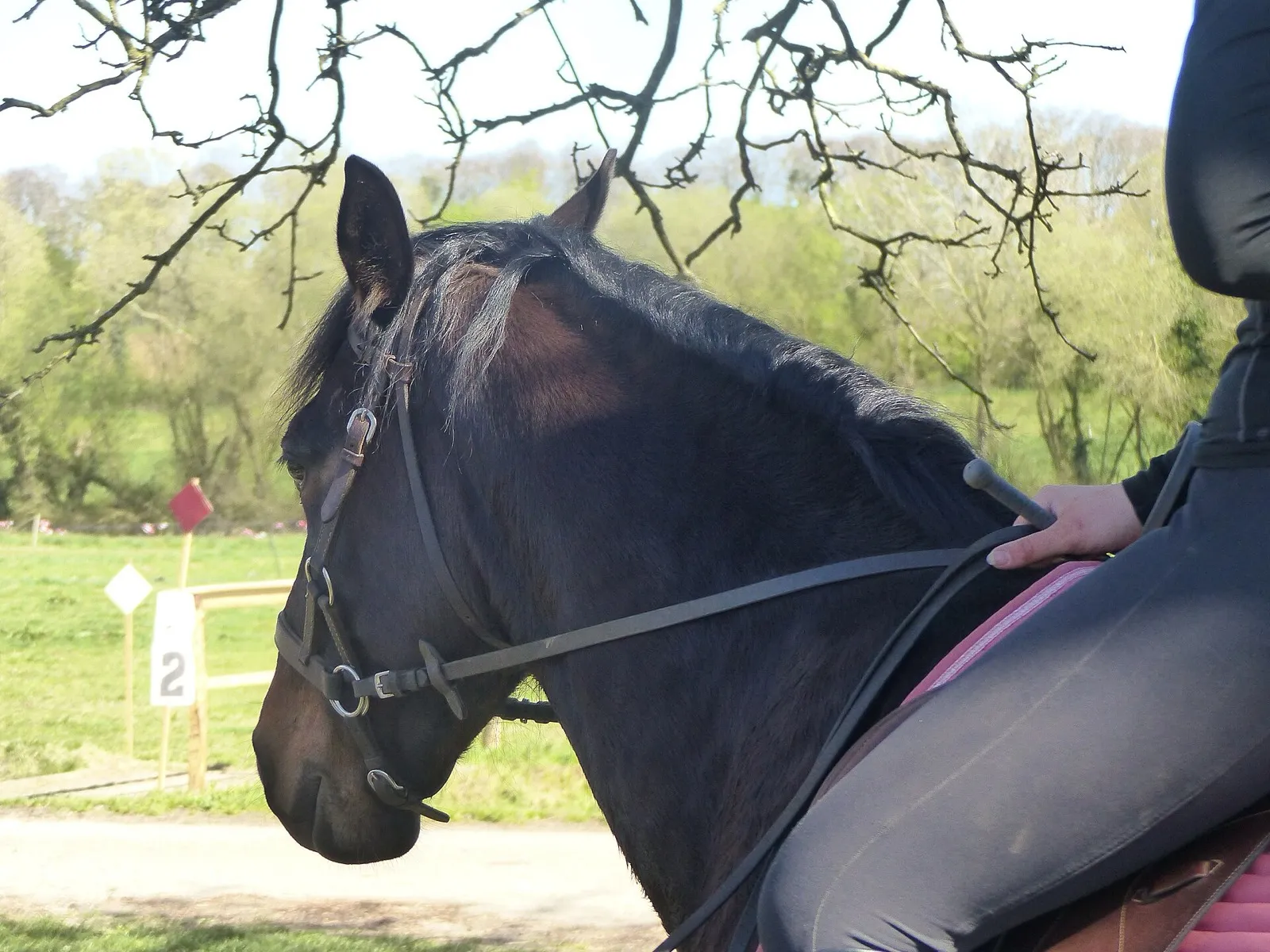
Sidepulls are the simplest. A pull on one rein draws the nose toward that side, with no leverage at all. The English cousin, the jumping cavesson, has a heavier leather noseband, often with a cable inside.
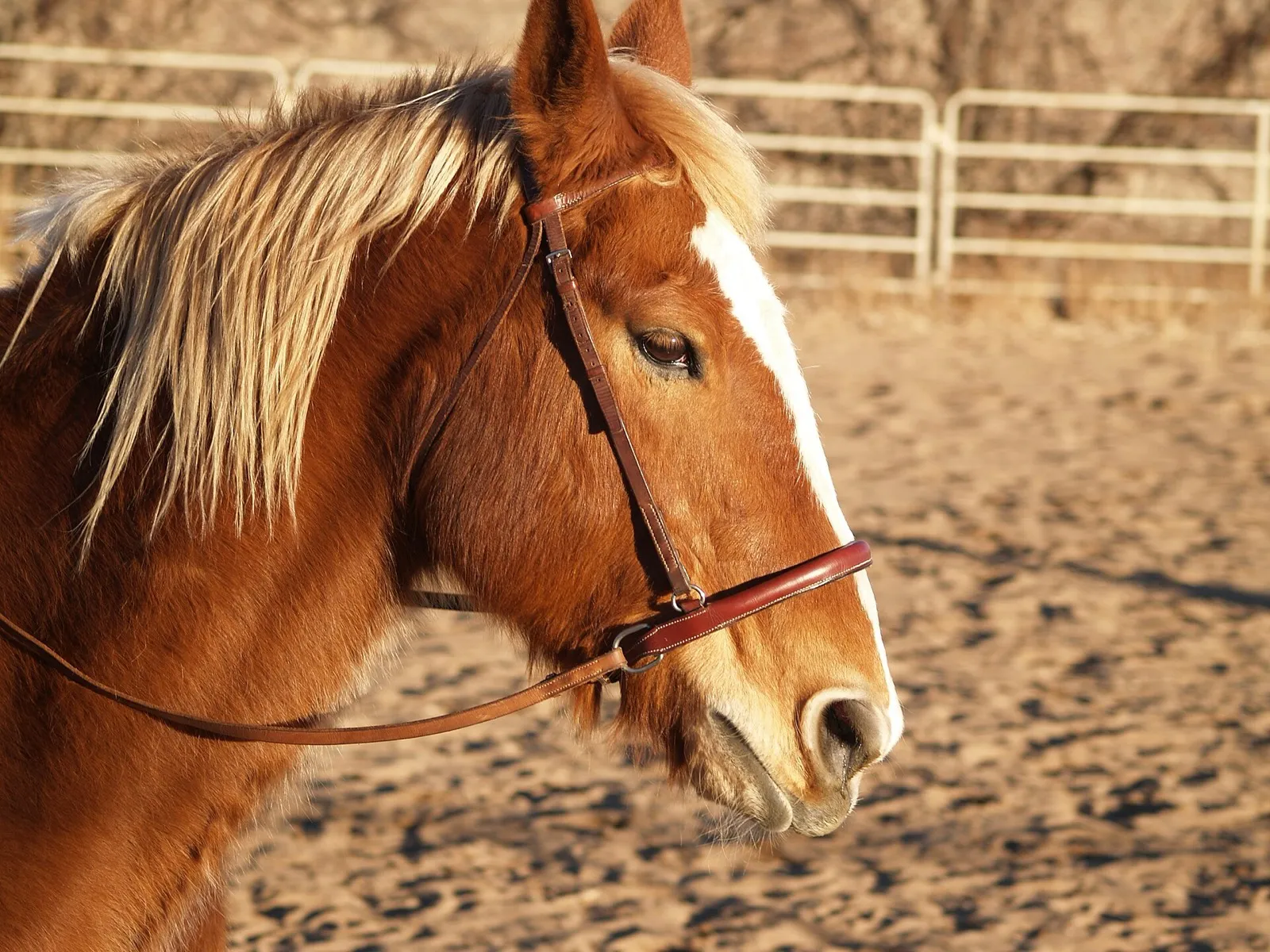
On a cross-under bridle, each rein runs through a ring at the side of the noseband, crosses under the jaw and goes up the opposite cheek to the poll. A pull on one rein tightens the whole loop, so it acts on the nose, the jaw, the far cheek and the poll at once. The design is best known through a version developed by the veterinary surgeon Robert Cook. Critics point out that the straps have to slide back through the rings before the pressure eases, so the release can be slow.
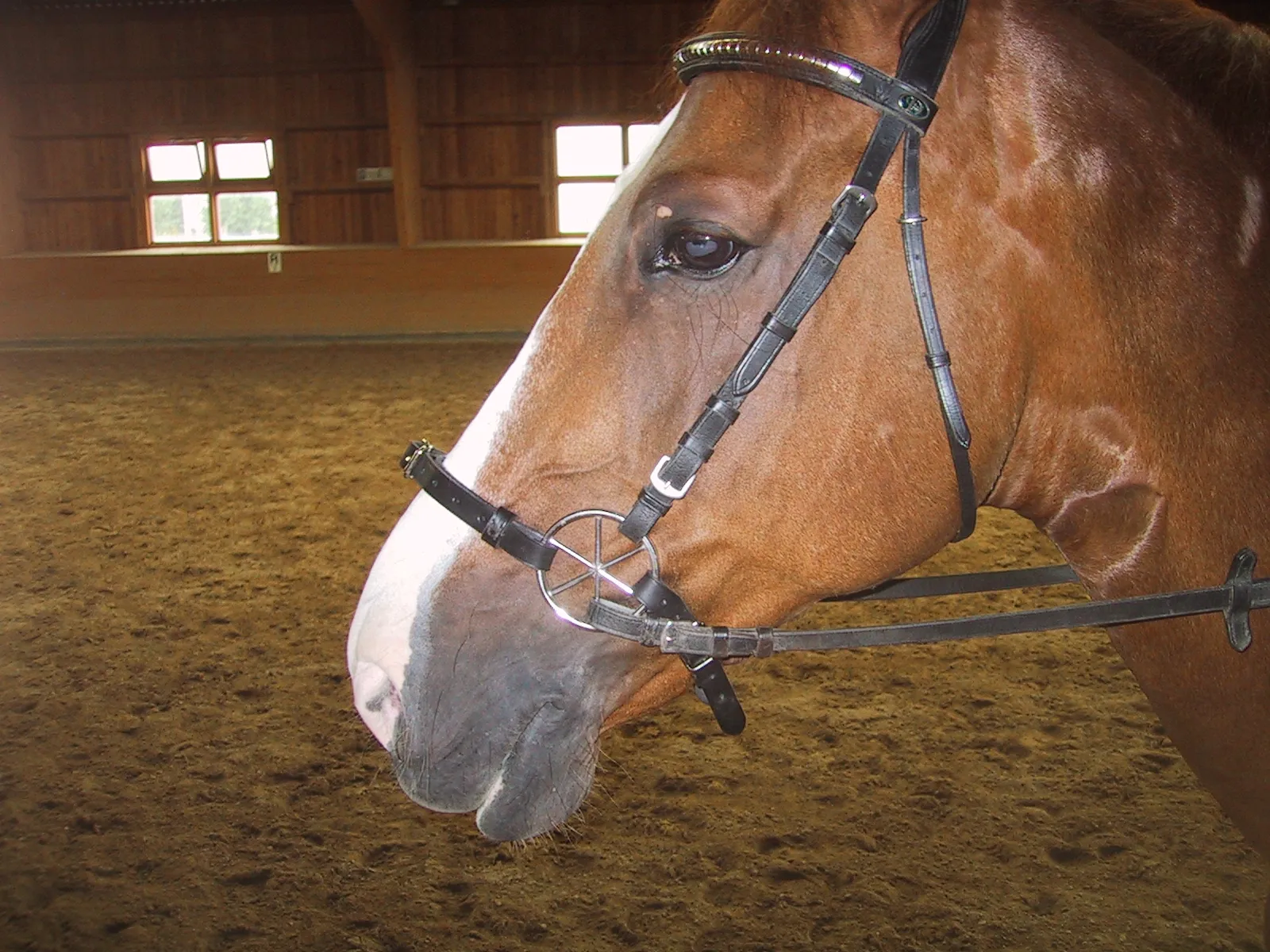
Wheel bridles, often sold as LG bridles, have a spoked metal wheel on each side of the noseband, with the rein fastened to the rim. As the rein turns the wheel, it adds a little leverage on the nose and chin.
How it should fit
A bitless bridle does all its work through the noseband, so the noseband has to sit right. It belongs on the bony part of the nose, well above the soft cartilage around the nostrils, where pressure can interfere with breathing. It should be loose enough for two adult fingers to slide underneath at the front of the nose, the same check used for any noseband, and it must not pinch the skin against the cheek teeth or rub under the chin. Check for marks after riding.
What the research says
Good evidence is still thin, and the studies so far are small:
- In a 2009 study of four two-year-olds in early training, the two started in a bitted bridle had higher heart rates during long-reining, and chewed and opened their mouths more, than the two in a bitless bridle.
- A 2019 paper collected riders’ reports on 66 horses switched from a bit to a bitless bridle and found far fewer signs of pain afterwards. The reports were the riders’ own before-and-after recollections, with no independent observers, and the lead author is Robert Cook, the developer of the cross-under bridle above.
- A 2021 study measured pressure on five horses ridden in a snaffle with a cavesson, a sidepull and a cross-under. Pressure under the noseband was higher with both bitless bridles than with the snaffle, significantly so with the sidepull, and the authors urged care in how bitless bridles are designed and used.
Taking the bit out moves the pressure from the mouth to the nose, jaw and poll. A bitless bridle can suit a horse very well, but it is not automatically kinder, and a horse that pulls hard in a bit may pull just as hard without one.
What the federations say
International dressage under the FEI still requires a bit: a snaffle or a double bridle. FEI show jumping rules, on the other hand, allow hackamores and let the reins fasten directly to the bridle. Some national federations have opened dressage to bitless riders at lower levels. Since January 2025 Denmark has allowed a bitless bridle or soft hackamore at its E, D and C levels, and since April 2025 the Netherlands has allowed bitless bridles up to its ZZ-Zwaar level. FEIF, which governs Icelandic horse sport, permits bitless bridles in sport and breeding shows for all ages. Hackamores and bitless bridles are also a familiar sight in endurance and trail riding. Rules change quickly here, so always check the current rulebook before you enter.
Safety and care
When you first try a horse bitless, start somewhere enclosed, and ideally with an instructor who knows the design, until you are sure of steering and stopping. Clean and condition the leather like any bridle (see how to clean tack), check rings and buckles for wear, and keep sliding straps on a cross-under clean so they release freely.
Related tack
Bitless bridles share their roots with hackamores and their headstalls with ordinary bridles. For how a bit works, and why it isn’t the only answer, see bits; for the straps that carry your signals, see reins.
Top image from Tsaag Valren under the CC BY-SA 4.0 license

Image from lostinfog under the CC BY-SA 2.0 license

Image from Immerwiederfreitags under the CC BY-SA 2.0 DE license
