Bits
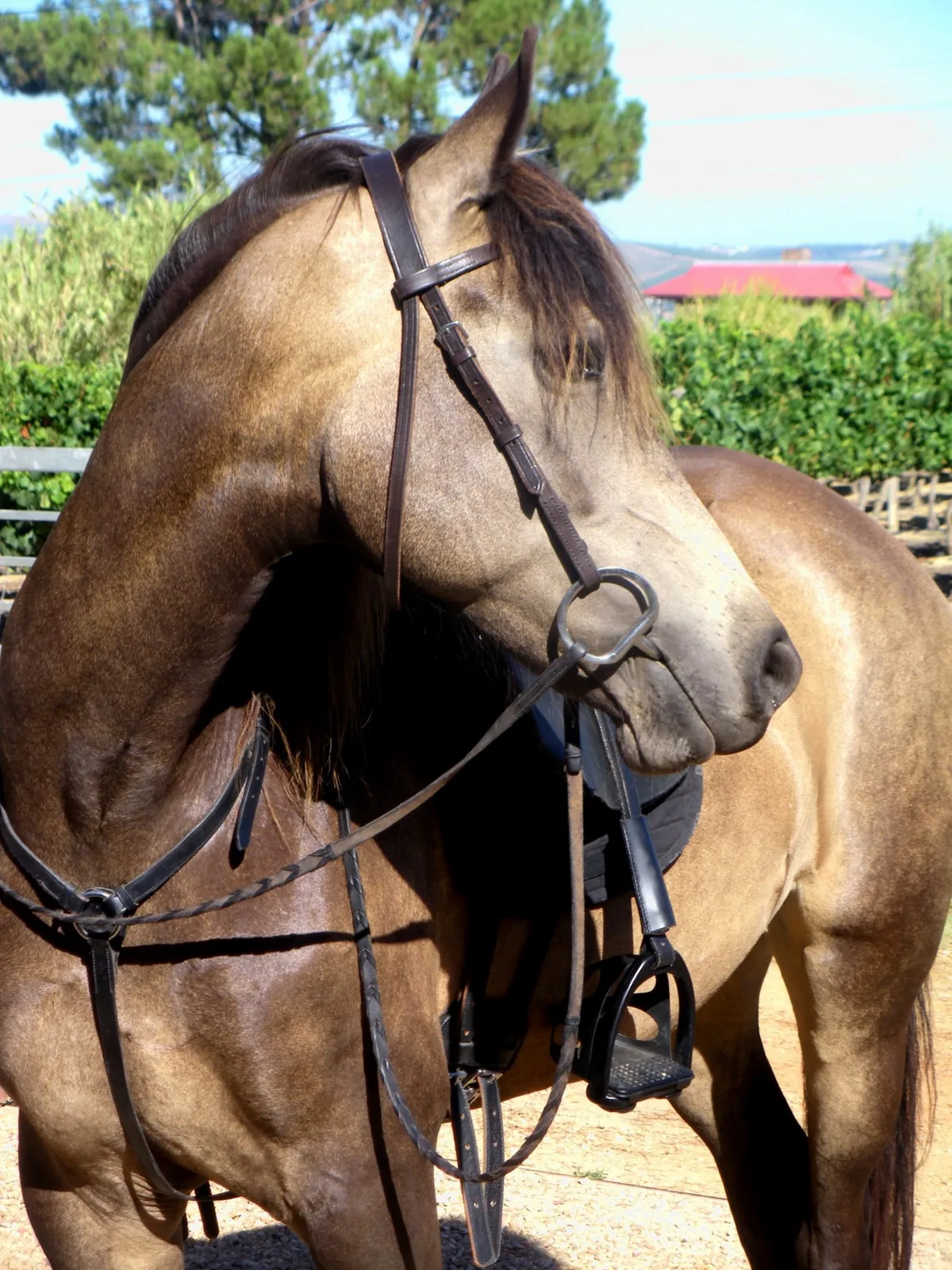
A bit is the part of the bridle that goes in the horse's mouth. It lies across the bars, the toothless gap between the front teeth and the cheek teeth, and turns a feel on the reins into pressure on the tongue, the bars and the corners of the lips. Some bits also act on the chin groove and the poll. How strongly depends on the bit's design and on the hands holding the reins.
Two ways a bit works
Direct pressure. On a snaffle the reins fasten to rings level with the mouthpiece, so there is no leverage: a pound of pull on the rein is about a pound of pressure in the mouth. That makes the snaffle the usual first bit for a young horse.
Leverage. A curb bit has shanks, metal arms below the mouthpiece, with the reins on their lower ends and a curb chain or strap in the chin groove. When the rider takes up the rein, the shank swings back, the chain tightens and the headstall draws down on the poll, and the force is multiplied. The longer the shank, the more leverage. Most guides advise setting the curb chain so it comes into contact when the shank has swung back about 45 degrees.
It is where the reins attach, not the mouthpiece, that makes a bit a snaffle or a curb. A jointed mouthpiece on shanks, often sold as a “cowboy snaffle”, is really a curb; a solid bar on plain rings is still a snaffle.
The main types
| Type | What it is for |
|---|---|
| Snaffle | Direct pressure, no leverage: young horses, everyday riding, jumping, most dressage |
| Curb | Leverage through shanks and a curb chain: trained western horses ridden one-handed, and the Weymouth in a double bridle |
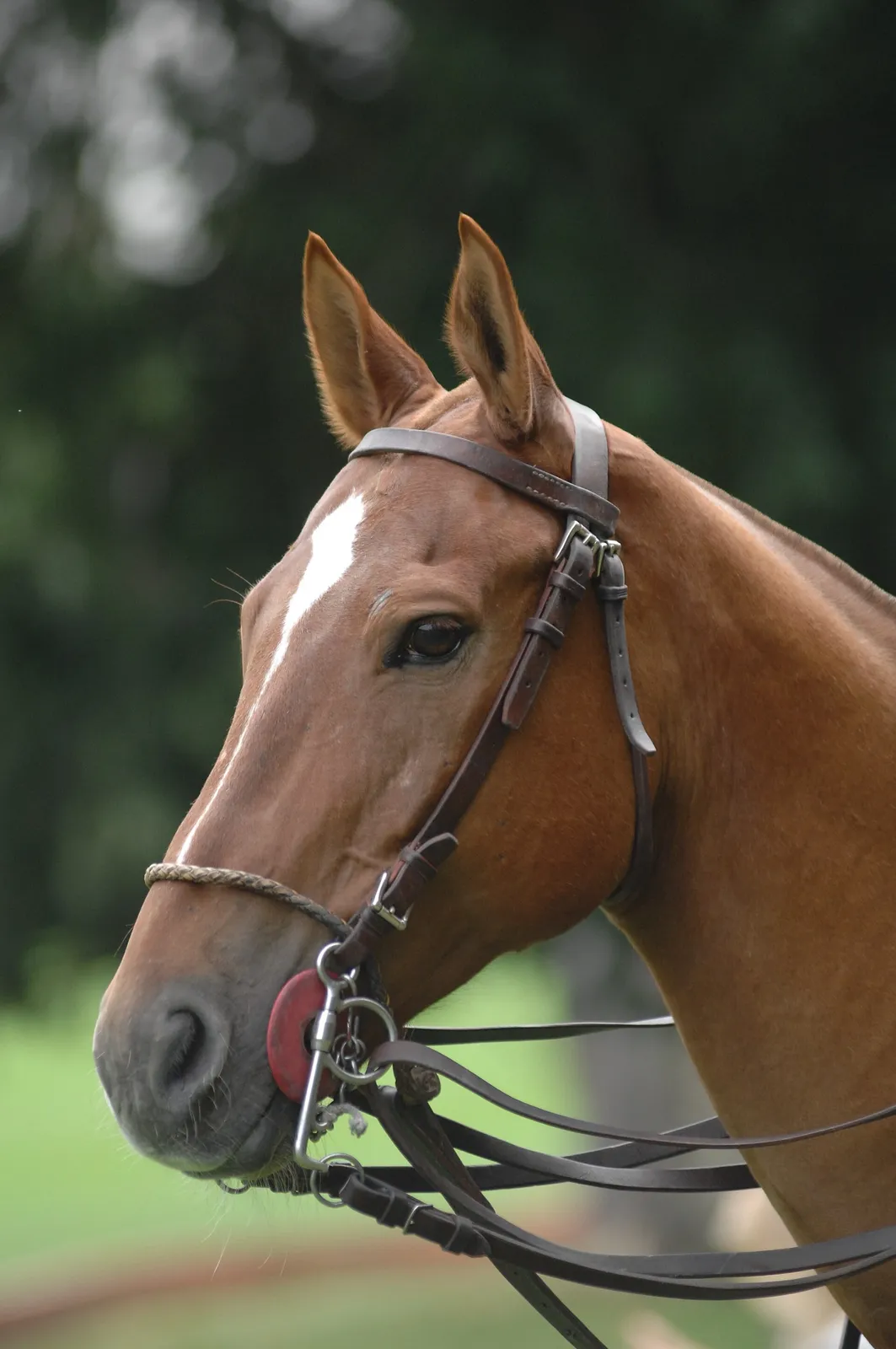
| Pelham | One mouthpiece with snaffle rings and curb rings, ridden with two pairs of reins (or one, on a leather converter): showing and polo |
| Kimberwick (Kimblewick) | A ring-cheeked bit with a curb chain and only slight leverage |
| Gag | Cheekpieces run through holes in the rings so the bit slides up in the mouth, acting on the lips and poll: strong horses in jumping, eventing and polo; not allowed in dressage |
| Bradoon | A small-ringed snaffle worn with a curb in a double bridle |
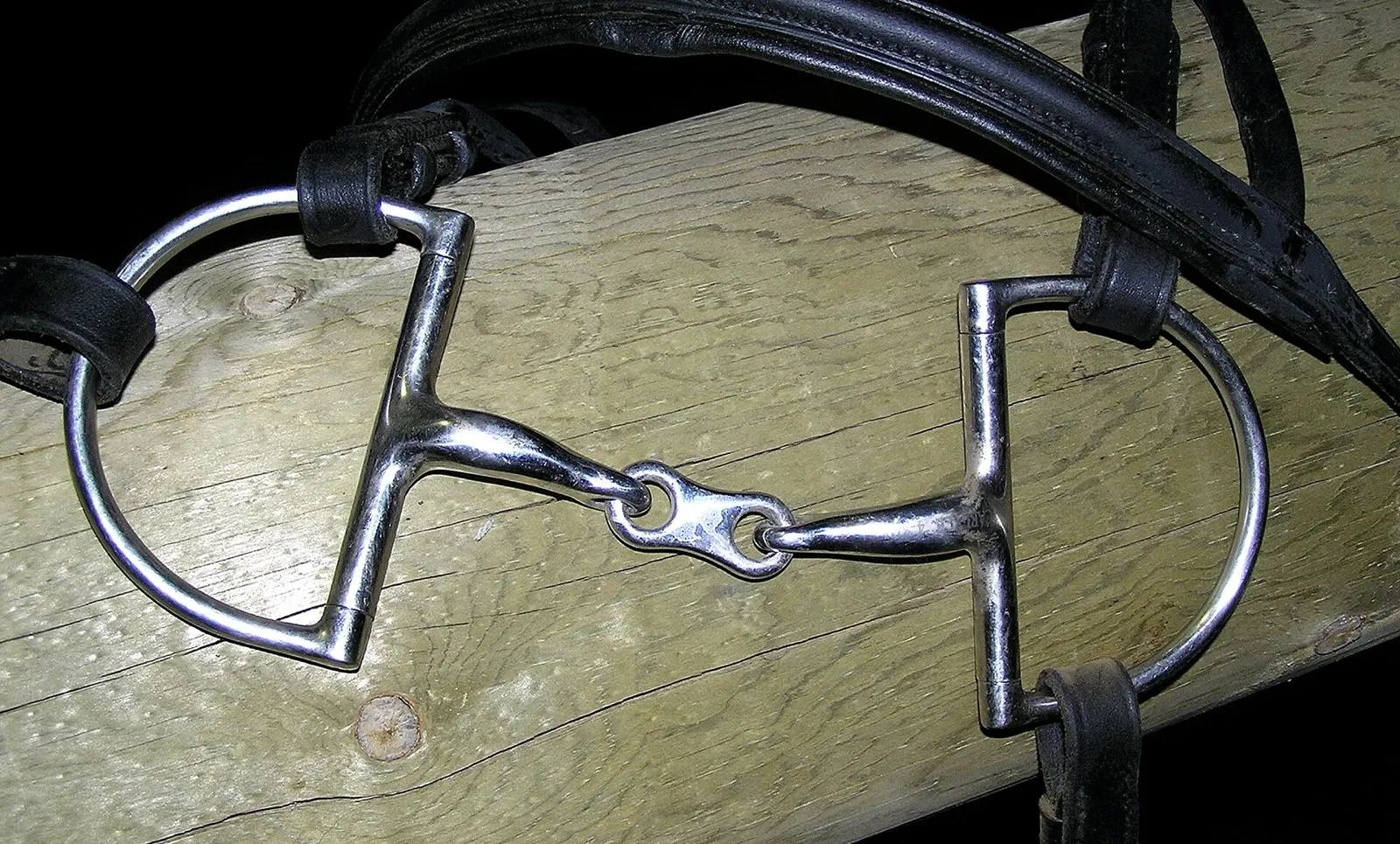
Rings. A loose ring slides through the mouthpiece; a rubber bit guard stops it pinching the lips. An eggbutt is fixed and smooth, so it can’t pinch. A D-ring and a full cheek also sit still, and their straight sides press on the face to help with steering; the full cheek’s long bars stop the bit sliding through the mouth.
Mouthpieces. A single-jointed snaffle folds when both reins are pulled, squeezing the lower jaw in a “nutcracker” action and pushing the joint up toward the roof of the mouth. A double-jointed bit, such as a French link with its small flat center link, reduces that folding. A mullen mouth is a gently curved solid bar and doesn’t fold at all. A port, a raised arch in the middle of a curb, leaves room for the tongue; a high one can also reach the roof of the mouth.
What bits are made of
Stainless steel is the standard: it doesn’t rust and is neutral in the mouth. By the 1940s it had largely replaced nickel. Sweet iron, which rusts on purpose, and copper or copper alloys are said to make a horse salivate and accept the bit more readily, though that rests mostly on riders’ experience rather than measured studies. Rubber and synthetic mouthpieces are softer and lighter, but horses can chew through them, so check them often.
Size and fit
Bits are measured across the mouthpiece between the rings, in inches or millimeters. A snaffle should be slightly wider than the mouth, about ⅛ to ¼ inch (3 to 6 mm) on each side, so the rings don’t pinch; much wider and it slides from side to side.
Thicker is not automatically kinder, because many horses have little room in their mouths. A Finnish study of 554 horses and ponies, measured during routine dental care, found mouths from 95 to 165 mm wide, and room on average for a mouthpiece only about 14 mm thick between the tongue and the palate. About 28 percent of the owners’ bits were too thick for that space, and about a quarter were too long or too short (Anttila and colleagues, 2022). A bit that is too thick can stop a horse closing its mouth without squashing its tongue.
Have your vet or equine dentist check the teeth before a horse is first bitted and regularly after, since sharp points and wolf teeth can make any bit sore.
“Only as severe as the hands”
The old saying is half right. Any bit, even a mild snaffle, hurts in rough or unsteady hands, and jerking on the reins can bruise the bars. But good hands don’t make every bit mild. Leverage multiplies small movements as well as big ones, and a thin or twisted mouthpiece concentrates pressure on a smaller area. The design decides how much a given pull delivers; the rider decides how much pull there is.
So a stronger bit is never a shortcut through training. If a horse gapes, tosses its head, puts its tongue over the bit or resists bridling, have its mouth and teeth checked and ask a qualified instructor to look at the riding before changing bits.
Care and a little history
Rinse the bit after every ride, dry it, and check the joints, rings and rubber for wear or sharp edges. Metal bits, first made of bronze, have been in use for more than 3,000 years, and “champing at the bit” still describes the impatience of a horse chewing its bit before a race.
Related tack
A bit hangs from a bridle and is worked through the reins; a noseband often keeps it steady, and a running martingale changes the angle of the rein. For riding without one, see hackamores and bitless bridles.
Top image from JCBrand under the CC BY-SA 3.0 license

Image from Montanabw, public domain

Image from Dee.lite, public domain
