Cruppers and Breeching
A crupper is a soft loop that sits under the horse's tail, joined by a strap to the back of the saddle or harness, so the saddle cannot slide forward onto the withers. Breeching (also written britching or britchen) is a broad strap around the hindquarters that does a bigger version of the same job. In harness, it is the horse's brake.
Parts of a crupper
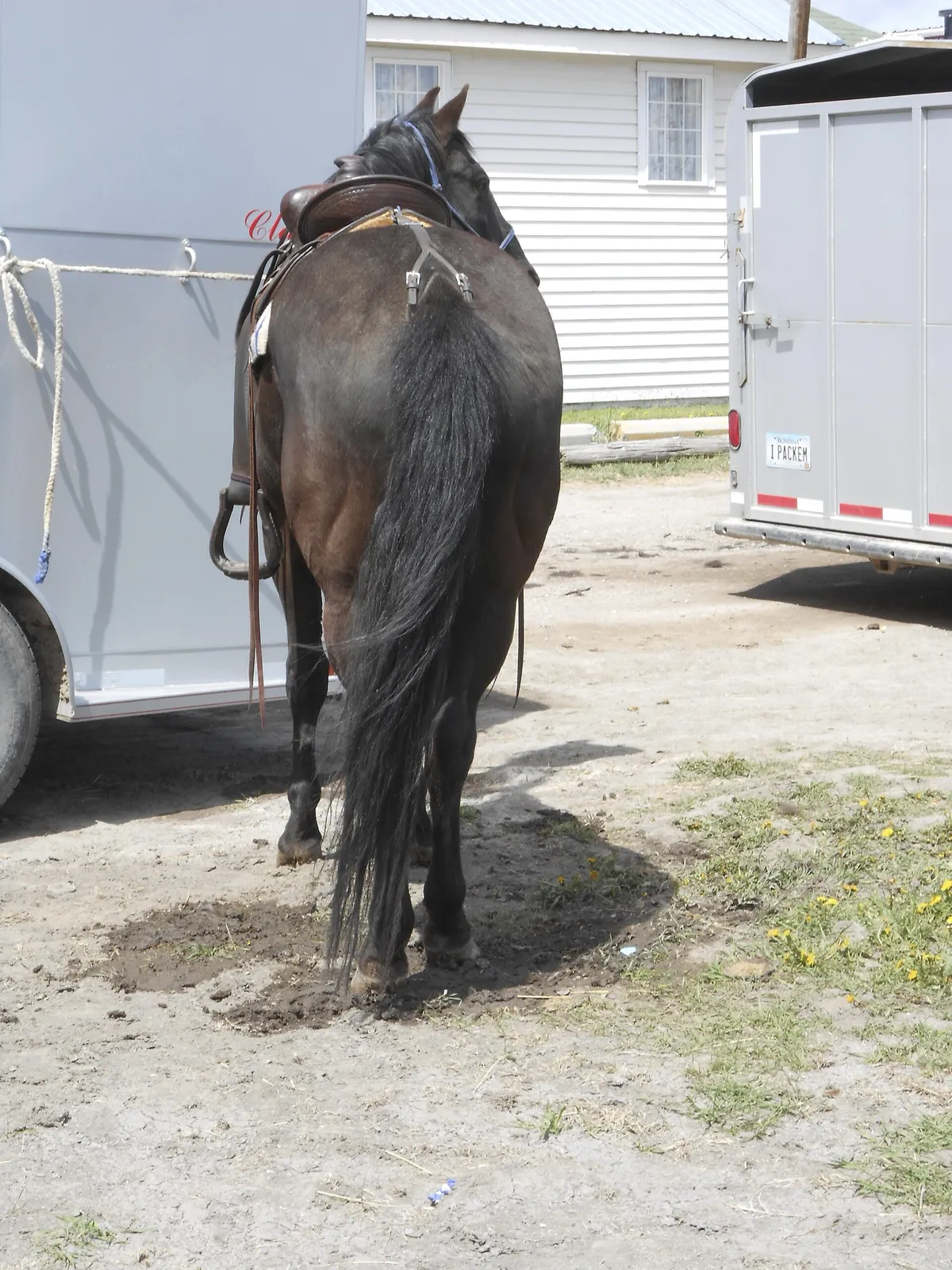
A crupper has two parts. The dock is the rounded loop that goes under the top of the tail; it is usually leather, smooth and padded, and was traditionally stuffed with linseed so it stayed soft. The crupper strap, or back strap, runs along the spine to the saddle and has a buckle for adjusting the length. On an English saddle it fastens to a ring or a metal T at the back of the cantle (the raised back of the seat). On a western saddle it fastens to a D-ring fixed to the tree, the rigid frame inside the saddle, behind the cantle. Some docks open with a buckle, so you do not have to thread the whole tail through.
Who needs one
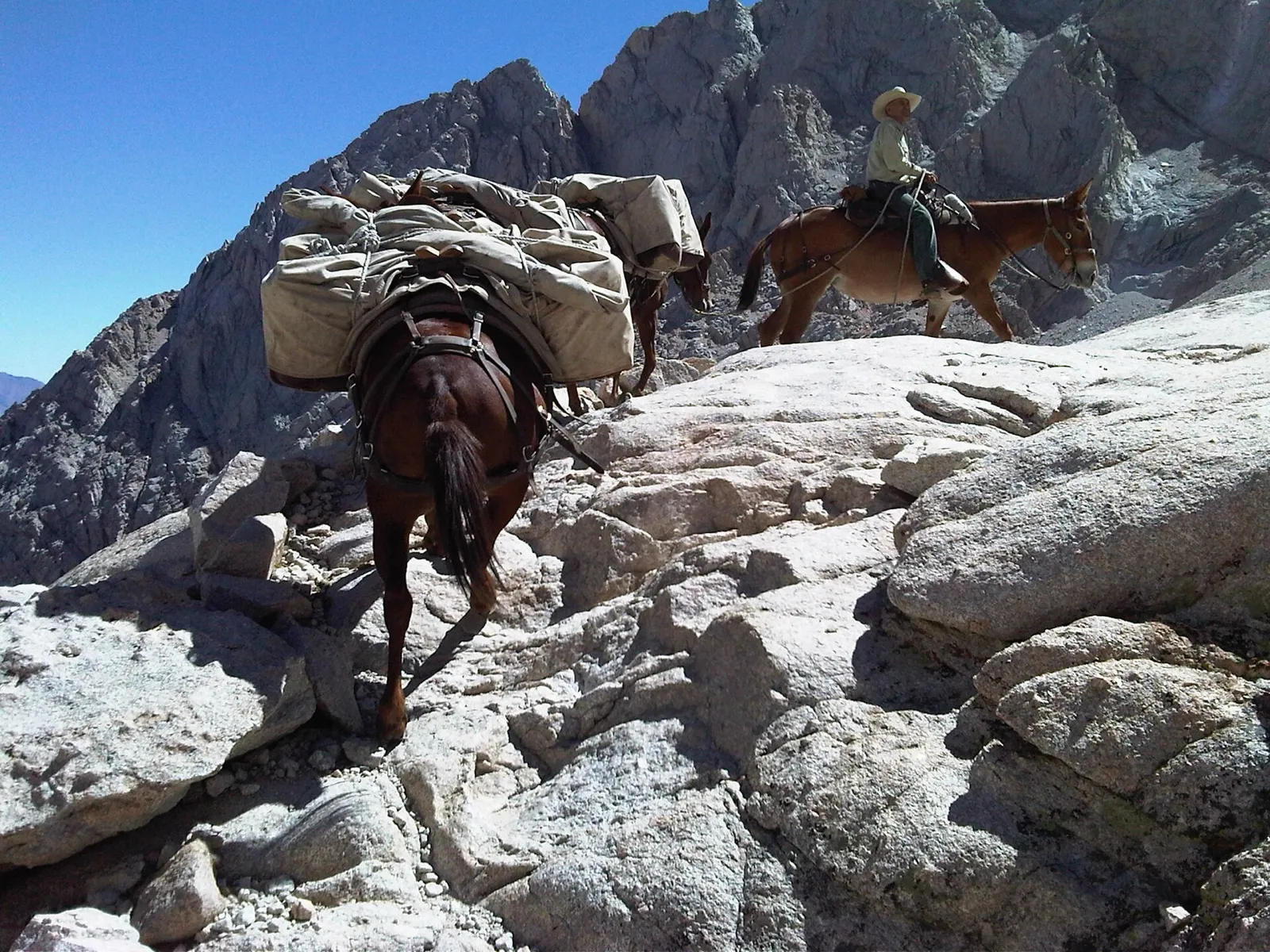
Riding saddles slide forward most on horses with low withers and round backs, on round ponies, and on mules and donkeys, whose backs are often flatter than a horse’s. The problem is worst going downhill. Trail and endurance riders in hilly country use cruppers for that reason, and mule saddles have carried them for centuries.
A crupper is not a fix for a poorly fitting saddle. A saddle that creeps forward on level ground may be the wrong shape for the horse, or the girth may sit too far forward. Ask a qualified saddle fitter before relying on a crupper; our guide on how to fit a saddle explains the basics.
Types and what they are for
| Type | What it is for |
|---|---|
| Riding crupper | Keeps a riding saddle back on low-withered horses, ponies and mules, especially downhill |
| Harness crupper | Holds the driving saddle in place and anchors the backstrap |
| Driving breeching | Lets a horse in shafts slow, stop and back the vehicle |
| Pack and mule breeching | Keeps a pack saddle or mule saddle from riding forward on steep trails |
Breeching
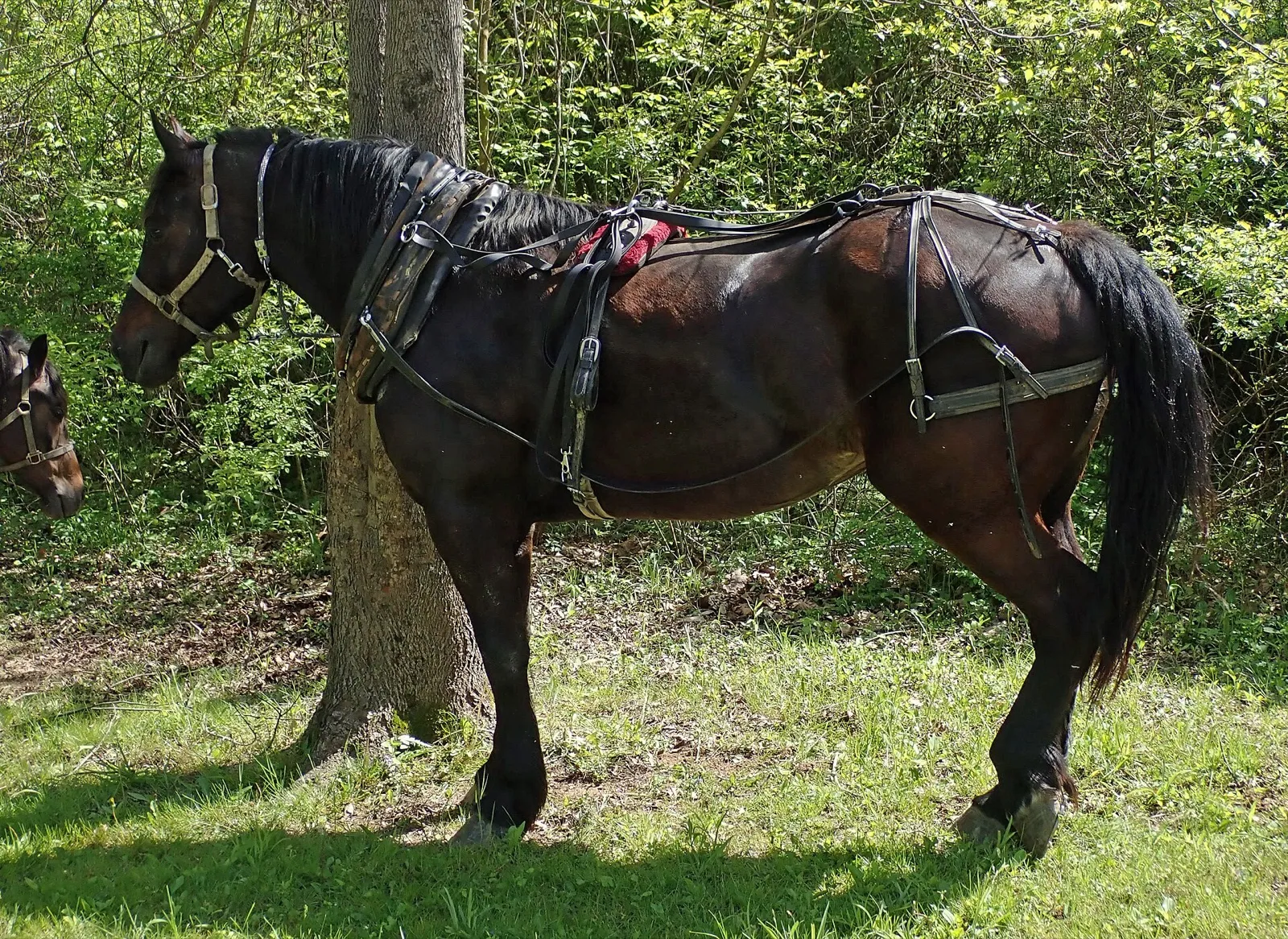
In driving, the breeching runs around the hindquarters and is buckled to the shafts. When the horse slows down, or the vehicle starts to roll downhill, the weight of the cart comes back against the breeching and the horse holds it with its quarters. Without breeching, the vehicle could run up onto the horse. A pair holds back mainly through pole straps from the collars to the end of the pole, and the front horses of a team, ahead of the pole, wear no breeching at all. Plow harness usually goes without, because a dragged plow does not roll forward. See harness for the rest of the outfit.
Under saddle, breeching is usual on pack saddles, and many mule riders put it on riding saddles too, often with a crupper built into it.
How they should fit
A crupper should be snug but not tight. It should come into play only when the saddle starts to move, never hold the tail up or press on the dock all the time. Leather stretches as it warms, so check the length again after the first few minutes of a ride. In harness, many drivers allow about a hand’s width between the horse’s back and the backstrap.
Breeching sits across the hindquarters roughly halfway between their widest and narrowest points. Too low, and it presses on the weaker part of the hind leg and gets in the way as the horse steps. Too high, and it can slip up under the tail. When the horse leans into its collar and the traces are tight, there should be about a hand’s width between the breeching and the quarters. Adjust the breeching straps so the vehicle cannot run forward far enough to reach the horse.
Safety and care
- Introduce a crupper calmly. A horse that has never felt one may clamp its tail or kick, so stand to the side, not behind, when you put it on, and let the horse walk or lunge in it before you ride.
- Check under the tail and across the quarters for rubbed hair after every ride or drive. A sore dock is easy to miss and very uncomfortable.
- Keep the dock clean and supple. Dried sweat and grit on it cause rubs, so wipe it after use and condition it with the rest of your tack, following our tack cleaning guide.
- Watch the stitching where the dock joins the strap. If it breaks, the saddle is free to slide.
Worth knowing
Cruppers were once standard on cavalry saddles. The US Army’s McClellan saddle could still be fitted with one in the early 20th century, until problems with fit led the Army to drop it. They survive today in the ceremonial tack of some mounted regiments.
Related tack
A crupper keeps a saddle from sliding forward; a breastplate keeps it from sliding back. Both work with the girth and the saddle; see western saddles for how a western rig is held in place.
Top image from Pacific Southwest Region 5, public domain

Image from Montanabw under the CC BY-SA 3.0 license

Image from James St. John under the CC BY 2.0 license
