Hackamores
A hackamore is a bridle with no bit. Instead of acting on the mouth, it works on the nose, the jaw and sometimes the poll. Three quite different pieces of tack share the name: the traditional bosal of the Spanish and Californian horsemen, the mechanical hackamore with its metal shanks, and the sidepull, a modern design that works by plain direct pressure.
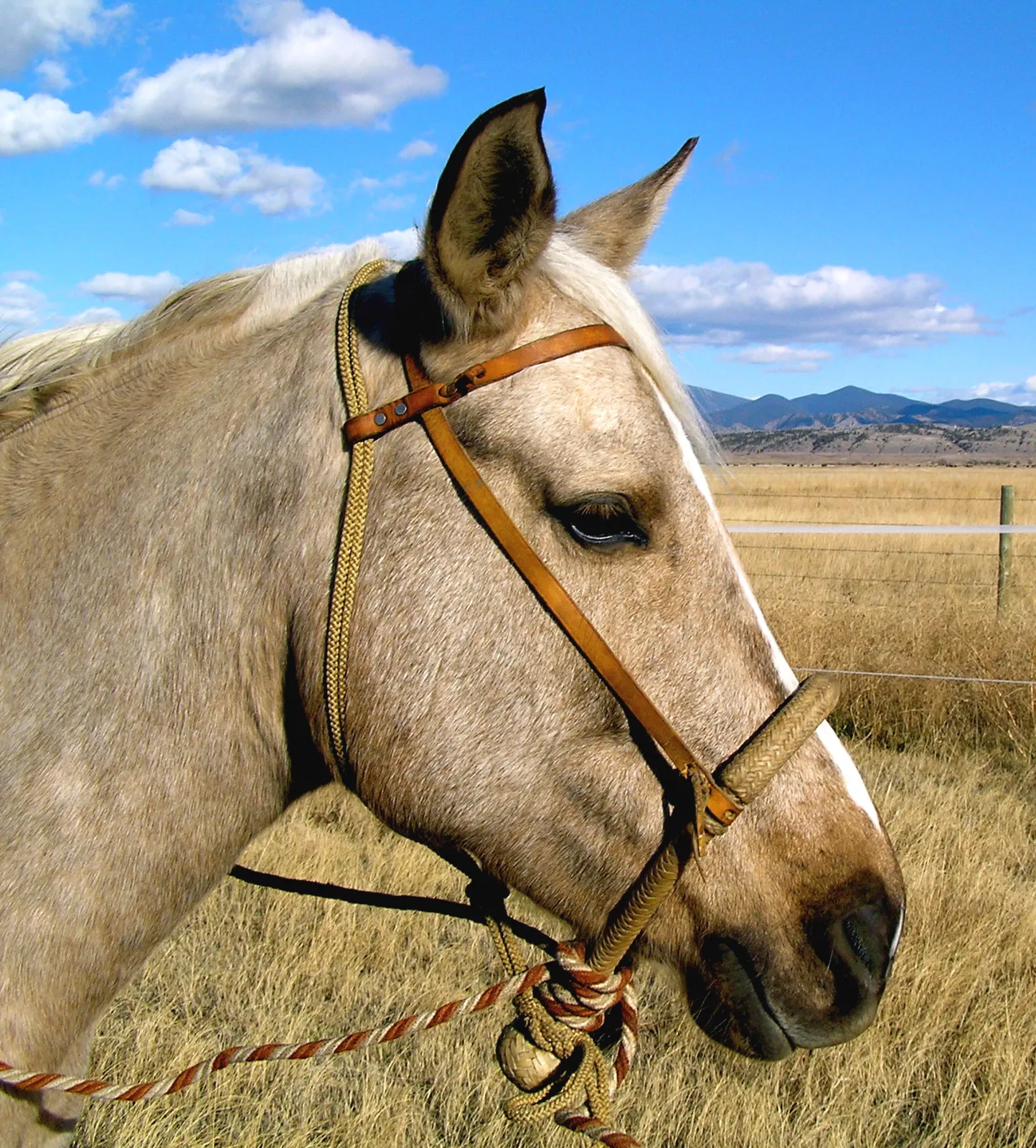
The bosal
The classic or “true” hackamore is a bosal, a stiff noseband of braided rawhide, with a heavy knot, the heel knot, under the jaw. It hangs from a light headstall called the hanger. Green horses often also wear a fiador, a thin rope throatlatch that steadies the bosal. The rein is a mecate, a single long rope, traditionally of horsehair and around 20 to 25 feet long, wrapped around the heel to adjust the fit and tied off to make both a looped rein and a long lead.
A bosal rests quietly until the rider lifts a rein. Then it presses on the side of the nose and under the jaw, and as soon as the horse gives, it goes slack again. It is ridden with two hands, one rein at a time, using brief pulls and releases; a steady pull on both reins only teaches a horse to lean on it.
In the vaquero tradition a young horse starts in a thick bosal and moves to thinner, lighter ones as it learns. Later a spade bit is added under a pencil-thin bosalito (the “two-rein” stage), and finally the horse goes in the bit alone as a finished “bridle horse”. Done properly, it takes years. Reined cow horse competitions still keep separate Hackamore, Two Rein and Bridle classes, and many western shows let younger horses be shown in a bosal, ridden two-handed.
A bosal should follow the shape of the nose closely, without gaps that let it rock and rub, and sit near the lower end of the nasal bone. At rest it should hang quietly, without touching under the jaw, and show rules allow no rigid material there. An experienced hackamore trainer can check the fit.
The mechanical hackamore
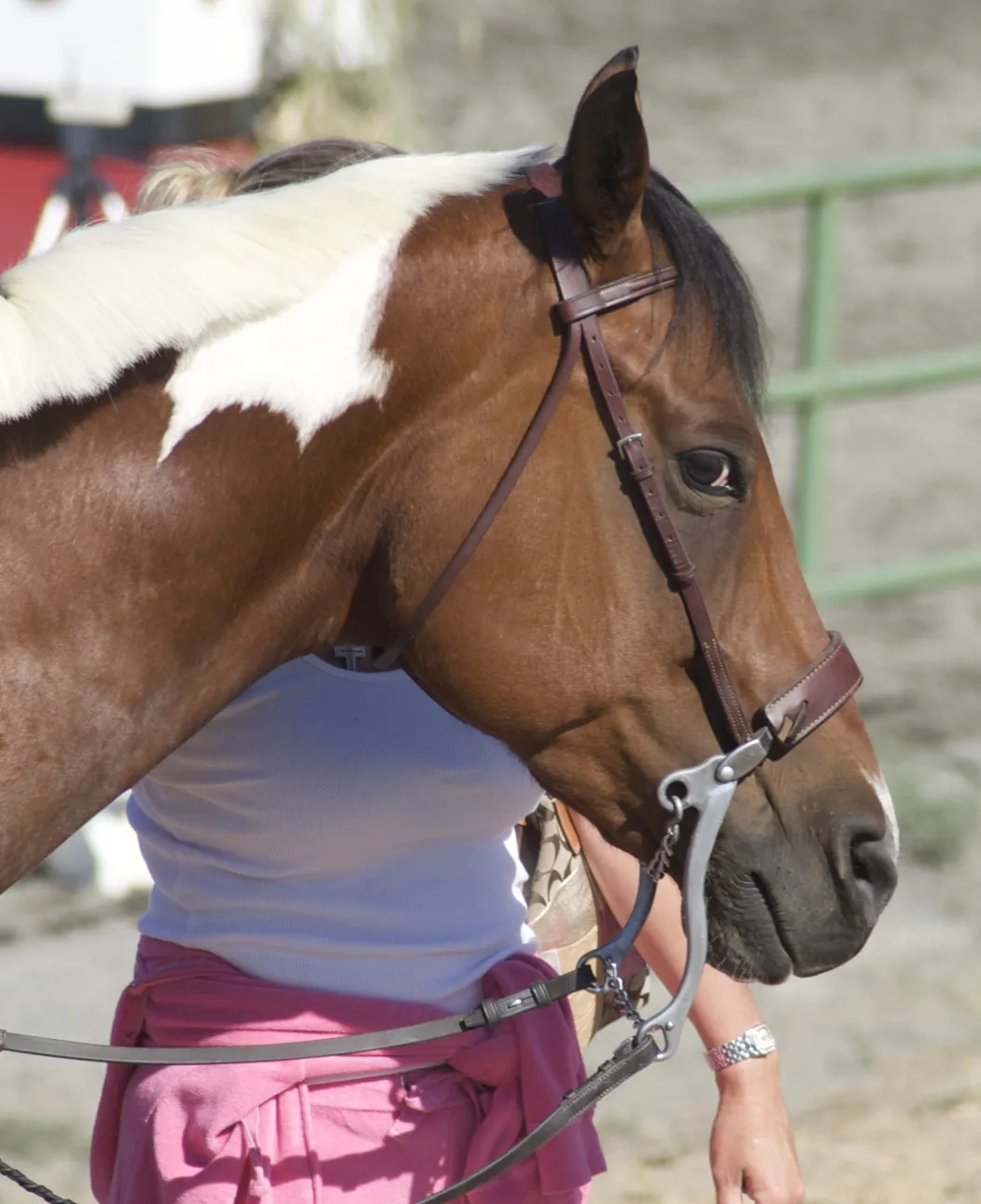
A mechanical hackamore (also called a hackamore bit or English hackamore) has a noseband, two metal shanks and a curb chain or strap under the chin. When the rider pulls, the shanks swing back and lever the noseband down on the nose, the chain up into the chin groove and the headstall onto the poll, just as a curb bit does. Longer shanks give more leverage. It stops well but turns poorly, and because a little rein makes a lot of force, it needs light, quiet hands. The noseband belongs on the nasal bone, well above the nostrils; set too low, its leverage lands on the fragile cartilage.
Despite the name, it isn’t considered a true hackamore. It is common on trail and endurance horses and in timed events such as barrel racing, but many western show classes ban it. In international show jumping, FEI rules allow hackamores.
The sidepull
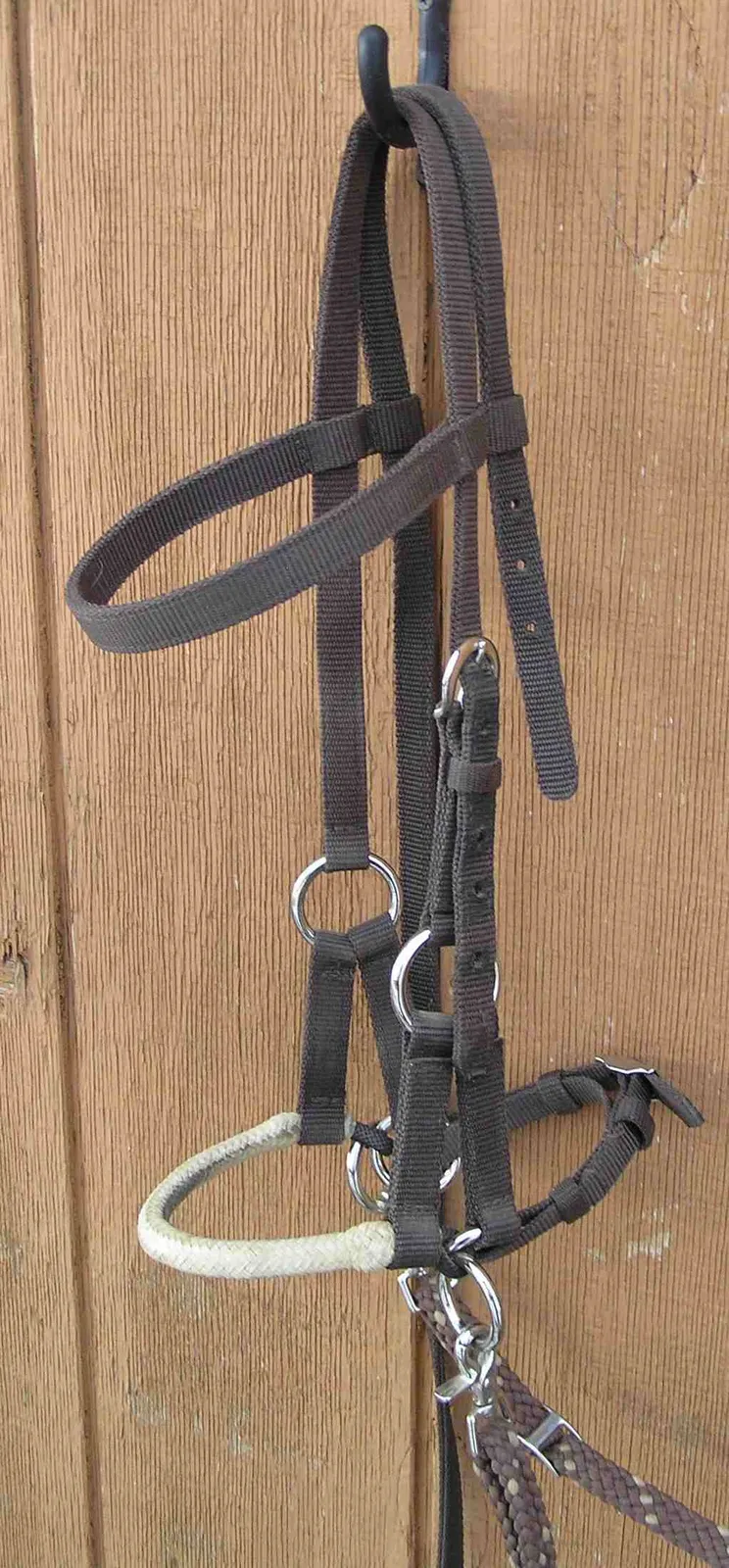
A sidepull is a noseband of rope, leather or rawhide with a ring on each side for the reins. There is no leverage: a pull on one rein draws the nose to that side. That makes it easy to understand for both horse and rider, and it is often used to start young horses. The English version, the jumping cavesson or jumping hackamore, has a heavy leather noseband, often with a cable inside. A sidepull’s severity depends on how hard and thin its noseband is.
Main types
| Type | What it is for |
|---|---|
| Bosal | Starting and finishing horses in the vaquero tradition; western hackamore classes |
| Mechanical hackamore | Leverage without a bit: trail, endurance, speed events, some show jumping |
| Sidepull | Direct pressure, no leverage: starting young horses, riders moving away from a bit |
| Jumping cavesson | An English sidepull, occasionally seen in show jumping |
Safety
No hackamore is gentle by nature. Rough hands, poor fit or a too-tight noseband can bruise the nose and jaw, and a mechanical hackamore used harshly can injure the nose. A bosal is a subtle tool that can confuse a horse in inexperienced hands, so learn it from an experienced trainer. Check for rubbing or swelling after each ride, and when you first switch a horse to a hackamore, ride somewhere enclosed until you are sure of your brakes.
Care is simple: clean the leather (see how to clean tack), and check the rawhide for cracks or broken braid, and the shanks, rivets and curb chain of a mechanical hackamore for wear.
Worth knowing
“Hackamore” is an Americanized form of the Spanish jáquima, a headstall or halter, a word that came into Spanish from Arabic. It was in print in English by about 1850.
Related tack
For other ways to ride without a bit, see bitless bridles. Hackamores share their headstalls with ordinary bridles, and the bosal’s long rope is covered with other reins. A noseband on a bitted bridle is a different thing again.
Top image from Montanabw under the CC BY-SA 3.0 license

Image from Jean under the CC BY 2.0 license

Image from Montanabw, public domain
