Lead Ropes
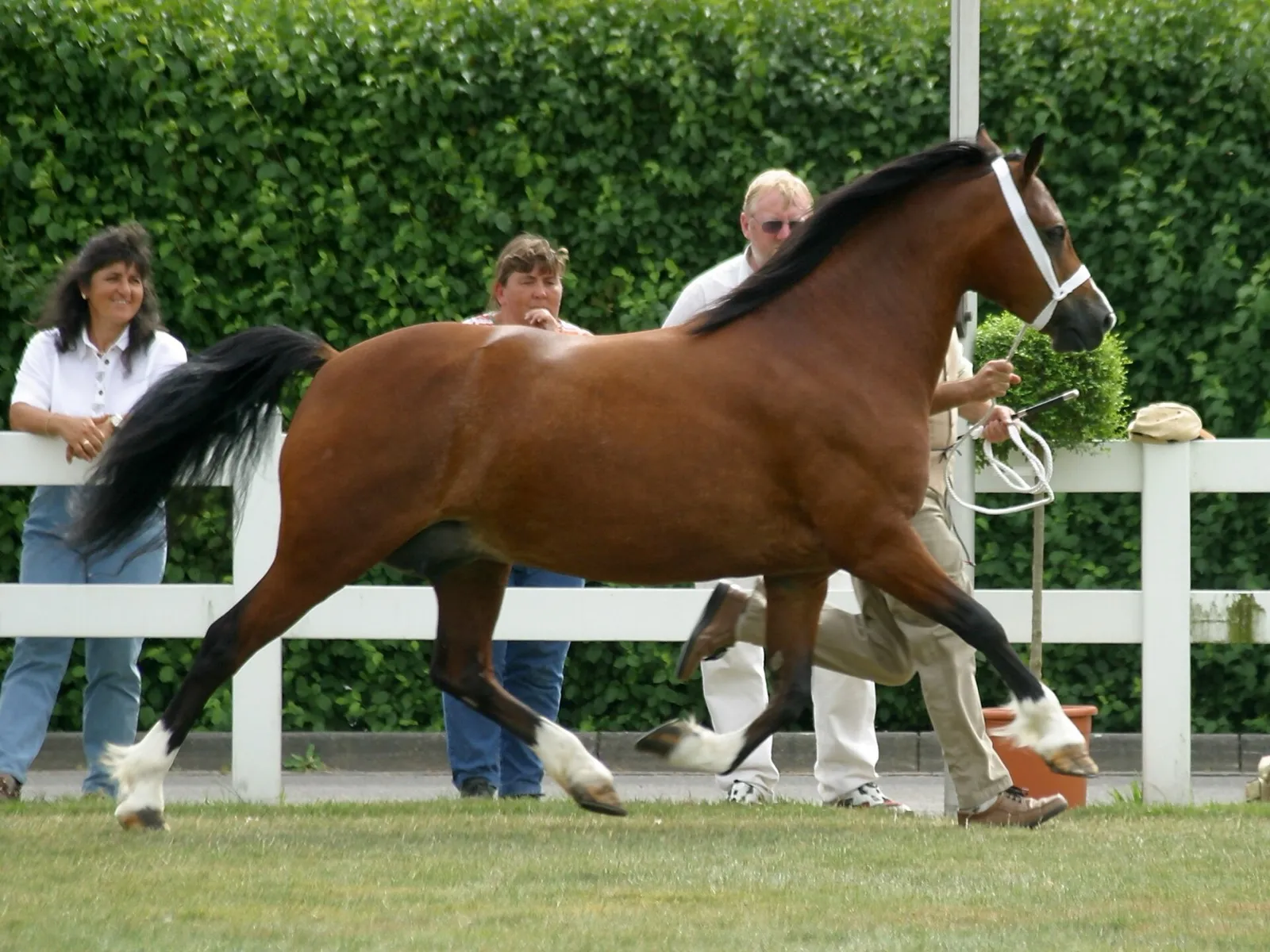
A lead rope, or lead line, clips to a horse's halter and is what you use to lead the horse on the ground and to tie it up. A lead shank is a lead, usually leather, that ends in a length of chain, for horses that need a clearer signal.
Parts of a lead
A lead has three parts: the line, a snap that clips to the halter’s lead ring, and a tail end, often knotted so it does not fray. Everyday leads are usually 8 to 10 feet (2.5 to 3 m) long; groundwork ropes for use with a rope halter often run to 12 feet (3.7 m) or more.
Types of lead
| Type | What it is for |
|---|---|
| Cotton rope | Everyday leading and tying. Soft on the hands, but soaks up water and wears faster than synthetics. |
| Nylon or polypropylene rope | Everyday use in all weathers. Strong and long-lasting, but it can burn your hand if it runs through it. |
| Flat web or leather lead | Leading and showing. Comfortable to hold, but less suited to tying than a thick round rope. |
| Groundwork rope | Training with a rope halter. Longer and heavier, giving distance and feel. |
| Lead shank with chain | The show ring, sales and the racetrack, and horses that need firm handling. |
Snaps
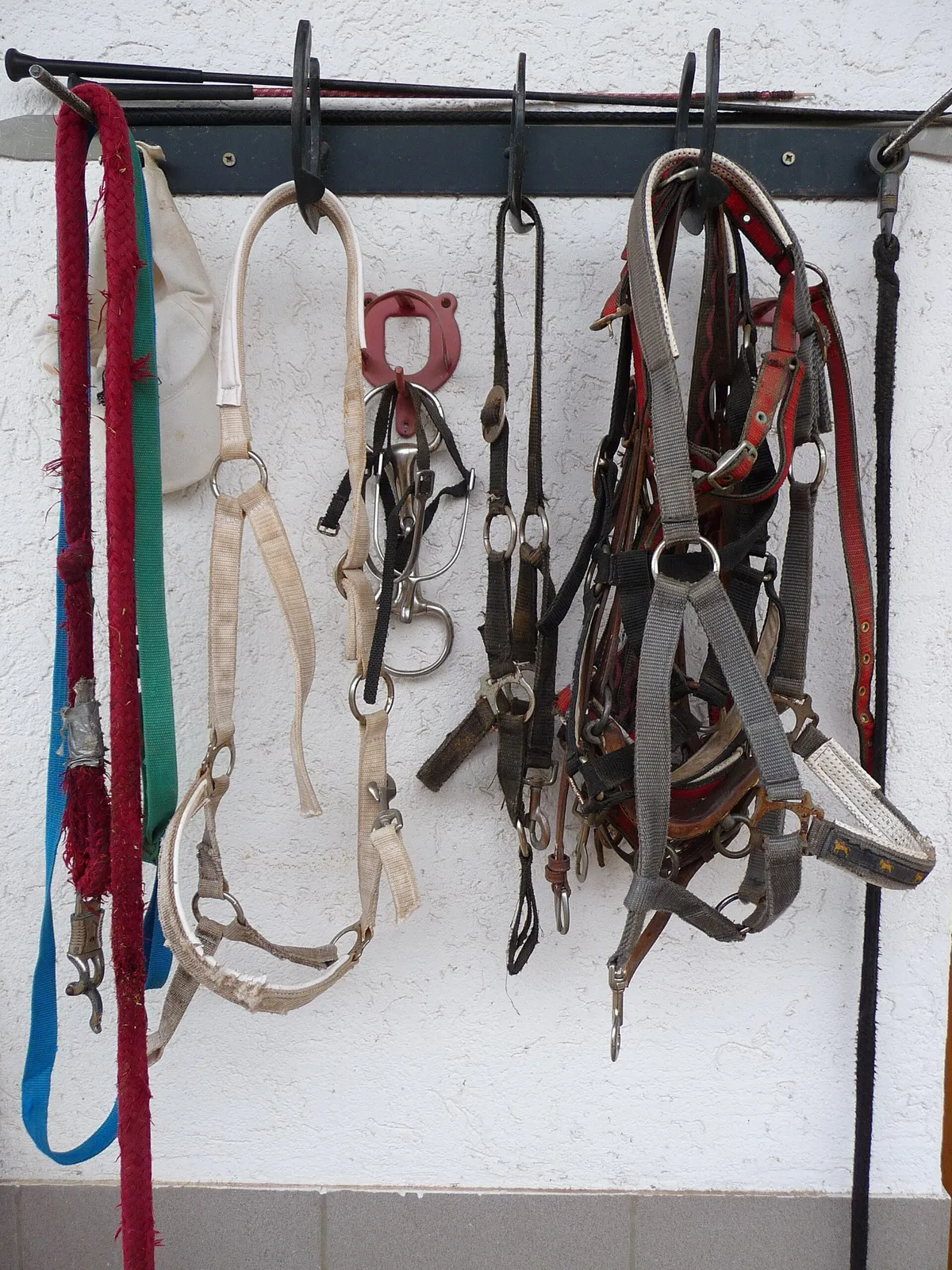
Most leads close with a bolt snap, whose spring-loaded bolt you slide back with your thumb, or a trigger snap with a hinged gate. Neither is easy to open while a horse is pulling against it. A panic (quick-release) snap is: pull back its sleeve and it lets go even under load. Panic snaps are mostly used on cross-ties and trailer ties, often at the wall end; stand to one side as you release one, because a taut rope can whip back. Snaps are a common point of failure, so check the spring and look for wear.
Leading a horse
Stand on the horse’s left side, level with its throatlatch, and hold the rope in your right hand about six inches (15 cm) below the halter. Fold the spare rope into loose loops in your left hand. Never wrap it around your hand or wrist: if the horse bolts, a loop can tighten and drag you. Don’t hold the halter itself, and keep the rope off the ground. Gloves save your hands from rope burn.
Tying safely
Penn State Extension and other mainstream guides agree on the basics:
- Tie with a halter, never with the bridle reins or the bit.
- Tie to something solid and fixed, such as a tie ring set in a wall or a stout post. Never tie to a fence board or rail, a gate, or anything a frightened horse could pull loose.
- Tie at the height of the withers or higher, with about 18 to 24 inches (45 to 60 cm) of rope between knot and halter, so the horse can hold its head normally but cannot get a leg over the rope.
- Use a quick-release knot. One tug on the free end undoes it, even when the horse is pulling back. If a horse learns to untie it, pass the tail through the loop, but pull it out again before you need the knot to release.
- Many people tie to a loop of baling twine or a purpose-made breakaway tie, so something gives in a panic. Twine varies, though: in one laboratory test, fine twine broke at about 36 kg (80 lb) of pull and heavy-duty twine at nearly 140 kg (300 lb).
- Do not tie a horse in a rope halter, and never tie with a chain shank.
In a large owner survey (see halters), headcollar injuries were 70% more likely when horses were tied up.
Chain shanks
The chain on a lead shank, usually 18 to 30 inches (45 to 75 cm) long, threads through the halter’s side rings and runs over the nose or under the chin before clipping to a ring on the far side. A light tug puts brief pressure where the chain lies, which is why shanks are common with stallions, racehorses and horses shown in hand.
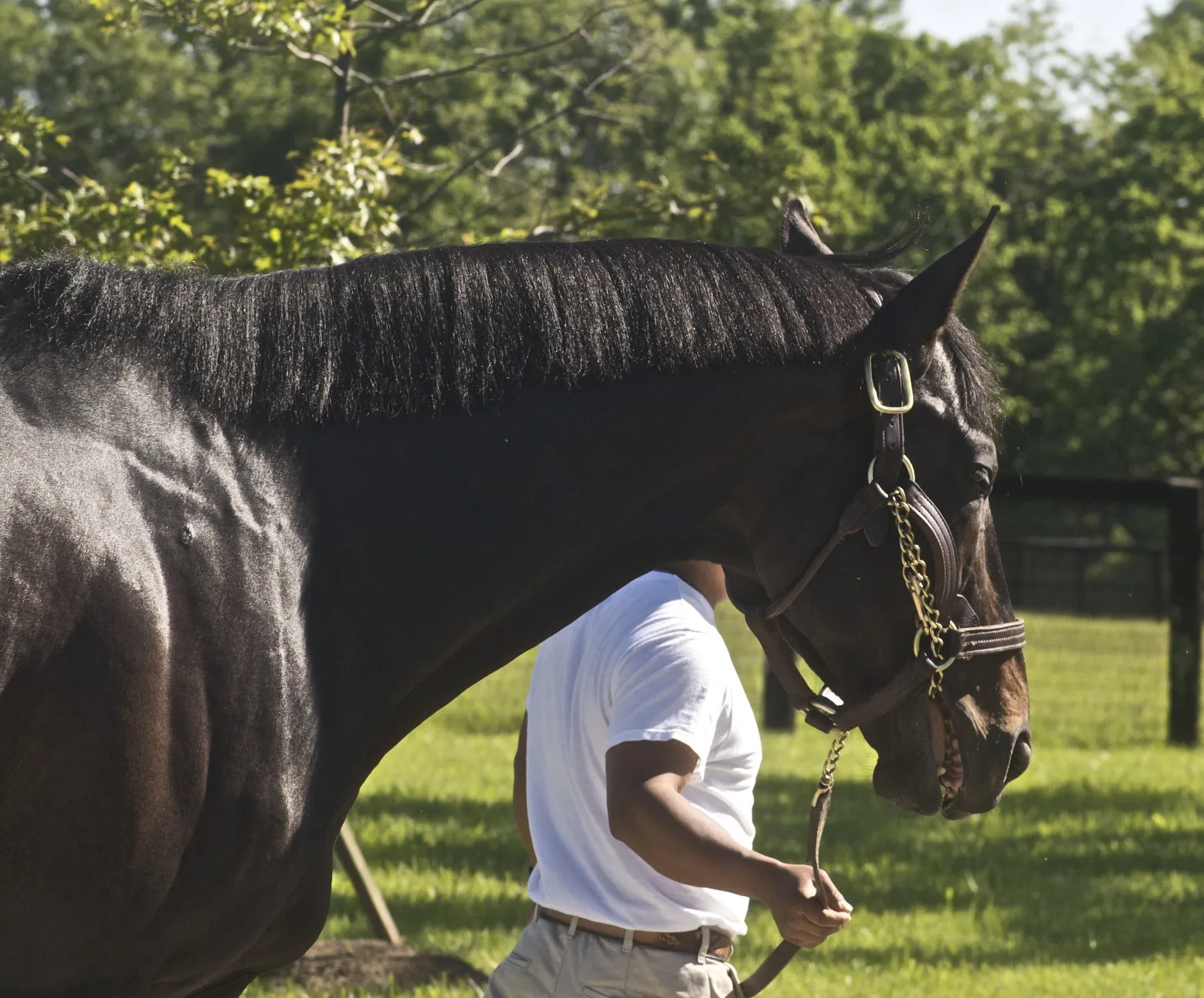
Veterinary advice is that, used well, a chain is no crueler than other tack; used roughly, it can injure the nose and start a fight. The usual rules:
- Ask with the least pressure that works, and release the instant the horse responds.
- Hold the leather, not the chain, which can hurt your hand if the horse throws its head.
- Do not run the chain under the chin and clip it back onto itself: the loop can catch a foot when the horse lowers its head.
- A chain over the gum, under the upper lip, is the most severe use of all and has no place in everyday handling.
If you have never used one, ask an experienced trainer to show you first.
Care
Wash cotton and nylon leads now and then, and retire any rope that is frayed or worn where it joins the snap. Clean and oil leather shanks along with the rest of your tack (how to clean tack).
Related tack
For work on a circle, a horse goes on a much longer line: see lunging equipment and how to lunge a horse. Under saddle, the bridle and reins take over from the halter and lead.
Top image from MBurger under the CC BY-SA 3.0 license

Image from 4028mdk09 under the CC BY-SA 3.0 license

Image from Just chaos under the CC BY 2.0 license
