Bridles
A bridle is the headgear a rider steers and stops with. It is a set of straps that holds a bit in the horse's mouth (or, on a bitless design, a noseband on its nose) and carries the reins back to the rider's hands. Every riding tradition has its own version, but the parts are much the same.
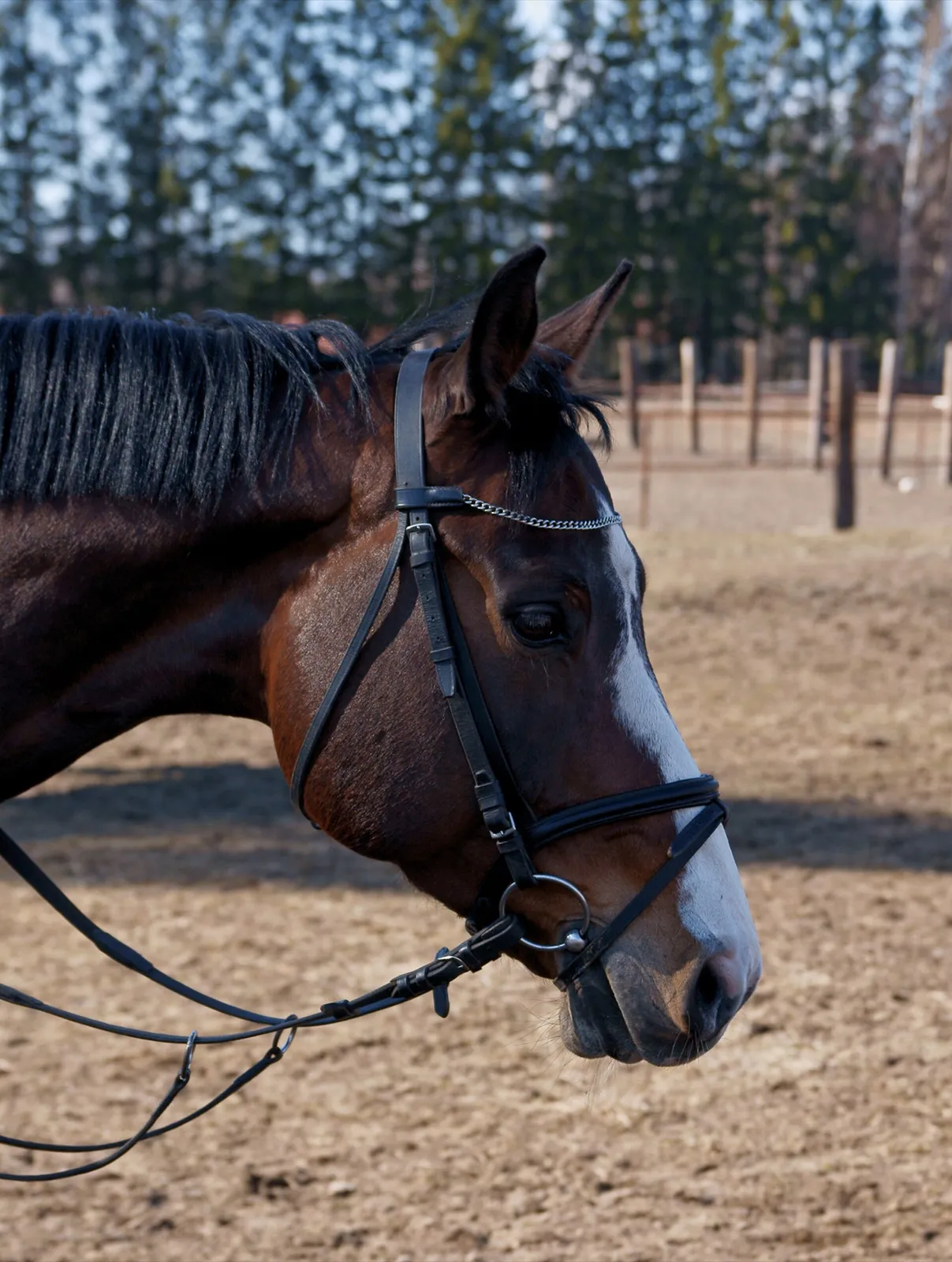
Parts of a bridle
- Crownpiece (headpiece): the strap that goes over the top of the head just behind the ears, at the poll. Everything else hangs from it.
- Browband: crosses the forehead below the ears and stops the crownpiece from sliding back down the neck.
- Throatlatch (throatlash): a thin strap from the crownpiece under the throat. It stops the bridle being rubbed or pulled off over the ears, and is never meant to be tight.
- Cheekpieces: run down each side of the face to the bit, so they set how high the bit sits.
- Noseband: circles the nose. On an English bridle it hangs from its own thin headpiece, the sliphead. See nosebands.
- Bit: the mouthpiece. It rests on the bars, the toothless gap between the front teeth and the cheek teeth. See bits.
- Reins: run from the bit to the rider’s hands. See reins.
A curb bit adds a curb chain or strap that lies in the chin groove. Our older guide to bridle terminology names the same parts.
English and western bridles
An English snaffle bridle has one bit, one pair of reins joined at the ends, and nearly always a noseband. It is the everyday bridle for flatwork, jumping, eventing and most dressage.
A western bridle, usually called a headstall, is simpler. Most have no noseband, and many have no browband either: a one-ear (split-ear or slip-ear) headstall stays in place with a loop around one ear instead. Some show headstalls leave out the throatlatch too. Western reins are split reins or romal reins, and a trained western horse is usually ridden one-handed in a curb bit.
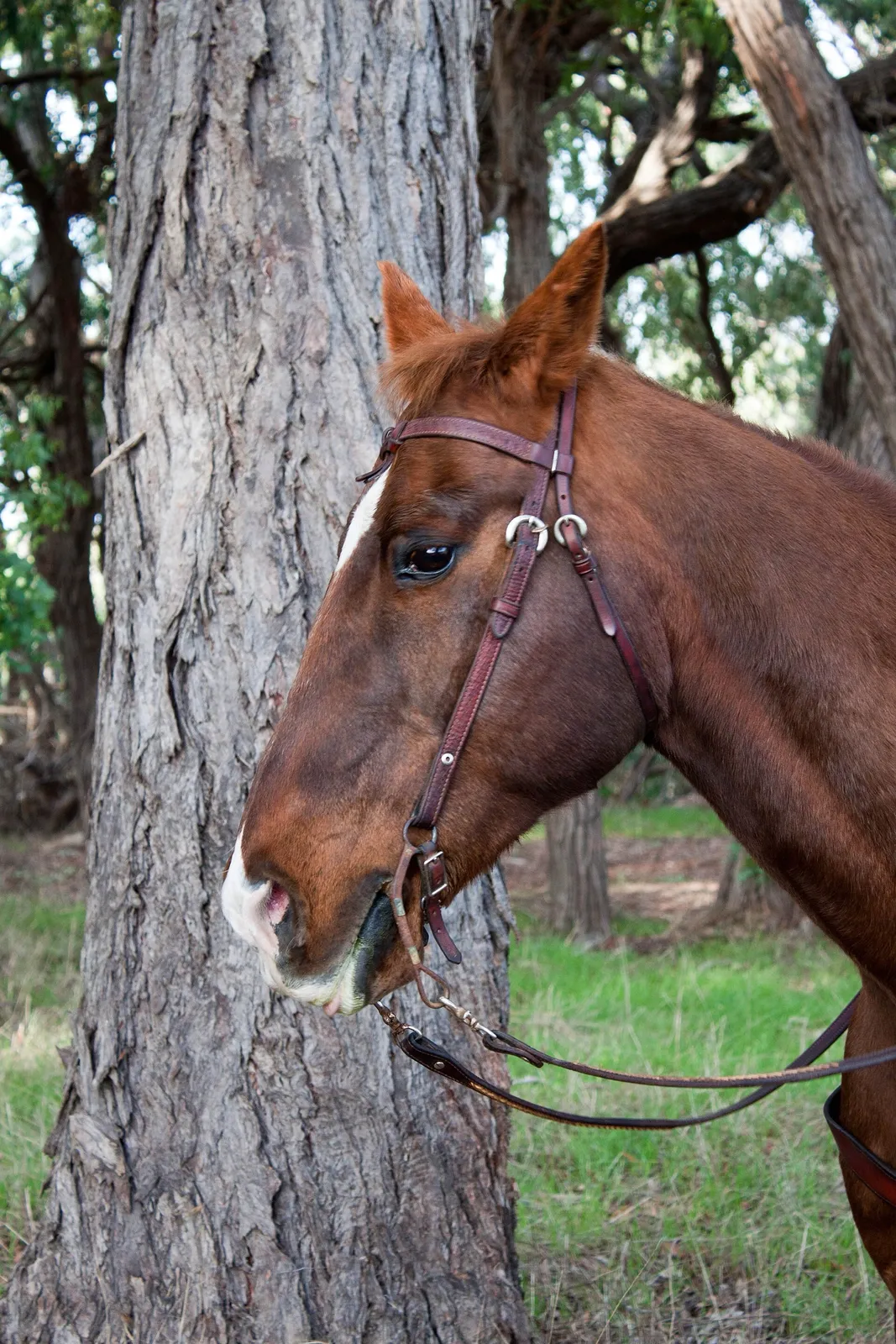
The double bridle
The double bridle, or Weymouth bridle, puts two bits in the mouth at once: a small-ringed snaffle called the bradoon (bridoon), hung on its own sliphead, and a curb bit, the Weymouth, with a curb chain. The bradoon sits above the curb. Each bit has its own reins, so the rider holds four. It is meant for a well-schooled horse and a rider with steady, independent hands, and you will see it in upper-level dressage, in British and Australian show rings, and in saddle seat riding.
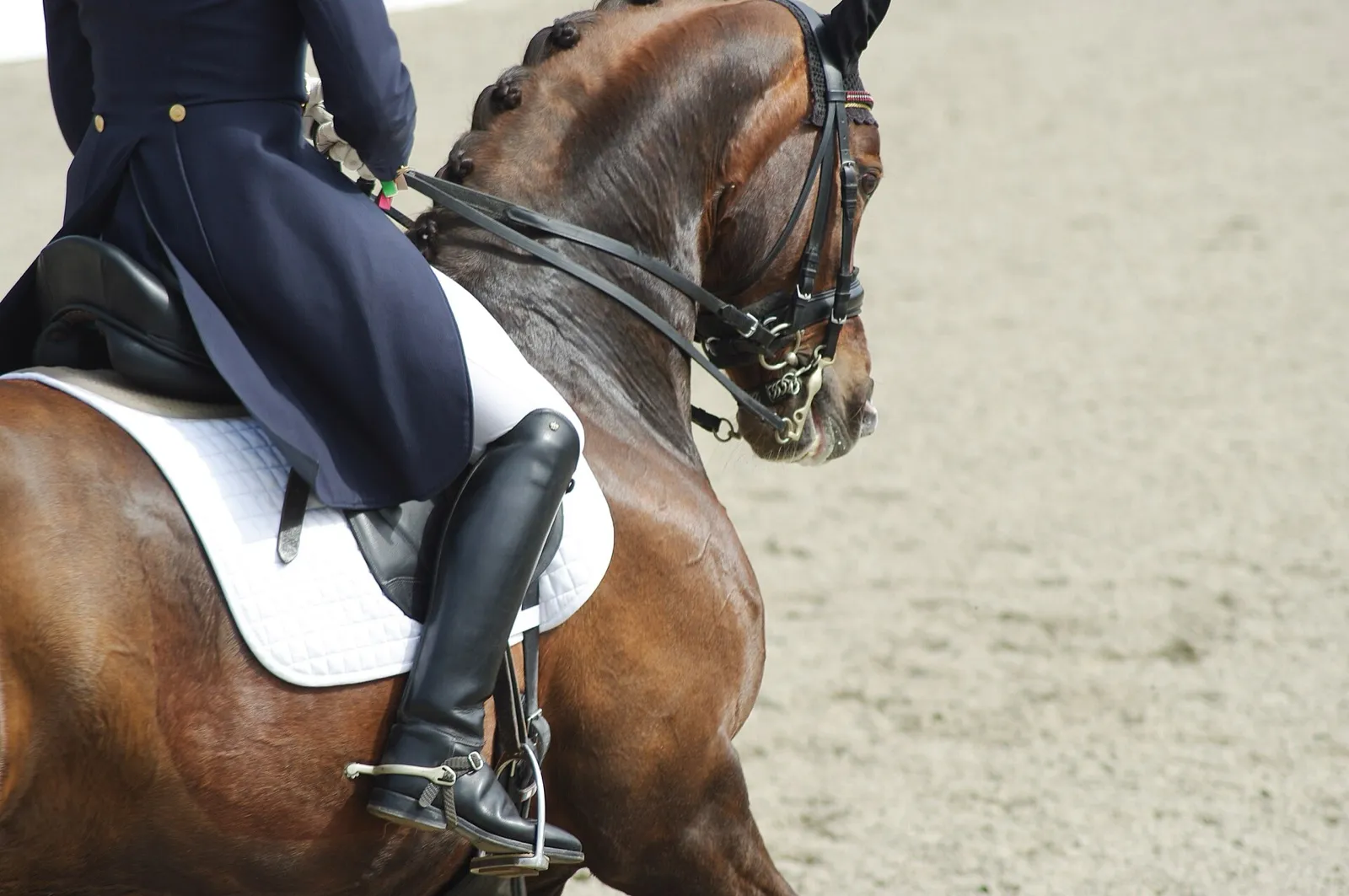
For decades the double bridle was compulsory in international Grand Prix dressage. Since January 2026 the FEI, the sport’s international federation, has let riders choose a plain snaffle instead at events up to three-star level, and the debate about the top level goes on.
Main types
| Type | What it is for |
|---|---|
| Snaffle bridle | One bit, one pair of reins: everyday riding, jumping, most dressage |
| Double bridle | Bradoon and curb, four reins: advanced dressage and showing |
| Pelham bridle | One bit with snaffle and curb rings, two pairs of reins: showing and polo |
| Western headstall | Browband or one-ear style, usually no noseband: western riding and ranch work |
| Hackamore | No bit; a bosal or other noseband does the work: starting young horses, western tradition |
| Bitless bridle | No bit; pressure on the nose, chin and poll: riders who prefer not to use a bit |
| Driving bridle | Usually with blinkers: horses in harness |
How a bridle should fit
The crownpiece should sit behind the ears without pressing on their base, and the browband should be long enough not to pull it forward into them. With the throatlatch done up, you should be able to slide about a hand’s width (three or four fingers) between it and the cheek. The bit should rest snugly in the corners of the mouth: English riders usually look for one or two soft wrinkles, while western riders on a loose rein often let it just touch the corners. A bit hung too low can knock against the teeth; one pulled too high stretches the lips.
Warning signs include rubbed or bald patches, a horse that tosses its head or grows hard to bridle, and constant fussing with the bit. Fit is about more than the right holes. A 2015 study of 19 dressage horses found the highest pressures under the headpiece just behind the ears and under the noseband; a bridle shaped to avoid those spots spread the load more evenly, and the horses moved with more flexion in their knees and hocks. If you’re unsure, ask your instructor or a qualified saddler to check. Our video on how to fit a bridle covers the basics, and Bridle & Unbridle Your Horse shows how to put one on and take it off.
Safety and care
Tie a horse up by a halter (a headcollar, in Britain) and lead rope, never by its bridle or reins: if it pulls back, the bit can injure its mouth and the leather can break. Check the stitching and buckles often, especially where the cheekpieces and reins fasten to the bit, because a broken cheekpiece leaves the bit hanging loose. After riding, rinse the bit and wipe the leather, then clean and condition it regularly so it stays supple (see how to clean tack).
Related tack
A bridle works together with the bit and reins it carries and the noseband that finishes it. To ride without a bit, see hackamores and bitless bridles; a martingale often fastens to the reins or noseband.
Top image from kallerna under the CC BY-SA 3.0 license

Image from Dawn Beattie under the CC BY 2.0 license

Image from Olaf Kosinsky under the CC BY-SA 3.0 license
