Driving Harness
Harness is the tack a horse wears to pull a vehicle or a farm implement instead of carrying a rider. It does three jobs: it lets the horse pull, it lets the horse slow and stop the load, and it gives the driver steering through long reins. Every piece must fit as carefully as a riding saddle.
Collar or breast collar
A horse pulls by pushing forward into one of two things.
A full collar is a stiff, padded oval that sits around the base of the neck and rests on the shoulders. Two rigid bars called hames, of metal or wood, sit in a groove around the collar, and the traces fasten to them. It spreads the load over the big shoulder muscles, so it is the choice for heavy work, and it has to be fitted to its horse.
A breast collar (called a breastplate in British driving) is a wide padded strap across the chest, held up by a strap over the neck. It adjusts easily and can fit several horses, so it suits light carriages, ponies, pleasure and competition driving, and racing harness.
The other parts
- Bridle with blinkers. Blinkers (also called blinders in America and winkers in Britain) are leather cups beside the eyes that keep the horse from being frightened by the vehicle behind it. Some harness adds an overcheck, or bearing rein, which holds the head up; set very high, it is rightly considered abusive.
- Saddle or pad. A narrow, padded saddle sits on the back just behind the withers. It carries rings called terrets that guide the reins, and on single harness it holds the shafts in loops called tugs. A girth holds it on, and a looser bellyband stops the shafts lifting.
- Traces. The long straps or chains that carry the pull from the collar or breast collar back to the vehicle, usually to a swinging bar called the singletree or swingletree.
- Backstrap and crupper. Run from the saddle to a loop under the tail and keep the saddle from sliding forward. See cruppers and breeching.
- Breeching. A strap around the hindquarters, buckled to the shafts, that lets the horse hold the vehicle back when it slows or goes downhill.
- Reins. Driving reins, often called lines in America, are much longer than riding reins and run through the terrets to the driver’s hands.
Single, pair and team
| Hitch | How it works |
|---|---|
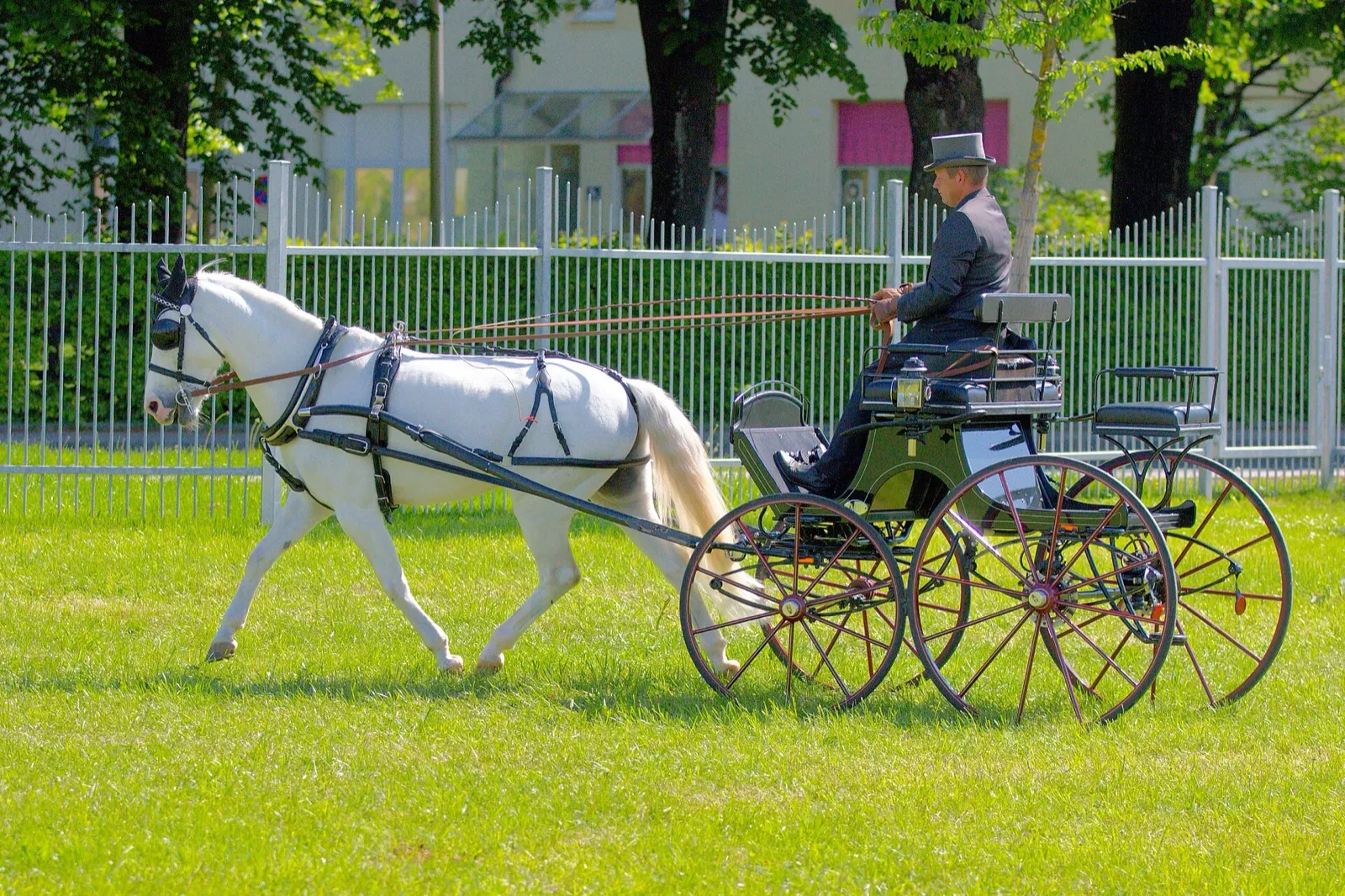
| Single | One horse between two shafts; the shafts rest in the tugs and the breeching does the braking |
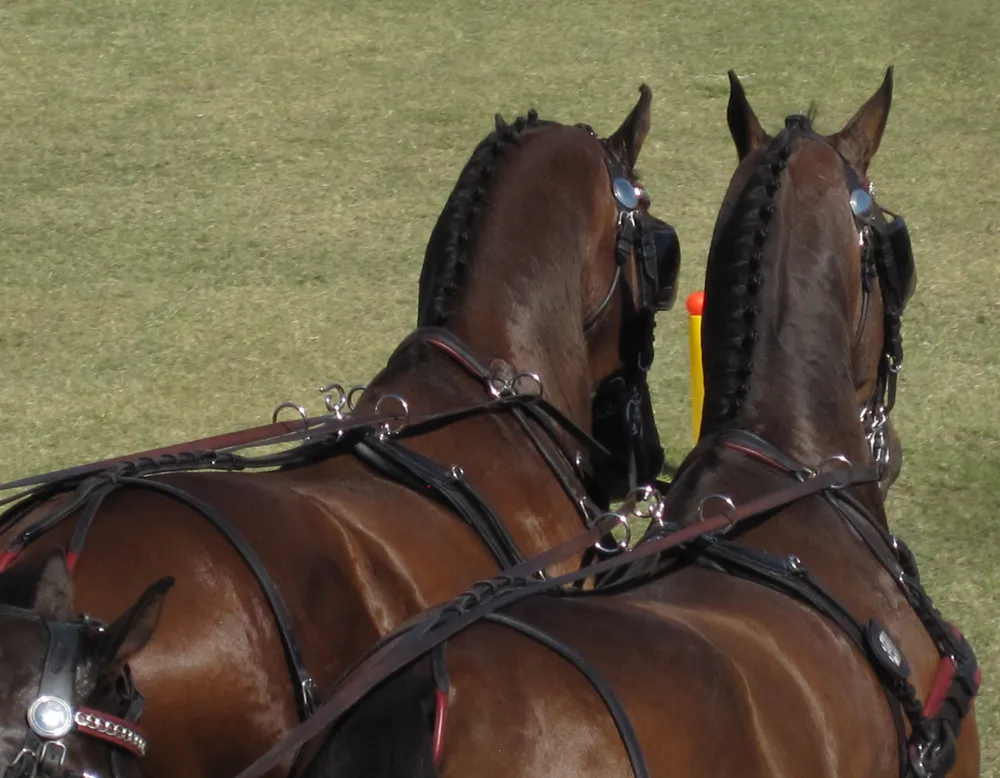
| Pair | Two horses side by side with a pole between them; pole straps from the front of each collar to the end of the pole let them hold the vehicle back |
| Tandem | Two horses one in front of the other |
| Unicorn | One horse in front of a pair |
| Four-in-hand | Two pairs; the wheelers next to the vehicle do the braking, while the leaders in front, ahead of the pole, only pull and need no breeching |
Draft harness
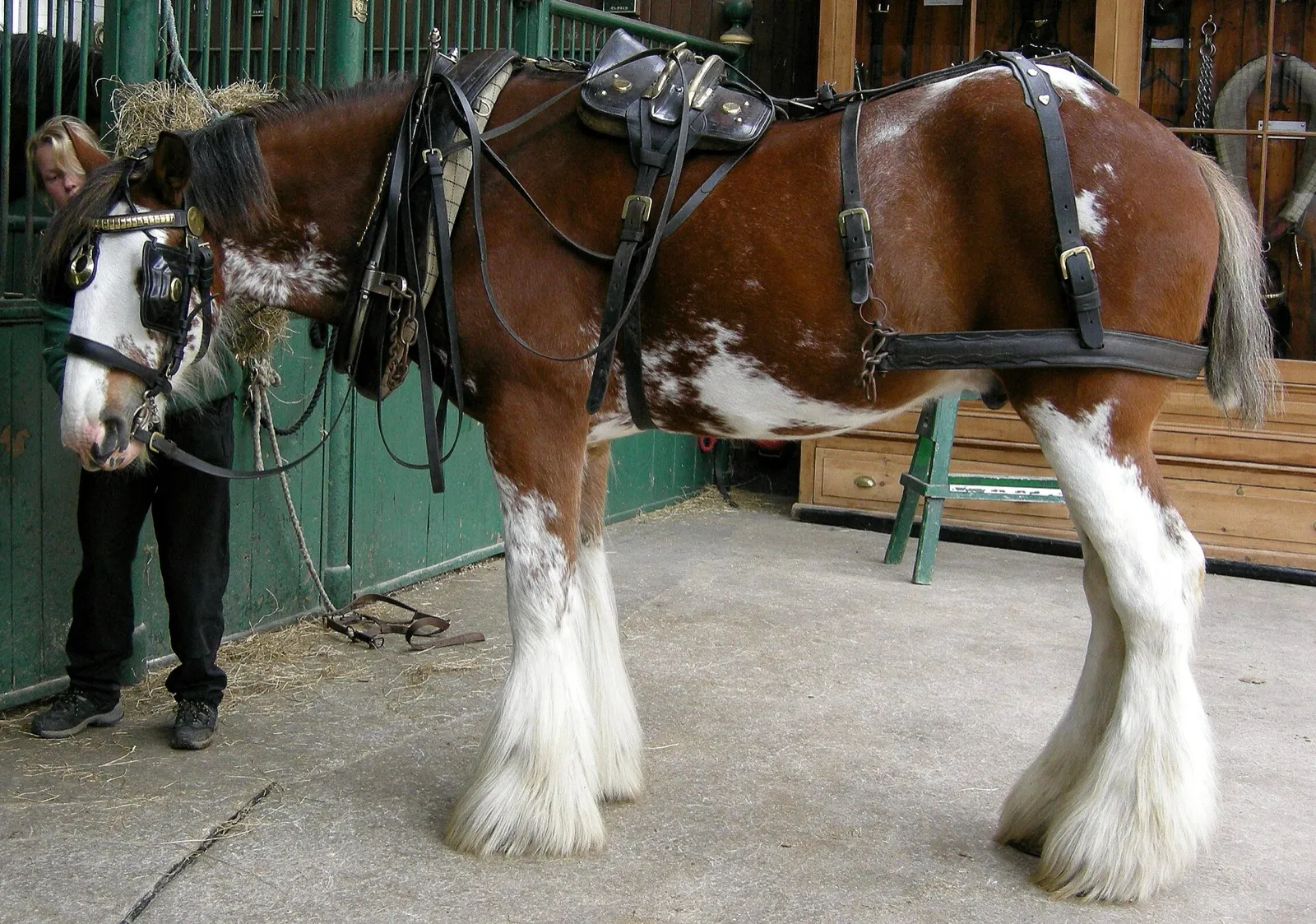
Heavy harness for farm, forestry and brewery horses such as the Clydesdale, Shire and Percheron is built on the same plan with wider straps, a full collar and hames, and often chain traces. Plow harness usually has no breeching, because a plow or a log being dragged does not roll forward onto the horse.
How it should fit
- Collar. With the horse’s head in its working position, you should be able to slide your fingers, held flat, between the collar and the sides of the neck, and your hand at the throat. A collar that is too long pulls from too high on the shoulder and can cause sores there; one that is too short presses on the top of the neck and against the windpipe.
- Breast collar. It should sit above the points of the shoulders and below the windpipe.
- Blinkers. The middle of each blinker should be level with the middle of the eye, and the cups should not touch the lashes.
- Breeching. With the traces tight, there should be about a hand’s width between the breeching and the hindquarters.
Necks change shape with age, work and condition, so check the fit again over time, and ask an experienced driver or harness maker to look at it.
Safety
- Never take the bridle off a horse that is still put to (attached to) the vehicle. Unhitch completely first. A horse that suddenly sees the cart behind it can bolt.
- Fasten the girth and bellyband before moving off. If the bellyband is left undone, a two-wheeled cart can tip back as the horse walks on.
- Check stitching, buckles and traces before every drive, and clean and condition harness as you would riding tack (cleaning tack). A break at the wrong moment can cause a runaway.
- Learn to drive with an experienced instructor.
Worth knowing
The padded collar first appears clearly in Chinese art of the late fifth century AD and was in use in Europe by around AD 1000. With horseshoes and the heavy plow, it helped horses replace oxen on many European farms. Historians once claimed older harness choked horses; later tests found it worked better than that, so how big a change the collar made is still debated.
Related tack
A harness horse also wears a bridle, a bit and a crupper and breeching. For the riding strap across the chest, see breastplates.
Top image from Linda Spashett Storye book under the CC BY 3.0 license

Image from MatthiasKabel under the CC BY-SA 3.0 license

Image from Heather Moreton from Louisville, KY, USA under the CC BY 2.0 license
