Halters
A halter, called a headcollar in Britain, is the simple head harness you use to catch, lead and tie a horse. It has no bit and no reins. A lead rope clips to a ring under the jaw, and light pressure on the nose and poll asks the horse to come along.
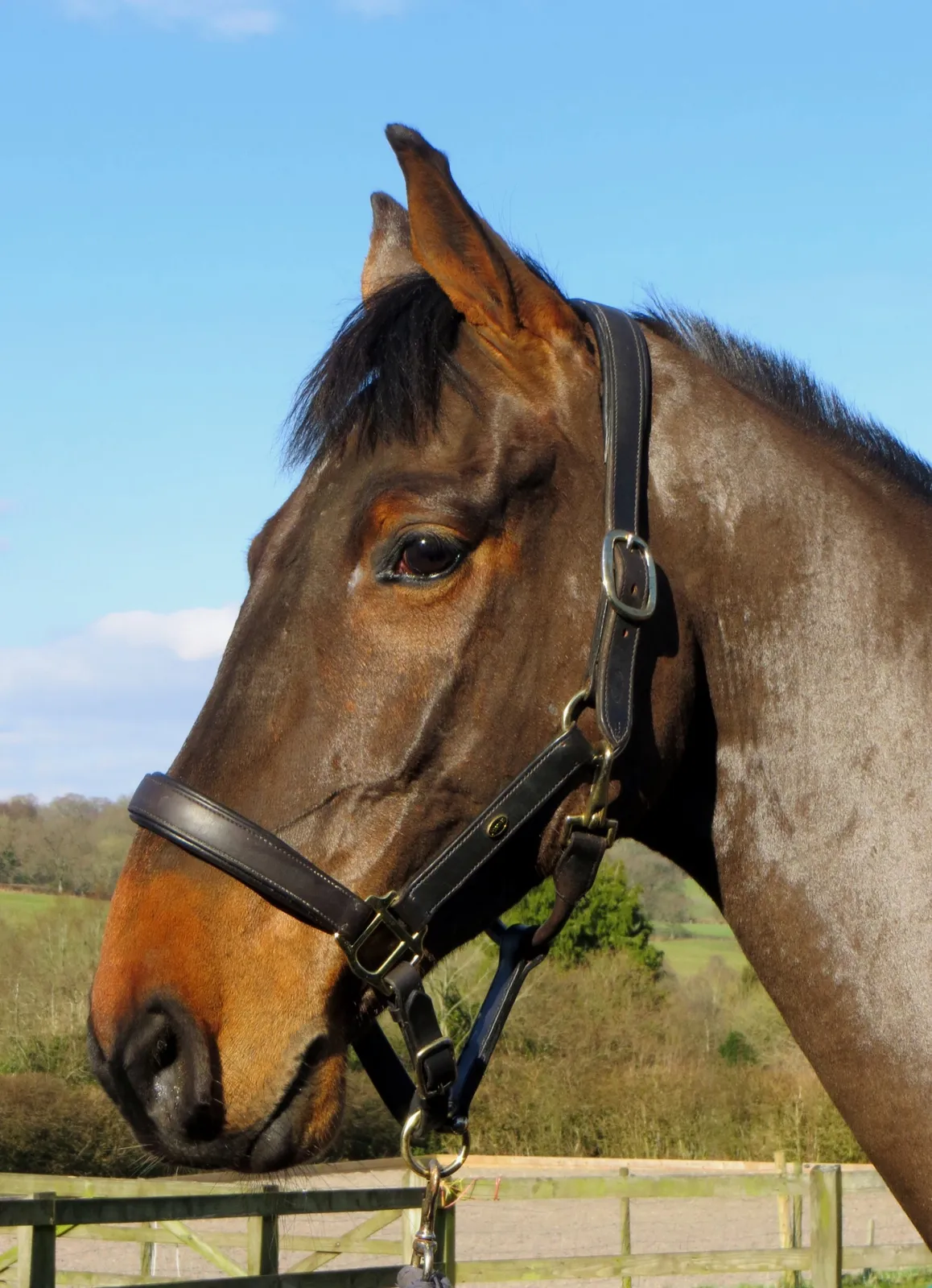
Parts of a halter
Most halters are built from the same few straps. The crownpiece runs over the poll, the spot just behind the ears, and usually buckles on the left side so the halter goes on without being pulled over the ears. The noseband circles the face above the nostrils. Cheekpieces join the two at a ring on each side, and a throatlatch runs under the jaw to keep the halter from sliding forward. Under the chin sits the lead ring, where the rope clips on. Some halters add a snap at the throat or an adjustable chin strap for a closer fit.
Halters come in foal, pony, cob, horse and draft sizes, but the label is only a starting point. Fit it to the horse in front of you.
Types of halter
| Type | What it is for |
|---|---|
| Flat web (nylon) | Everyday handling. Strong, washable and long-lasting, but the webbing rarely breaks if it snags on something. |
| Leather | Everyday handling and travel. More likely than webbing to break if the horse gets caught, which many owners count as a safety feature. Needs regular cleaning. |
| Breakaway | A web halter with a leather crownpiece or a release tab made to give way under strain. The usual choice when a halter has to stay on. |
| Rope | Groundwork and training. Tied from one length of thin rope, with knots in place of buckles. It concentrates pressure, so the horse feels small signals, but it will not break. |
| Show | In-hand and halter classes. Fine, polished leather, often with silver trim in western classes, or very slim straps in the Arabian ring. |
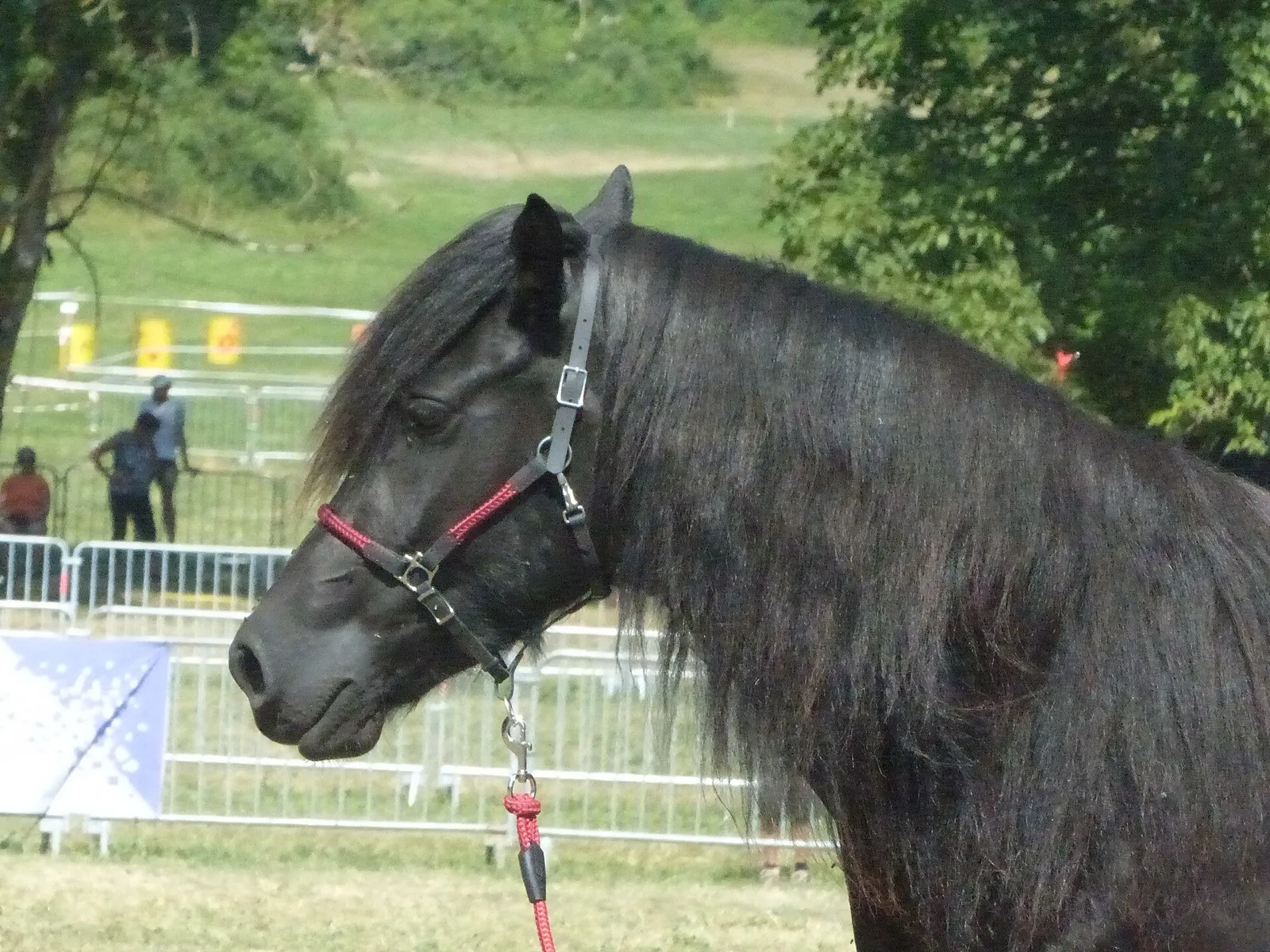
Rope halters are popular with trainers who do a lot of work from the ground, and they are best kept for that job. Because a single rope has no weak point, most sources advise against tying a horse up in one: a horse that pulls back in a panic cannot break free and can hurt itself badly. For tying, use a leather halter or a web halter with a breakaway crown, and see lead ropes for how to tie safely.
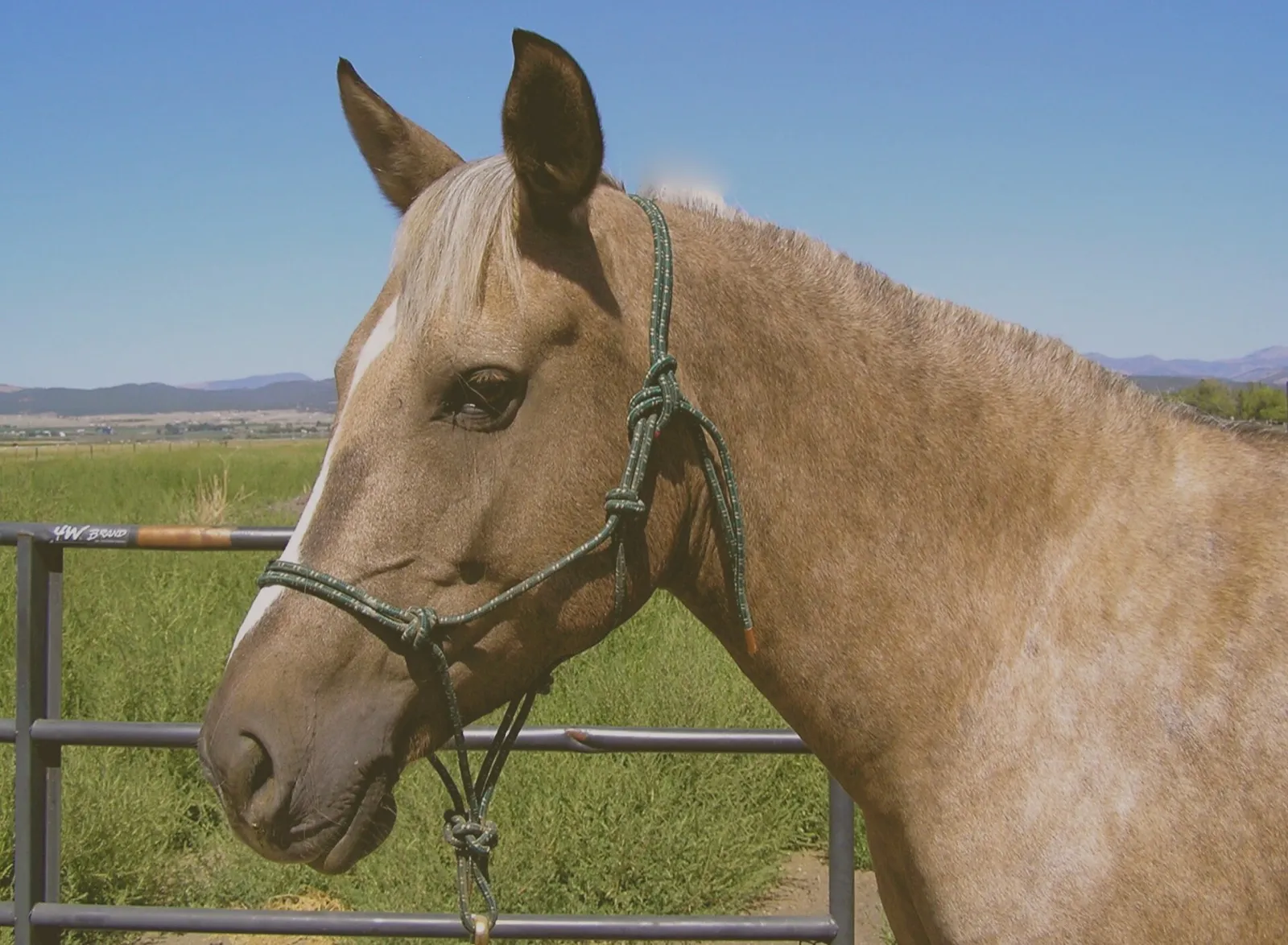
How a halter should fit
- The crownpiece lies just behind the ears without pressing into them.
- The noseband sits about two fingers’ width below the cheekbone (the bony ridge that runs down the side of the face), roughly halfway between the eye and the nostril. Set too low, on the soft end of the nose, it can hamper breathing and may even slip down over the nostrils.
- Two or three fingers fit between the noseband and the face, so the horse can chew and breathe freely.
- The throatlatch leaves room for three or four fingers.
A halter that is too loose shifts about until its buckles and rings sit near the eye, and its slack straps can catch a hoof or a post. One that is too tight rubs hair off the cheekbones and poll. Leather stretches with use, so check the fit again now and then. The same finger checks apply to a riding headpiece; see how to fit a bridle.
Turnout and safety
Most safety advice is plain: take the halter off before you turn a horse out. A halter can hook on a fence post, a gate latch or a branch, and a horse scratching its head with a hind foot can catch a shoe in it. If a horse must wear one, for example because it is hard to catch, the usual advice is a snug breakaway or all-leather halter, never a plain nylon one.
The best figures come from a 2021 survey of 5,615 horse owners by researchers at Hartpury University and the University of Nottingham. Almost a third had seen a horse hurt while wearing a headcollar, and between them they reported 134 fractures and 167 deaths. Injuries were reported most often with webbing headcollars and least often with leather ones, and the risk rose when horses were tied up. These are owners’ own reports, not a count of every accident, and the authors called for more research and proper fitting guidelines.
A later laboratory test by the same team found that “safety” designs vary widely. One opened at a pull of about 36 kg (80 lb), while one ordinary webbing headcollar held until nearly 600 kg (1,300 lb). A release point only helps if it actually releases, so choose with care and check breakaway parts often.
Everyday care
Wash web halters when they stiffen with sweat and mud, and clean and condition leather ones as you would a bridle (how to clean tack). Check the stitching, buckles and rings, and replace a breakaway crown or tab once it has torn. And leave tying to the halter: never tie a horse up by its bridle and reins.
Related tack
A halter’s partner is the lead rope. For riding, a horse wears a bridle instead, and the noseband on a bridle follows similar fit rules. A hackamore or another bitless bridle also works through pressure on the nose rather than the mouth.
Top image from Carine06 from UK under the CC BY-SA 2.0 license

Image from Tsaag Valren under the CC BY-SA 4.0 license

Image from Montanabw under the CC BY-SA 3.0 license
