Reins
Reins are the long straps that run from the bit, or from the noseband of a bitless bridle, back to the rider's hands. They are the rider's main line to the horse's head: through them the rider asks the horse to turn, slow down, stop or step back, and feels what the horse is doing in return.
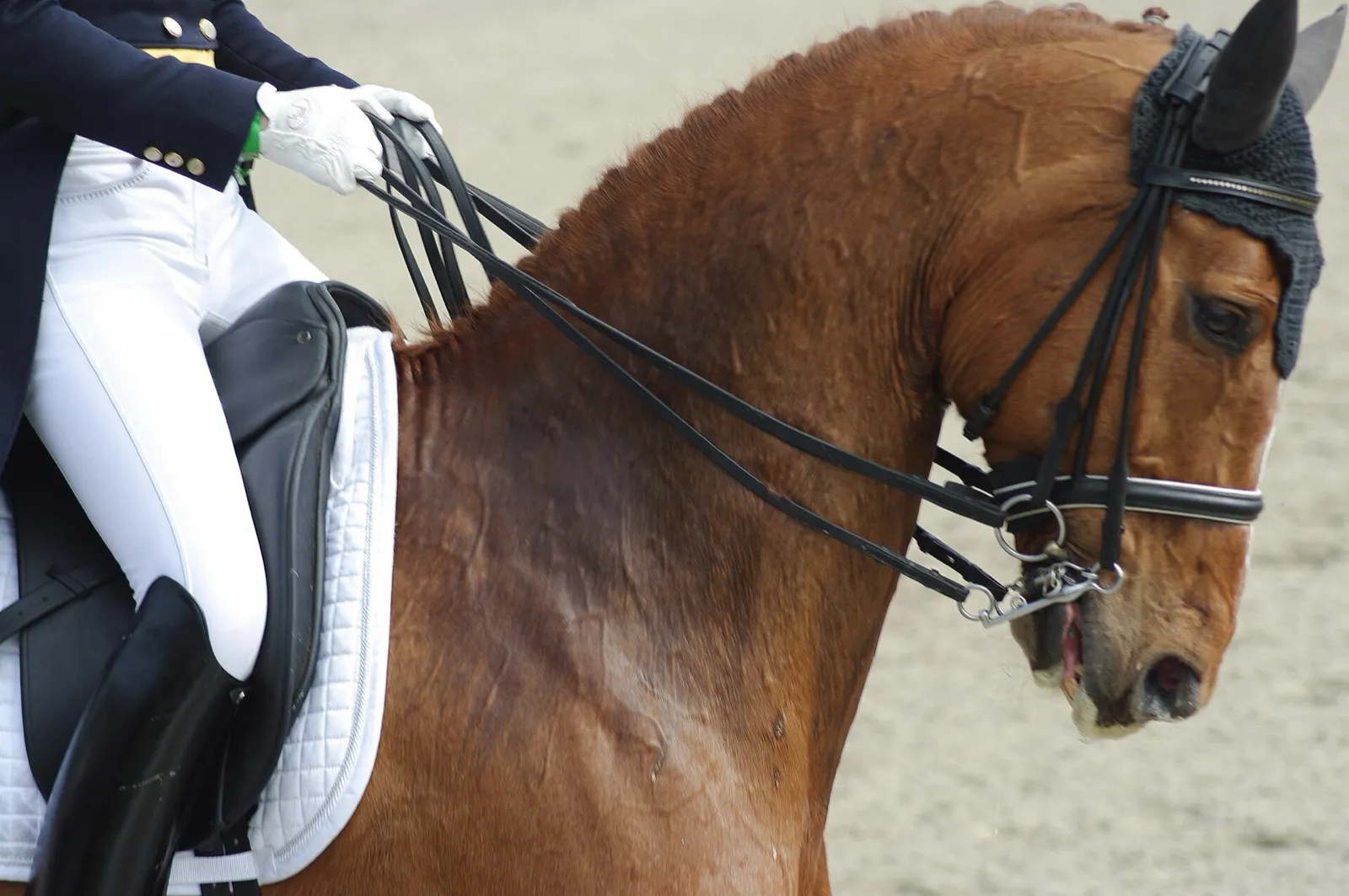
English reins
English reins are closed: the two sides are buckled or sewn together, so the rider can’t lose one if it slips through the fingers. They fasten to the bit with buckles, hook studs or stitching, and come in pony, cob and full sizes, with exact lengths varying by maker. The difference between them is mostly grip:
- Plain leather is smart and traditional, but slippery when wet.
- Laced and plaited (braided) reins give the fingers something to hold.
- Rubber-covered reins grip even in rain and sweat, which is why they are common in jumping, eventing and racing.
- Web reins of cotton or nylon webbing often have small leather bars, called hand stops, along their length.
A double bridle or Pelham needs two pairs. The snaffle (bradoon) rein is usually the wider of the two, the curb rein thinner and plain, so the rider can tell them apart by feel.
In English riding each hand holds one rein. It usually comes up between the ring and little fingers, runs across the palm and out over the index finger, and the thumb closes on top like a roof. This lets the fingers soften or close without the whole arm moving.
Western reins
Split reins are two separate long reins whose ends are not joined. If a rider drops them or gets off, there is no loop for the horse to catch a foot in. In many western show classes a horse in a snaffle or bosal is ridden with two hands, while an older horse in a curb bit is ridden with one, and only one finger may go between split reins.
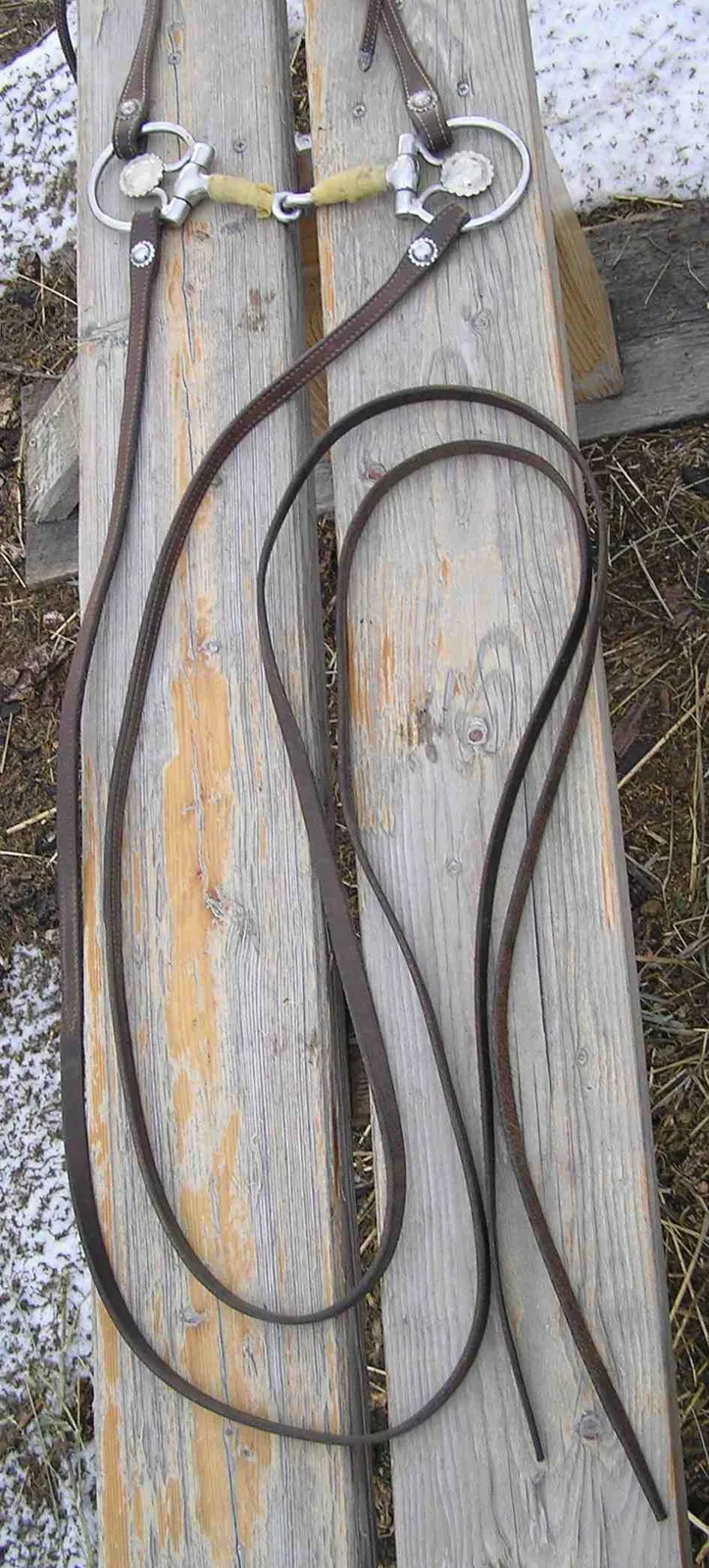
Romal reins come from the vaquero tradition of Spanish California. They are closed reins, often of braided rawhide, with a long tapering extension, the romal, attached where they join. The rider holds the reins in one hand with no fingers between them and carries the romal in the other; show rules require at least 16 inches (40 cm) of rein between the two hands. The romal is for moving cattle, not for striking the horse.
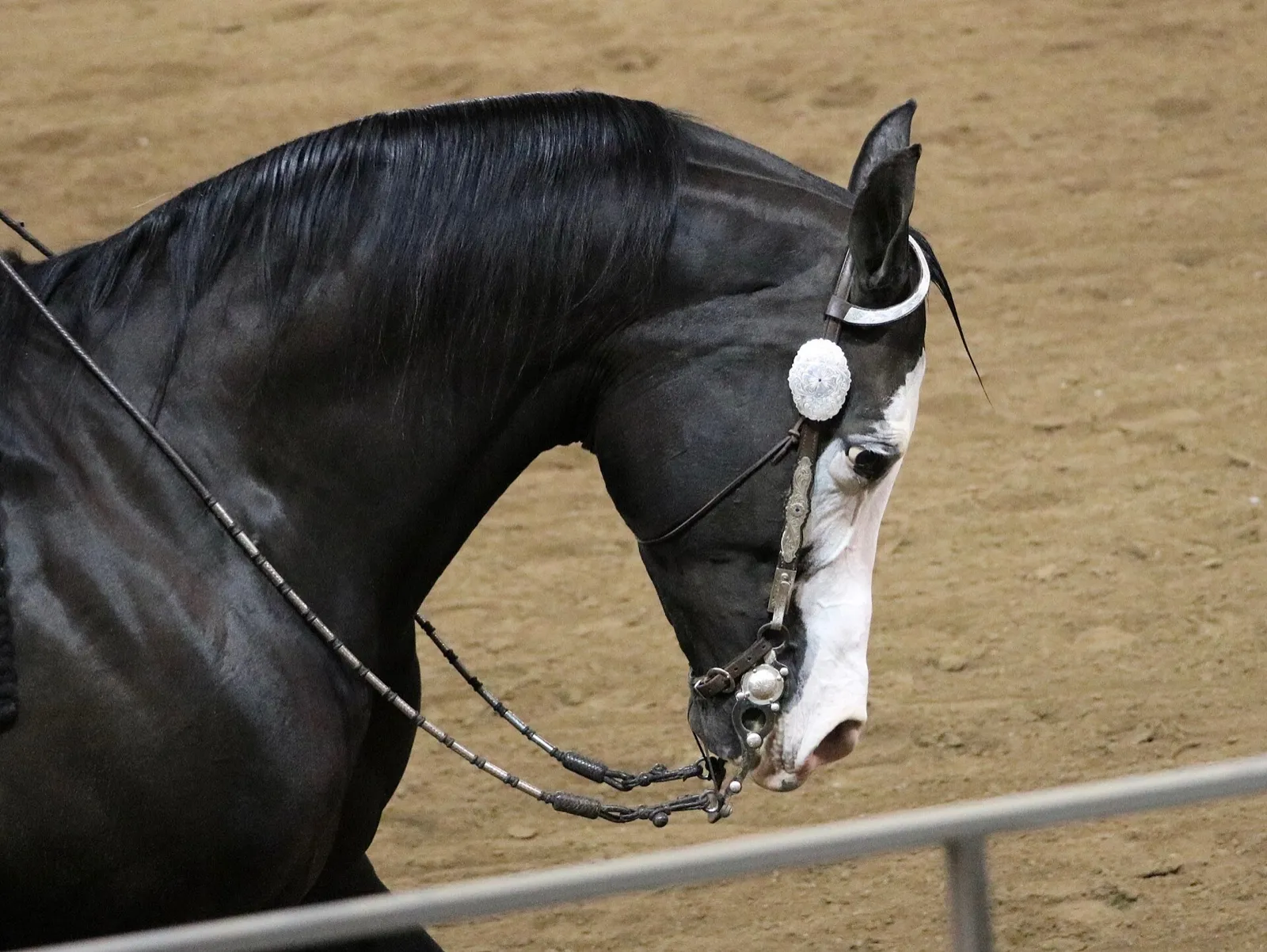
Roping reins are a single short closed rein that can’t be dropped while the rider is busy with a rope, and the mecate is one long rope, traditionally horsehair, that ties to a bosal to make both a looped rein and a lead (see hackamores).
Main types
| Type | What it is for |
|---|---|
| Closed English reins | One loop, buckled or sewn: English riding of every kind |
| Double reins | Two pairs, for a double bridle or Pelham |
| Split reins | Two loose ends: western riding, especially training and pleasure |
| Romal reins | Closed rawhide reins with a romal: vaquero-style bridle horses and shows |
| Roping reins | One short closed rein: roping and timed events |
| Mecate | Long rope rein and lead tied to a bosal |
| Side reins | Bit to saddle or surcingle, not held by anyone: lunging |
| Draw (running) reins | From the girth through the bit rings to the hand: schooling aid with strong leverage |
| Driving reins (lines) | Very long reins through the harness: driving |
Fit and safety
Reins should be long enough for the horse to stretch its neck fully on a loose rein, without leaving a loop so long it can catch the rider’s foot. Draw reins multiply the rider’s pull and can force a horse’s head into place rather than teach it, so they belong only in experienced hands, ideally under an instructor’s eye.
Check reins every time you tack up. The stitching and buckles where they fasten to the bit take the most wear; rubber grips crack with age, and a running martingale should always be used with rein stops, small leather or rubber stops that keep its rings from sliding down onto the bit fastenings. Never tie a horse up by the reins: if it pulls back, it can hurt its mouth or break the reins. Clean and condition leather reins regularly (see how to clean tack); web reins can usually be washed.
Worth knowing
To “give free rein” means to loosen the reins and let the horse go as it likes. It is often misspelled “free reign”, but the phrase comes from riding, not from royalty.
Related tack
Reins are part of the bridle and work through the bit. For rope reins on a bosal, see hackamores; for the reins of a driving horse, see harness.
Top image from Olaf Kosinsky under the CC BY-SA 3.0 license

Image from Montanabw, public domain

Image from Montanabw under the CC BY-SA 4.0 license
