Western Saddles
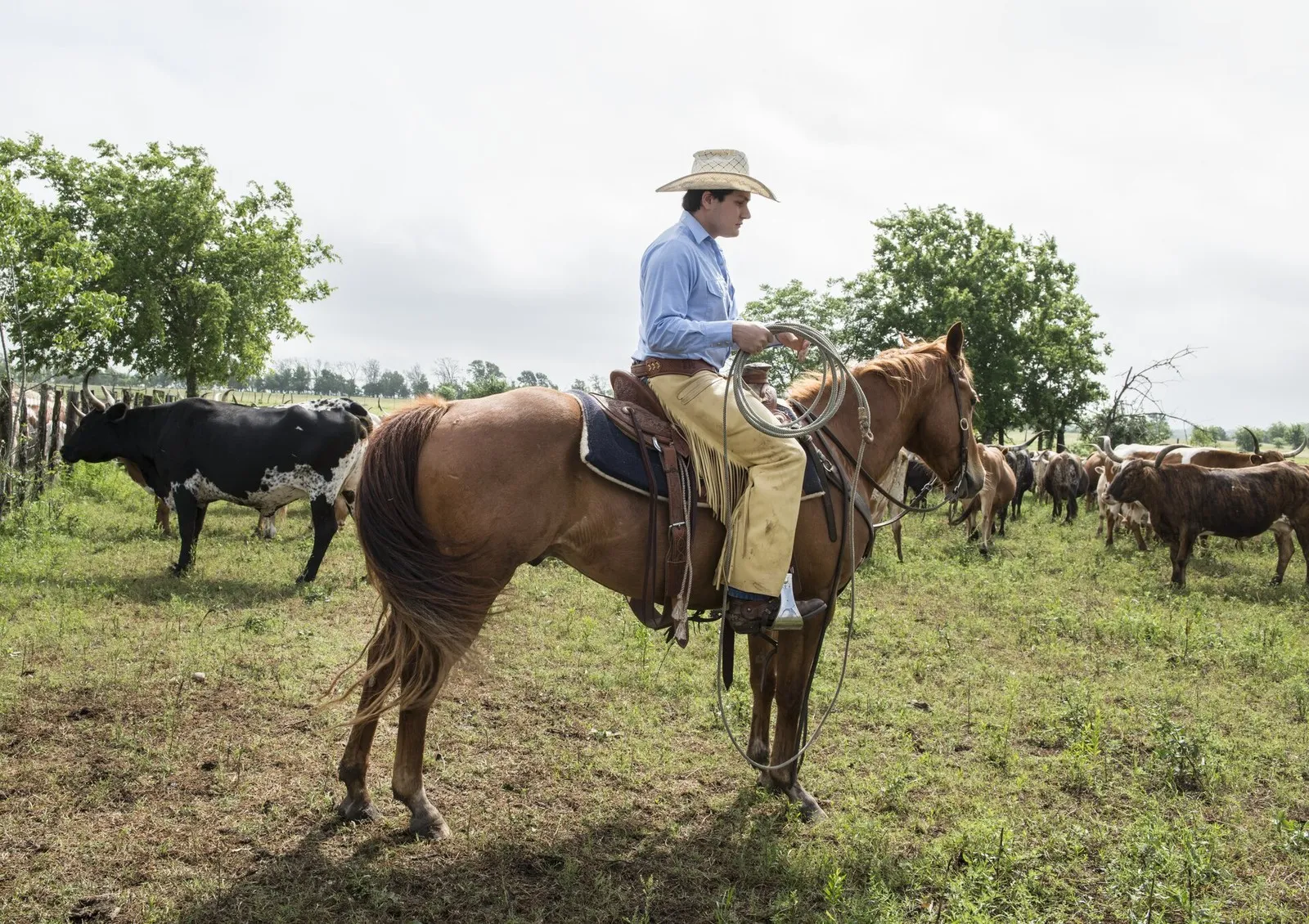
A western saddle is the big, deep-seated saddle of the cowboy, built for long days of ranch work. Its wide skirts spread the rider's weight over a large area of the horse's back, and the horn at the front gives a roper something to tie or wrap the rope around once a cow is caught.
Parts of a western saddle
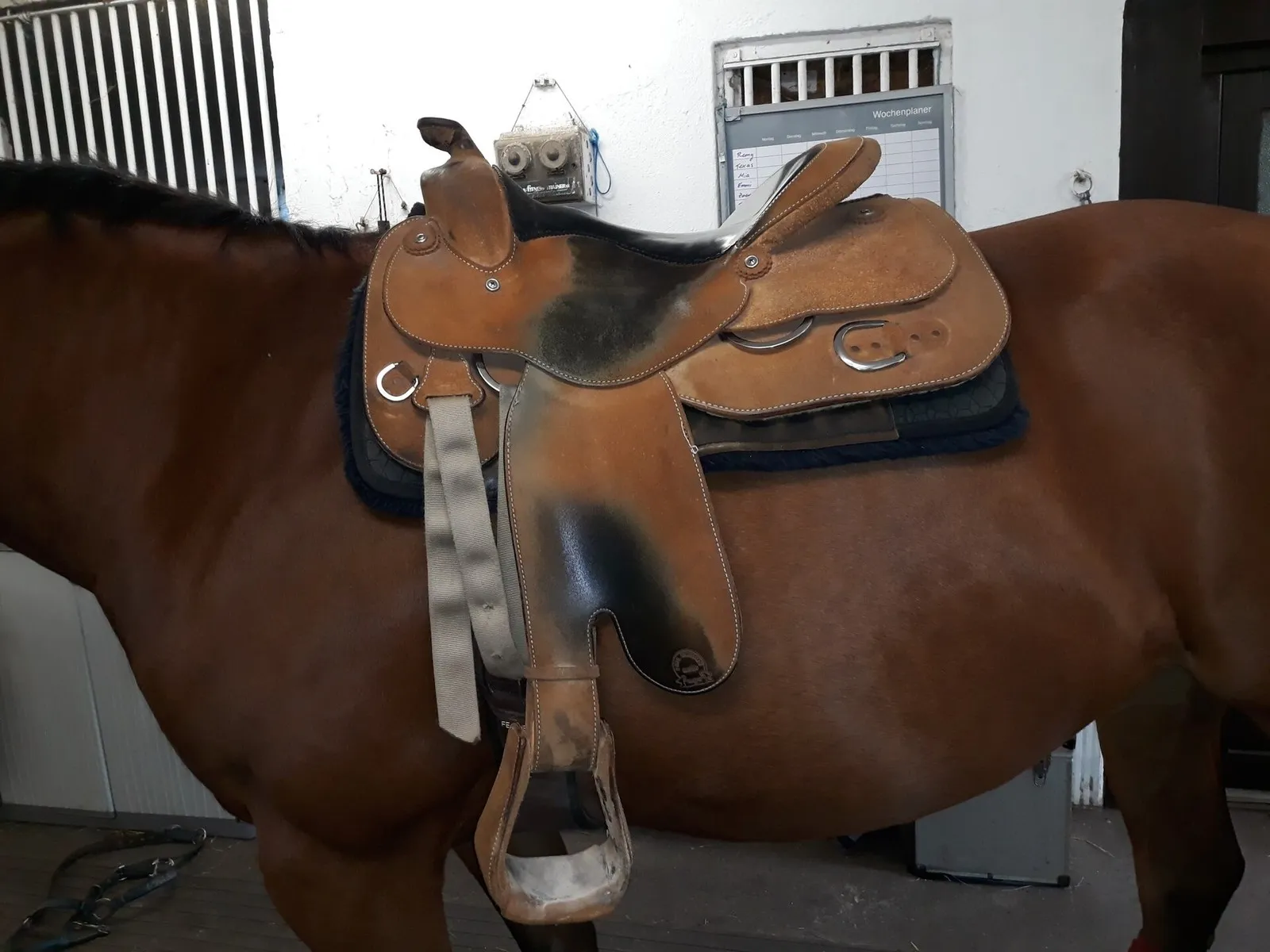
- Tree: the frame inside, traditionally wood covered in rawhide, or a synthetic. Its two bars carry the weight, one on each side of the spine.
- Fork, swells and horn: the fork is the front arch of the tree; the swells are its sides, and the horn sits on top.
- Seat and cantle: where you sit, and the raised back behind it.
- Gullet: the gap under the fork that clears the withers, the bony ridge at the base of the neck.
- Skirts and jockeys: the skirts are the large leather panels under the seat, lined with sheepskin; the jockeys are the smaller leather flaps over them.
- Fenders and stirrups: the fenders are the wide leathers the stirrups hang from, protecting the rider’s legs from sweat.
- Rigging: the rings or plates the cinch attaches to. On the near (left) side a long strap called the latigo runs from the rigging to the front cinch; on the off side a shorter off billet does the same job.
- Back cinch: a second, rear cinch on many saddles, tied to the front one by a short strap.
- Saddle strings: leather ties for carrying a coat or gear.
The front rigging can sit in different places: right under the fork (full rigging), a little farther back (7/8 and 3/4 rigging), or halfway between fork and cantle (center-fire). Saddles rigged well forward usually carry a back cinch too.
Types of western saddle
| Type | What it is for |
|---|---|
| Roping | Heavy and strong, with a thick horn and a low cantle so the rider can step off quickly |
| Cutting | Made to keep the rider secure as the horse darts, stops and turns in front of a cow |
| Reining | Free-swinging fenders, so the rider’s legs can move through sliding stops and spins |
| Barrel racing | Light, with a deep seat and high cantle for sprints and tight turns |
| Trail and pleasure | A comfortable, padded seat for long hours at a walk and jog |
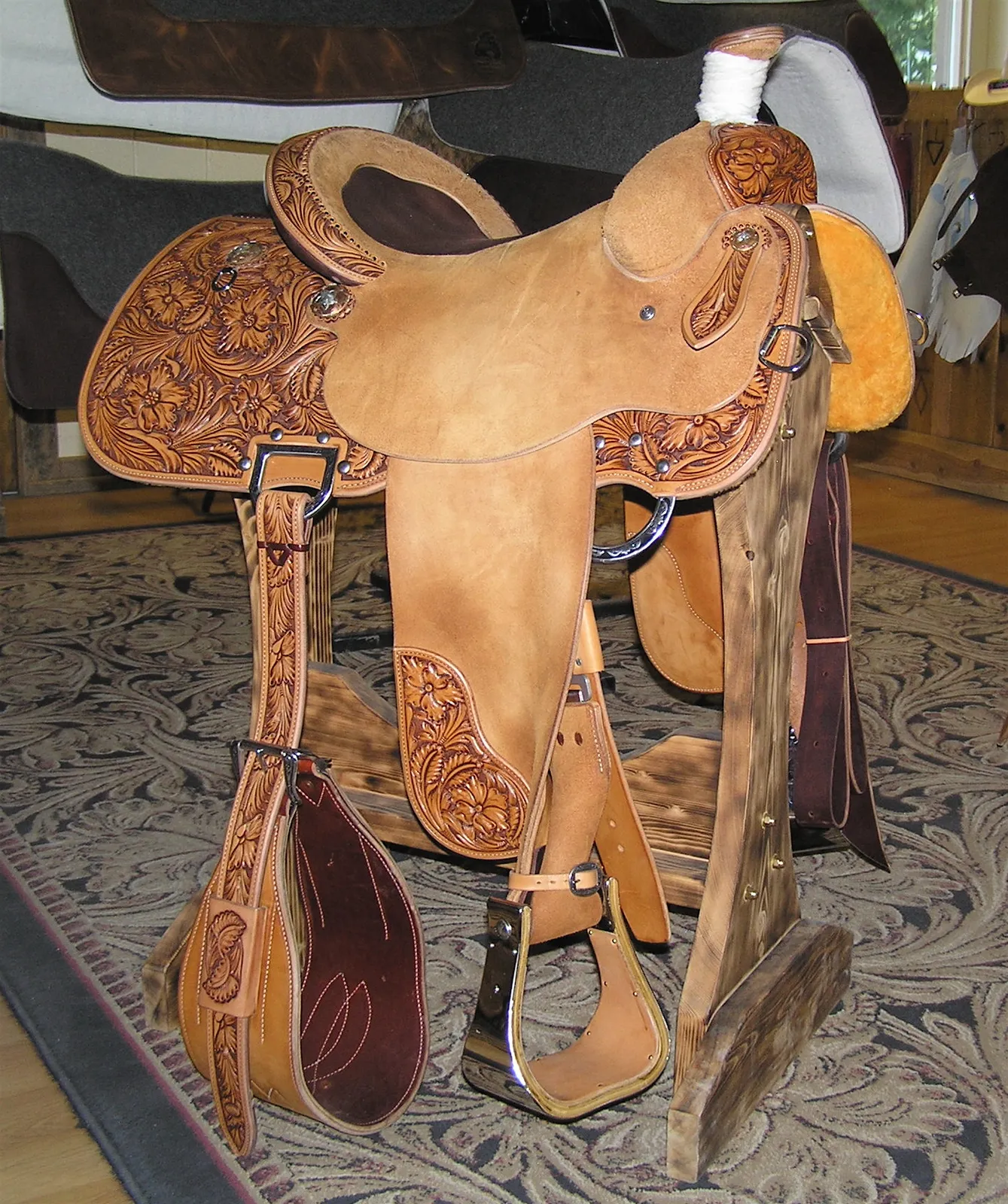
| Show | A working design dressed up with tooled leather and silver |
| Endurance | Lighter, often hornless, spreading the weight over a larger area |
| Bronc | A hornless saddle for rodeo saddle-bronc riding |
How it should fit
The bars must match the angle and curve of the horse’s back. Makers sell trees in several widths, often under names such as semi-quarter horse and full quarter horse bars, after the Quarter Horse, with shorter, flatter trees for breeds such as the Arabian and much wider ones for drafts. With the rider mounted, two or three fingers should fit between the withers and the fork, more for a heavier rider. The bars should touch the back along their whole length: if they bridge, touching only at the front and back, they press hard on the withers and the loins, just behind the saddle.
Watch for dry spots beside the withers after a ride, a sore loin, rubs at the edges of the skirts, or white hairs where the saddle sits. Skirts that are too long can dig into the hips of a short-backed horse. A western saddle always goes on over a saddle pad or blanket; the sheepskin lining is not enough on its own. Seat sizes are measured differently from English ones, so the numbers do not compare.
Saddling up safely
Groom the saddle and cinch areas first; trapped dirt causes sores. Fasten the front cinch first, then the back cinch, then the connecting strap. The back cinch should sit snug against the belly, never hanging loose where a hind foot could catch in it. Tighten the front cinch slowly: snug it up, lead the horse a few steps, then take it up a little more, until about two fingers fit between the latigo and the horse. Cinching hard and fast can make a horse “cinchy,” and some will throw themselves down or over backward. The University of Arkansas guide Saddling the Horse has the full steps. When you unsaddle, work in reverse: back cinch first, front cinch last, so the saddle is never held on by the back cinch alone.
Before each ride, check the latigos and cinch for cracks, fraying or worn holes, since they carry the whole saddle. Brush the sheepskin after riding, and clean and oil the leather now and then.
Where it came from
The western saddle descends from the saddles the Spanish brought to the Americas, which Mexican vaqueros (cowboys) adapted for working cattle. The horn was added so a roper could tie off or wrap the rope around it. The design kept changing with the work: the back cinch came into wide use as roping events grew, and in 1922 Earl Bascom designed the hornless bronc saddle used in rodeo. For show-ring words, see our western show terminology.
Related tack
Every western saddle needs a cinch and a pad or blanket; a breast collar, covered under breastplates, stops it sliding back on steep ground. Compare it with English saddles, or start at saddles.
Top image from Carol M. Highsmith, public domain
Image from Esroh17 under the CC BY-SA 4.0 license

Image from Montanabw under the CC BY-SA 3.0 license
