Blankets
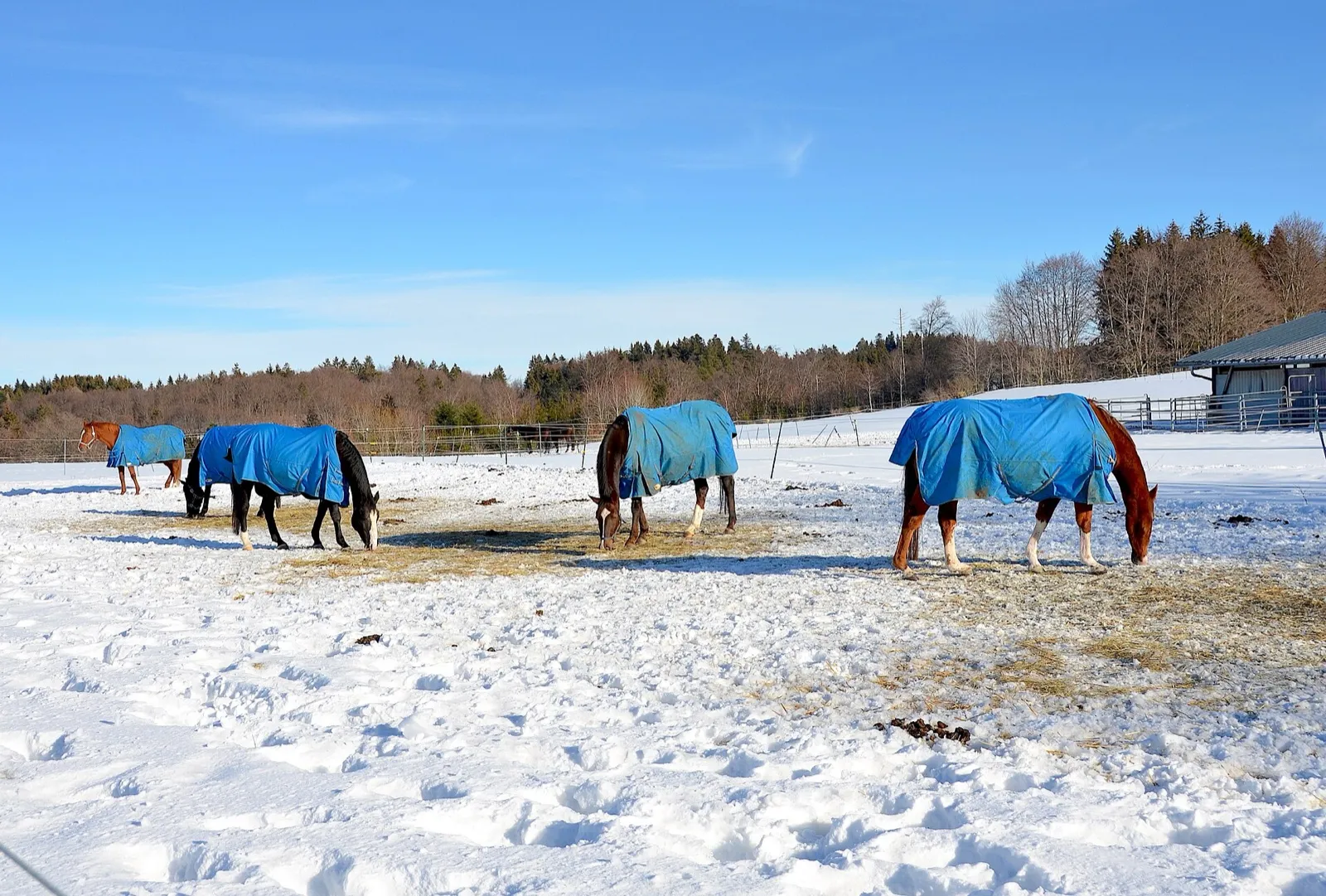
A horse blanket, called a rug in Britain, is a fitted coat that keeps a horse warm, dry, clean or free of flies. Many horses never need one: a healthy horse with a full winter coat, shelter and plenty of hay copes with a great deal of cold. A clipped, elderly or thin horse is another matter.
Parts of a blanket
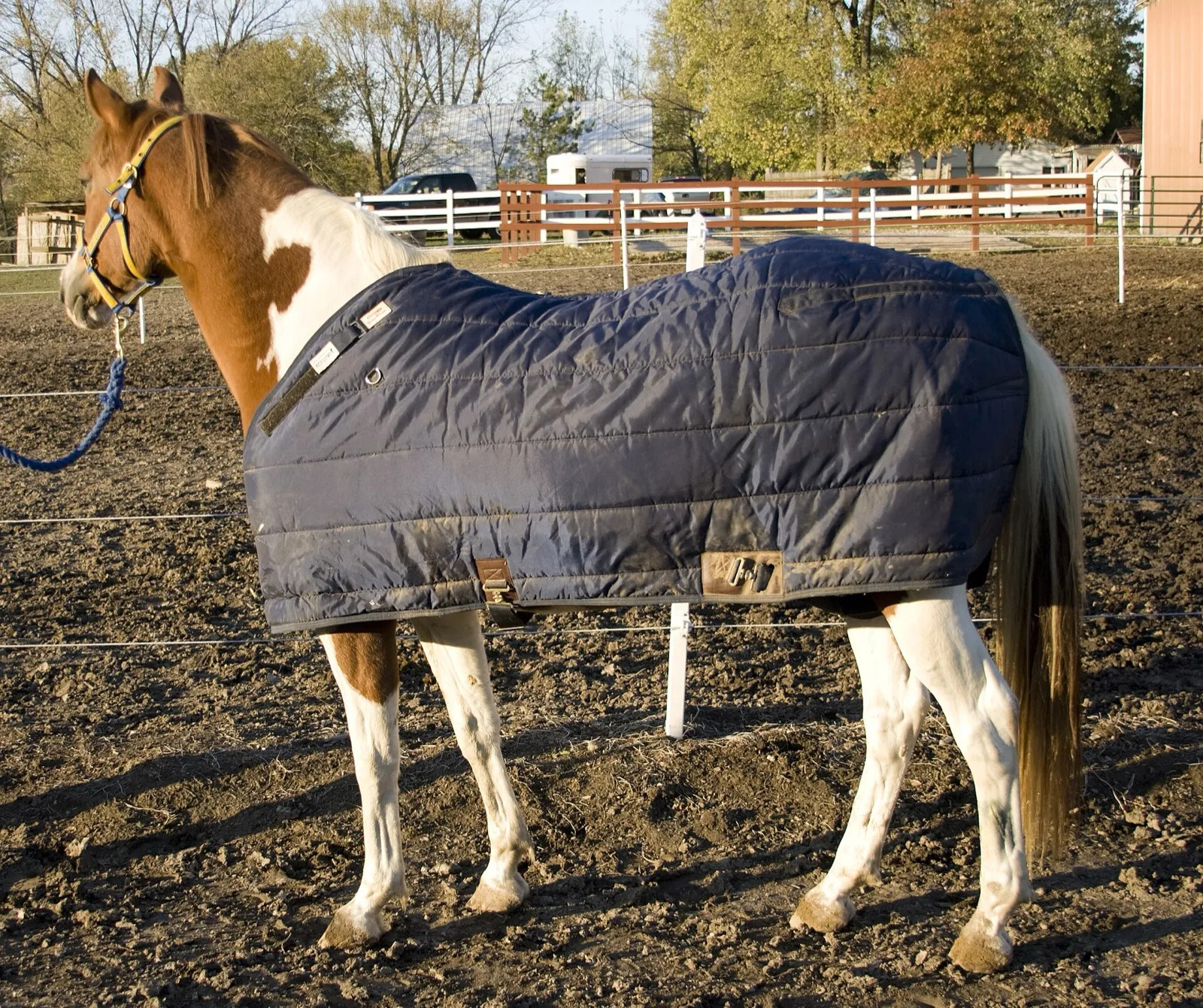
The outer fabric is the shell, inside is a smooth lining, and warm blankets have insulating fill between the two. One or two straps buckle across the chest, two surcingles (belly straps) cross under the belly, and leg straps loop around the hind legs to stop the blanket sliding sideways. Many turnouts take a separate neck cover or hood.
Types of blanket
| Type | What it is for |
|---|---|
| Turnout blanket | Outdoors. Waterproof but breathable, in weights from unfilled to heavy. |
| Stable blanket | Indoors only. Warm but not waterproof. |
| Sheet | A blanket with no fill. A turnout sheet keeps off rain and wind; a stable sheet keeps a horse clean. |
| Cooler | Wool or fleece, put on a hot or wet horse after work so it dries without getting chilled. Not to be left on an unattended horse. |
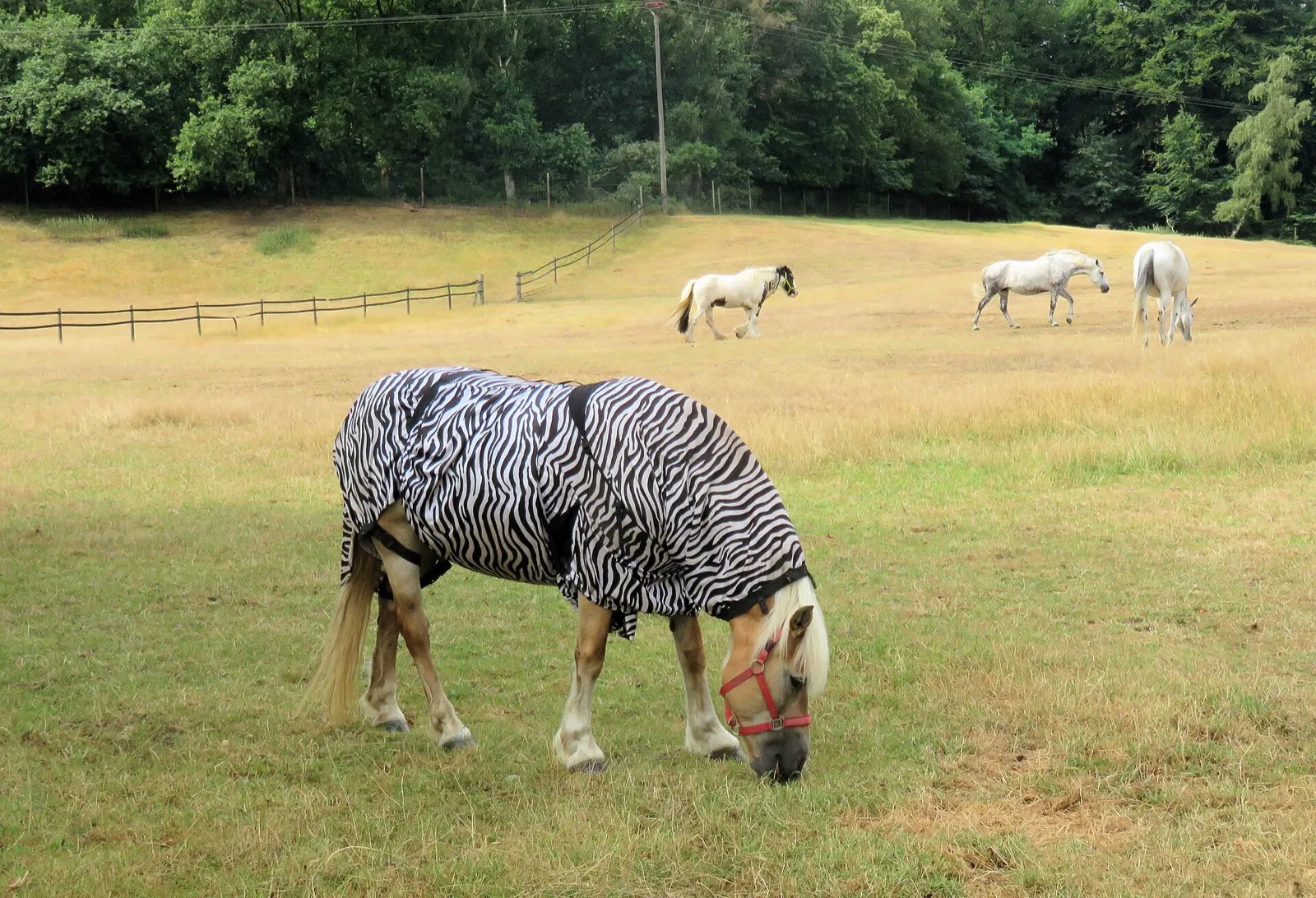
| Fly sheet | Light mesh against biting insects and sun. |
| Quarter (exercise) sheet | Covers the loins and hindquarters under saddle, keeping muscles warm during a cold warm-up. |
Fill weight and denier
Fill is the polyester insulation, and its weight in grams is the best guide to warmth. Makers draw the lines differently, so read the number, not the label:
- Sheet: no fill
- Lightweight: up to about 100 g (some makers go to 150 or 200 g)
- Mediumweight: about 150 to 250 g
- Heavyweight: about 300 g and up; extra-heavy blankets reach about 400 g
Denier describes the shell, not the warmth. It is a textile unit, the weight in grams of 9,000 meters of a single fiber. A higher number means thicker yarn and a tougher fabric, so a 1200-denier turnout stands up to a playful field mate better than a 600-denier one. Many shells are also woven as ripstop, with a grid of heavier threads that stops a small tear from spreading.
Measuring and fit
With a soft tape, measure from the center of the chest, around the widest part of the shoulder and along the side to the middle of the tail. In the United States that figure in inches is the size: a horse that measures 78 inches wears a 78. British sizes are in feet and inches (6’6” is 78 inches) and European ones in centimeters. Some brands end the tape at the point of the buttock instead, so check each maker’s chart.
An extension fitting guide from the University of Wisconsin–River Falls gives these checks:
- A cupped hand fits between the withers and the blanket.
- A flat hand slides under it at the shoulders, and the horse can graze without it pulling tight.
- The blanket covers the barrel without hanging down the legs.
- A hand’s width fits between the surcingles and the belly, so a leg cannot get caught.
- Leg straps hang above the hocks with a hand’s width to spare, looped through each other.
- Snaps face in toward the horse, so they cannot catch on hay nets.
Rubbed patches at the shoulders, withers or chest, or a blanket that keeps slipping to one side, mean a poor fit.
When a horse needs one
Extension services such as Utah State and Minnesota agree that most horses allowed to grow a normal winter coat do not need a blanket. Utah State puts the lower critical temperature, below which a horse burns extra feed to stay warm, at about 18°F (−8°C) in a winter coat and 40°F (5°C) in a summer coat. A blanket makes sense for a horse that:
- is clipped;
- is very young or old, or underweight;
- has not adjusted to the cold, for instance after moving from a warmer region;
- has no shelter in severe cold.
Wet and wind matter as much as temperature, because a soaked, flattened coat stops insulating. A rule of thumb quoted by US Equestrian: when two of wind, wet and cold come together, consider a blanket. Never put one on a wet horse; dry it first under a cooler. Too much blanket does harm as well, leaving a horse damp with sweat and then chilled. Our guide how to tell if your horse is cold has a temperature table and the warning signs.
Everyday care
Take the blanket off often, daily if you can, to groom and check the skin and ribs: weight loss hides under a blanket, and damp warmth can breed skin fungus. Have blankets cleaned and repaired before the season, and store them clean and dry. If an older horse loses weight through the winter despite good feed, talk to your vet.
Worth knowing
Zebra-striped fly sheets are not just a fashion. In a 2019 study led by Tim Caro, horse flies landed far less often on horses in striped coats than on the same horses in black or white ones, yet just as often on their bare heads. The stripes seem to spoil the flies’ landing.
Related tack
A western “saddle blanket” goes under the saddle; see saddle pads. For the legs, see boots and wraps, and for handling, halters and lead ropes.
Top image from Olga Ernst under the CC BY-SA 4.0 license

Image from Ealdgyth under the CC BY 3.0 license

Image from Gerbil under the CC BY-SA 4.0 license
