Boots and Wraps
Boots and wraps protect a horse's lower legs: from knocks and scrapes, from blows by its own hooves, from bumps in a trailer and, on bare feet, from stones. Each kind guards a particular spot, and each can do harm if it fits badly or is put on wrong.
Why legs need protection
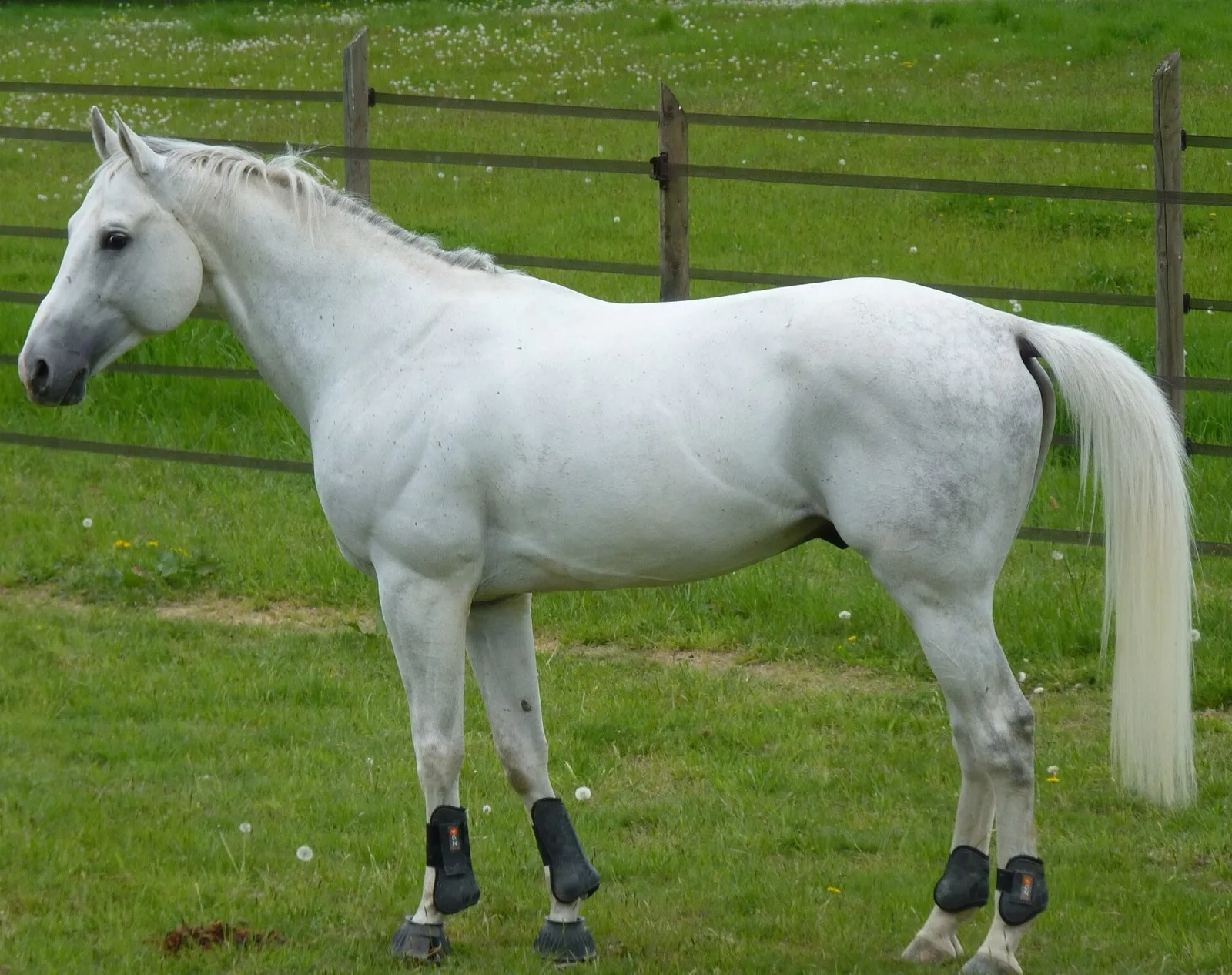
Below the knee and hock a horse has almost no muscle, only bone, tendons and ligaments under thin skin. The flexor tendons run down the back of the cannon bone. A horse can also strike itself. Brushing, or interfering, is a hoof knocking the inside of the opposite leg; overreaching is a hind toe catching the heel of a front foot.
Types of boots and wraps
| Type | What it protects against |
|---|---|
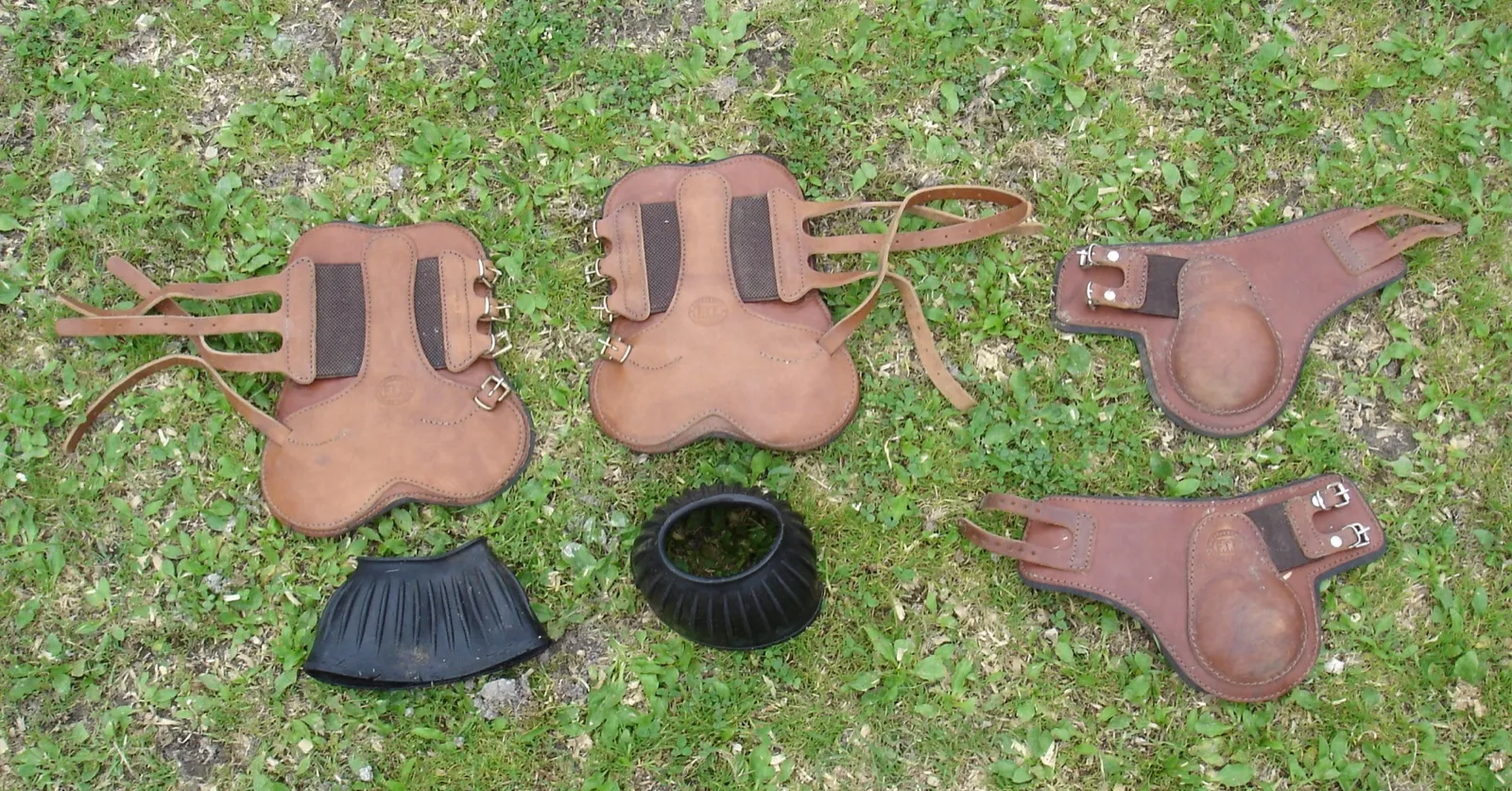
| Brushing boots | Knocks to the inside of the lower leg from the opposite hoof. Neoprene or mesh, with a firm strike pad on the inside. |
| Tendon boots | Strikes from a hind toe on the back of the front legs. Often open at the front for jumping, so the horse still feels a pole it touches. |
| Fetlock boots | The hind fetlocks knocking each other. Short boots for the hind legs, usually paired with tendon boots in front. |
| Bell (overreach) boots | Cuts to the heel bulbs and coronet (where the hoof meets the skin) of the front feet, and a hind foot treading on and pulling off a front shoe. |
| Shipping (travel) boots | Bumps, scrapes and treads in a trailer. Padded from the knee or hock, or above, down to the coronet. |
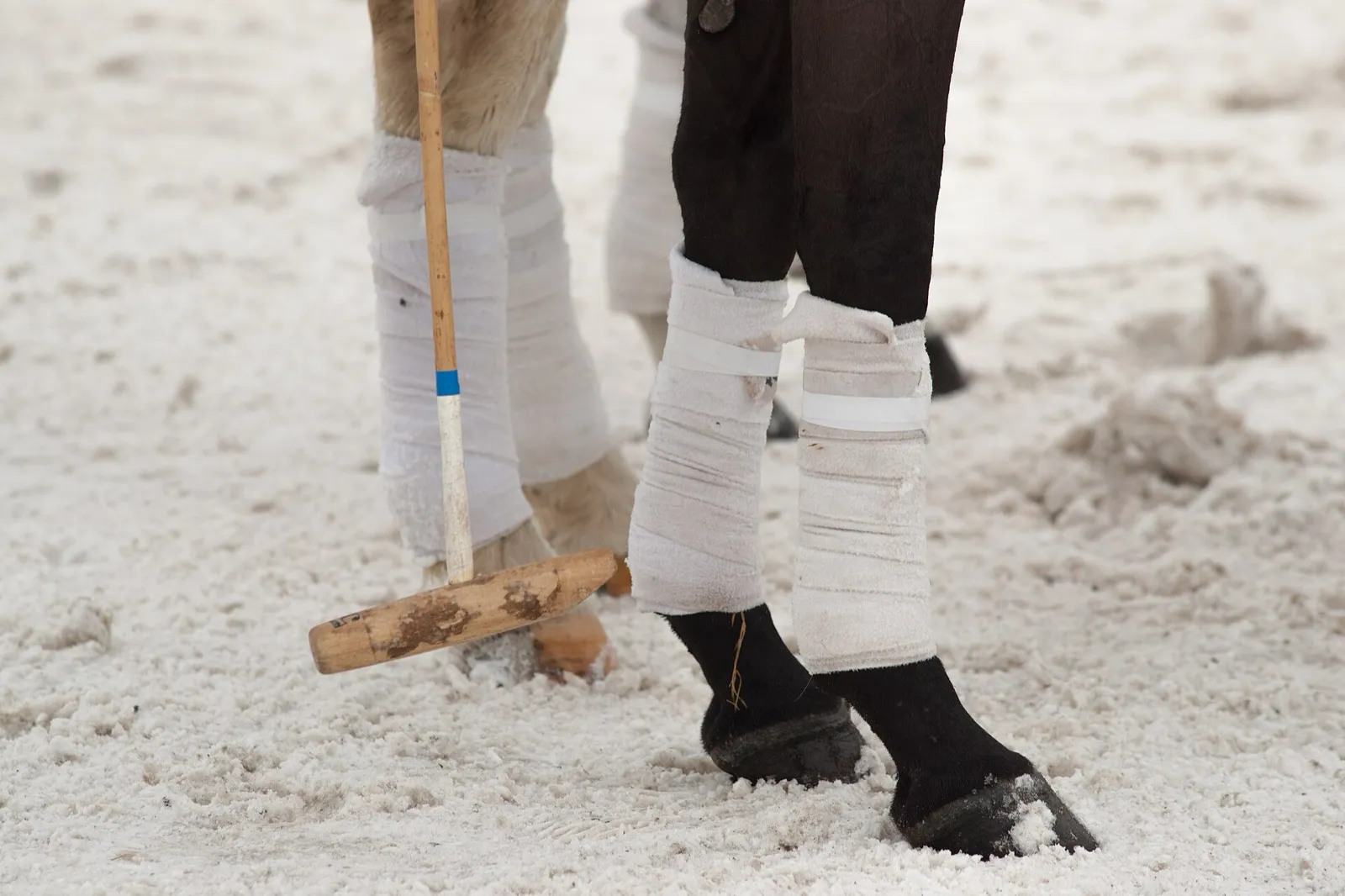
| Polo wraps | Scrapes and light knocks during work. A fleece bandage wound from below the knee or hock down around the fetlock. |
| Standing (stable) bandages | Knocks in the stall, swelling after hard work or long hours standing, and holding dressings. A stretchy bandage over a thick quilted pad. |
| Hoof boots | Stone bruises on bare feet, a lost shoe, or a dressing on an injured foot. A removable shoe that straps on. |
Fit and everyday use
Boots should be snug enough not to slip or twist, never tight enough to press. Put clean, dry boots on clean, dry legs, take them off after work, and do not leave them on for hours. A bell boot should just touch the ground behind the heel bulbs when the horse stands square. Hoof boots need careful sizing, ideally a couple of weeks after a trim, because a slight misfit can rub sores on the heel bulbs or coronet and even change the horse’s gait. Ask your farrier to check the fit.
Boots are protection, not a brace. In a study of 26 horses published in the Equine Veterinary Journal, support boots reduced how far the fetlock sank at the trot by only about half a degree to a degree and a half.
All leg protection also holds in heat. In a 2021 study at Middle Tennessee State University, every boot and bandage tested left the leg warmer than a bare one, a fleece polo wrap warmest of all, and none of the covered legs had cooled back to normal three hours later. The researchers think the heat may slowly damage the superficial flexor tendon; others point out that this is not yet proven. Either way, the researchers’ advice is simple: take boots and wraps off soon after work and hose the legs with cold water.
Bandaging: where it goes wrong
Veterinary sources warn that a bandage that is too tight, is tight in one spot, or slips after it goes on can damage the tendons underneath. Horsemen call the result a “bandage bow”, and a tendon hurt this way may never regain its full strength. Vets say the usual culprit is thin or uneven padding rather than the bandage as a whole. A wrap that is too loose has its own danger: it can slip down, unwind and trip the horse.
- Use smooth, even padding with no wrinkles, and don’t let it poke out at the ends.
- Wind with firm, even tension all the way down.
- The traditional direction is counterclockwise on the left legs and clockwise on the right, seen from above. Some horsemen say doing it the same way every time matters more.
- Finish with the fastening on the outside of the leg, where the other hoof cannot catch it open.
- Polo wraps are for exercise only, not for overnight.
- Rewrap standing bandages at least once a day unless your vet says otherwise, and swap a wet bandage for a dry one.
- If a leg is hot, swollen or sore when the bandage comes off, call your vet.
Bandaging is a skill best learned from an experienced hand; our polo wraps video is a start.
Competition rules
In FEI show jumping, everything added to one leg, boots and fetlock rings included, may weigh no more than 500 grams, and hind boots for young horses have size limits too. Check the rulebook before you compete.
Worth knowing
The strap-on hoof cover is an ancient idea. Across the northwestern Roman Empire, horses and other draft animals wore the hipposandal, an iron cup with a metal sole held on by clips and leather laces. It was in use before nailed horseshoes became common.
Related tack
For cold weather, see blankets. Boots are often worn for lunging, and a horse traveling also needs a well-fitted halter and lead rope.
Top image from Wikikoko, public domain

Image from Maloq under the CC BY-SA 3.0 license

Image from Ludovic Péron under the CC BY-SA 3.0 license
