Lunging Equipment
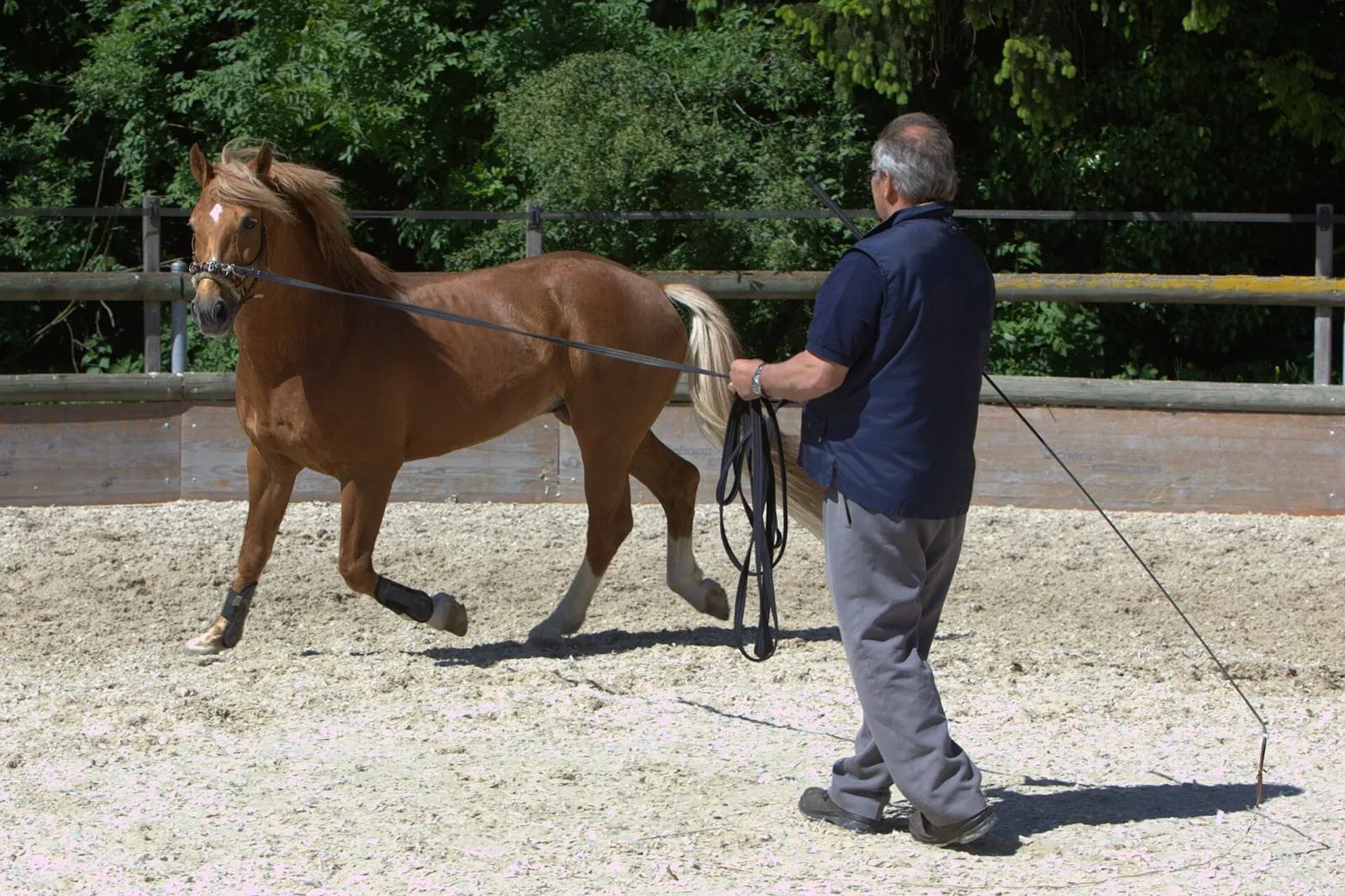
Lunging (spelled longeing in much of America) means working a horse on a circle around you at the end of a long line. It is used to exercise and warm up a horse, to start a young one, to check how it is moving, and to give riders lessons without reins. The kit is simple, but each piece needs fitting and handling with care.
The equipment
| Item | What it is for |
|---|---|
| Lunge line | The long line between handler and horse; it does the job of the reins |
| Lunge cavesson | A sturdy padded noseband with rings, so the line acts on the nose and not the mouth |
| Surcingle or roller | A padded strap around the girth area with rings for side reins |
| Side reins | Straps from the bit to the surcingle or saddle that give the horse a steady contact |
| Lunge whip | A long whip that takes the place of the rider’s legs |
| Boots or wraps | Protect the horse’s legs from knocks on the circle |
Lunge line
The US Dressage Federation’s lunging guidelines recommend a line of about 10 meters (33 to 35 feet), and no shorter than 7 meters (about 23 feet). Cotton or jute is better than nylon, which slides through the hand. Hold the spare line in neat loops, never coiled around your hand or wrist, and never let it trail on the ground where you or the horse can step in it. Wear gloves.
Lunge cavesson
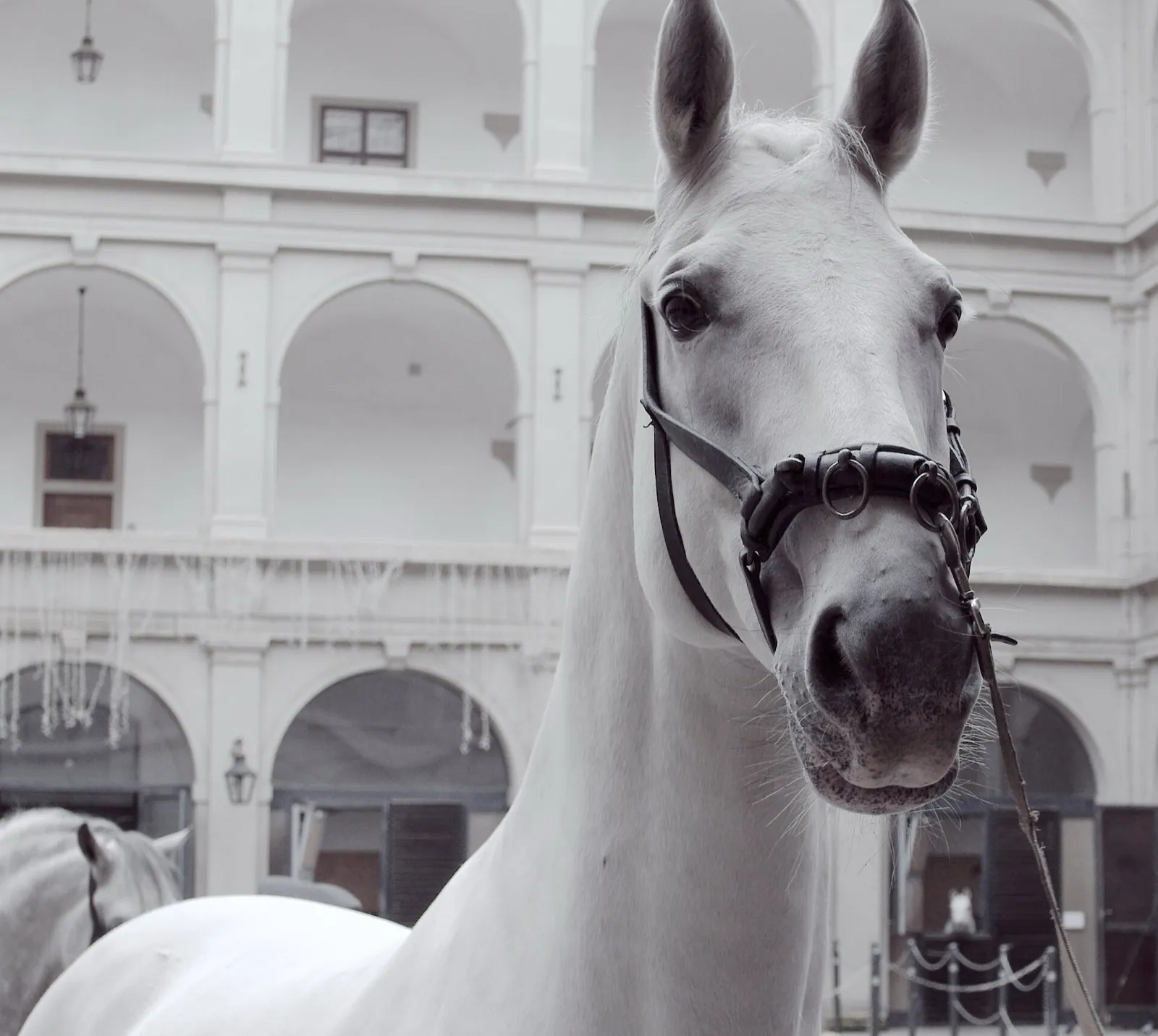
A lunge cavesson is a sturdy, padded noseband with rings on the front, usually three; the line clips to the center ring. It is the gentlest way to lunge, because it leaves the horse’s mouth alone, and you can change direction without moving the line. Fit it a little below the cheekbone and do it up snugly, with the jowl strap fastened, so it cannot twist round and rub the outside eye.
Some people clip the line to the inner bit ring instead, or run it through the inner ring, over the head and down to the outer ring. Trainers disagree about bit attachments; the over-the-head method acts like a gag and is severe, so leave it to experienced hands.
Surcingle or roller
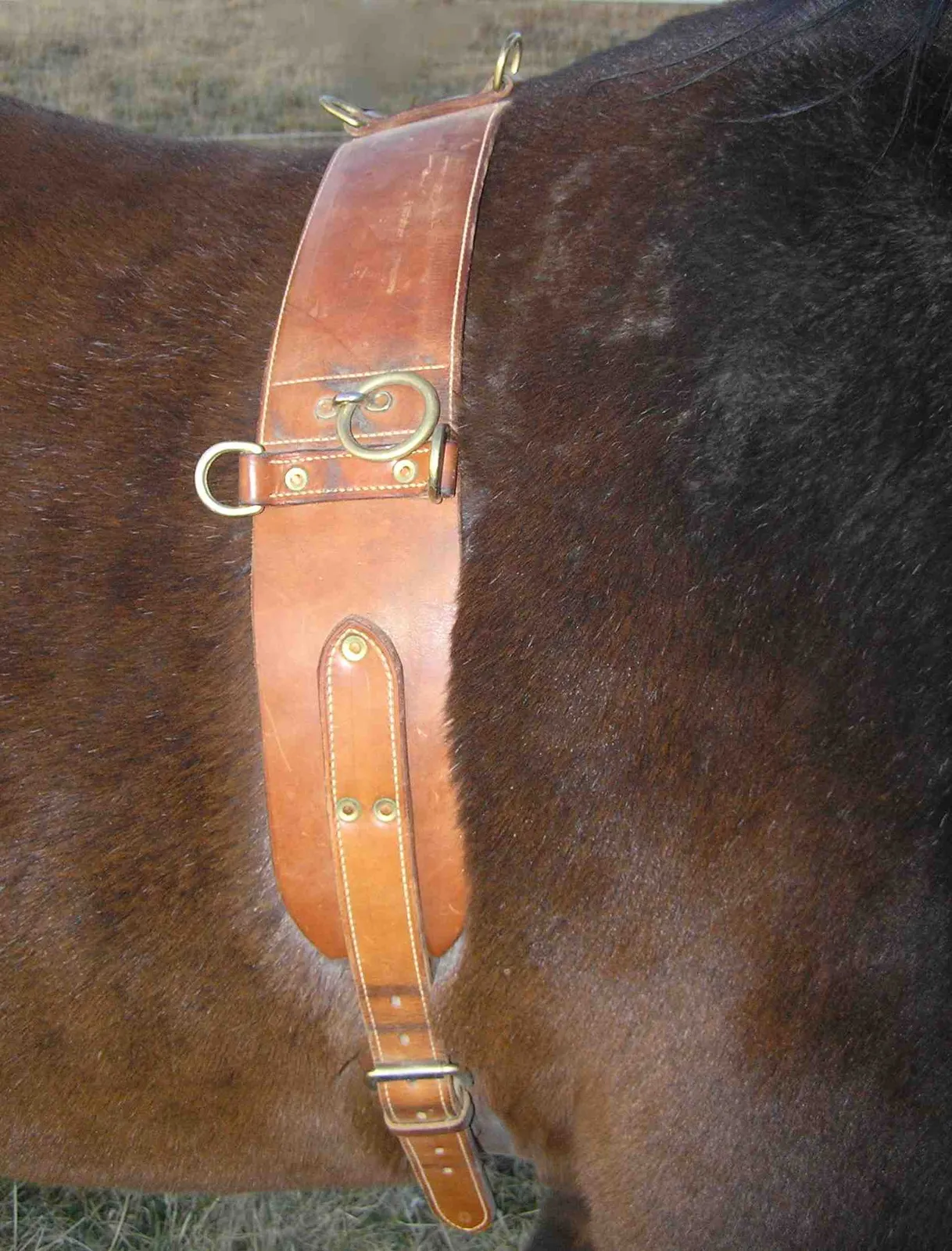
The surcingle (called a roller in Britain) is a padded strap that buckles around the girth area, with rings at several heights for attaching side reins or long reins. Put a pad underneath and tighten it gradually, as you would a girth. A saddle can be used instead, with the stirrups run up and secured, or taken off, so they cannot swing and bang the horse.
Side reins
Side reins run from the bit rings back to the surcingle or saddle. Both must be the same length. For a young or green horse they go on the lower rings and are kept long enough for the nose to be well in front of the vertical; a more trained horse may work with them higher and a little shorter. They come in plain leather, leather with a rubber ring (a “donut”) for a little give, and leather with elastic inserts. The USDF guidance keeps plain side reins for advanced horses, suggests the rubber-ring kind for most horses, and limits elastic to very green ones, warning that elastic can teach a horse to snatch at the bit. Other trainers have their own preferences, so ask your instructor.
Clip side reins on only once you are in the lunging area and the horse has warmed up without them, outside rein first, and unclip them before leading the horse anywhere. Avoid nylon side reins unless they have a breakaway section.
Lunge whip
The lunge whip stands in for the rider’s legs, not for punishment. Its lash should be long enough to reach the horse on the circle. Pointed toward the hocks it asks the horse to go forward; pointed toward the shoulder it asks it to move out. Never lay it on the ground. When you walk up to the horse, tuck the handle under your arm with the lash trailing behind you.
Lunging safely
- Work in a fenced area on level ground with good, non-slippery footing.
- Keep the circle large. The USDF advises no smaller than 15 meters (about 50 feet) across for an average horse; small circles strain the joints.
- Change direction every five to seven minutes and keep sessions short, especially for young or unfit horses.
- Wear a riding helmet, gloves and boots with ankle support and grippy soles. Do not wear spurs.
- Put boots or bandages on the horse (see horse boots and polo wraps), and secure the bridle reins so they cannot hang loose.
- Check the stitching on the line and the side reins often. Our article on how to lunge a horse has a video of the technique.
Related tack
You will need a halter and lead rope to bring the horse to and from the lunging area, and a lunged horse often wears a bridle and bit under the cavesson. Protect its legs with boots and wraps.
Top image from Rama under the CC BY-SA 2.0 FR license

Image from Eerschay under the CC BY-SA 4.0 license

Image from Montanabw under the CC BY-SA 3.0 license
