Saddles
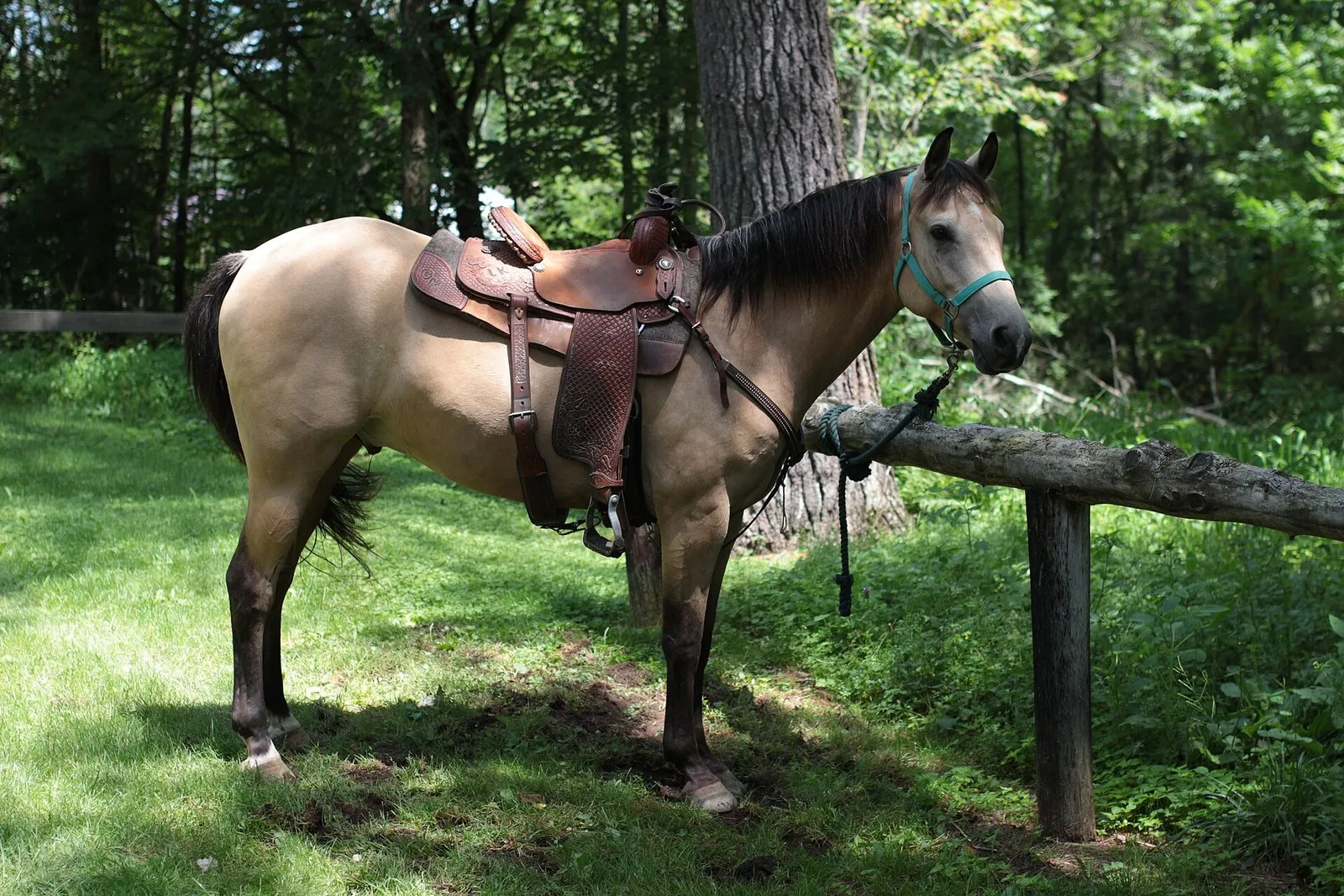
A saddle is the seat a rider sits on, held on the horse's back by a girth. It spreads the rider's weight over the broad muscles on either side of the spine, keeps that weight off the spine itself, and gives the rider a secure, balanced place to sit and somewhere to hang the stirrups.
What a saddle does
Ride bareback and your weight presses down through two seat bones onto a small patch of back. A good saddle turns that into a wide, even load on the long muscles beside the backbone, and keeps the rider clear of the withers (the bony ridge where the neck meets the back) and the spine, both of which bruise easily.
Parts of a saddle
Almost every riding saddle is built the same way underneath.
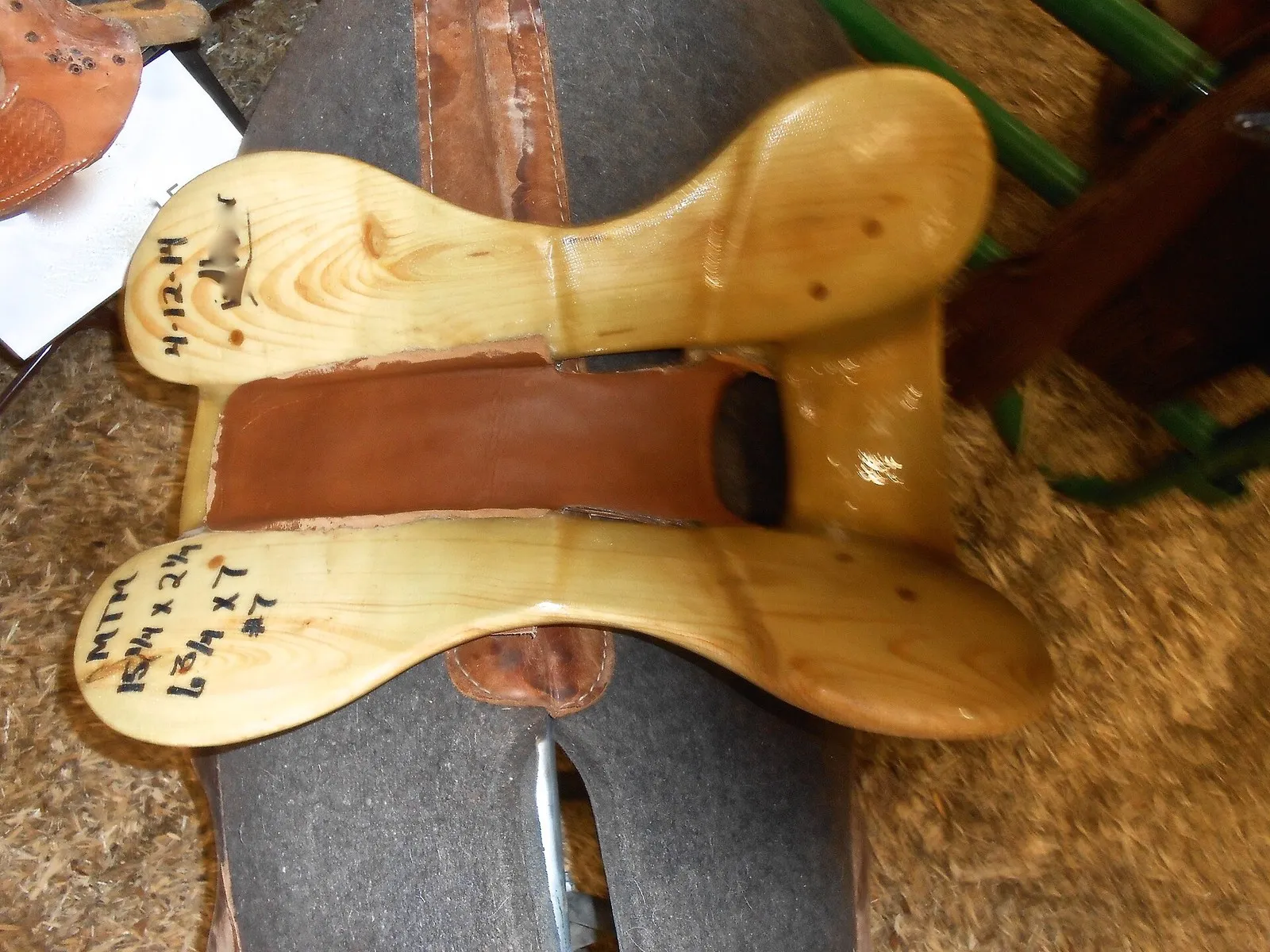
- Tree: the rigid frame inside, traditionally wood, now often laminated wood reinforced with steel, or a synthetic. Its two bars rest on the horse, one on each side of the spine, and their shape decides how the saddle fits.
- Gullet: the open channel between the bars that keeps the saddle off the withers and backbone.
- Seat, pommel and cantle: you sit in the seat; the pommel is the raised front and the cantle the raised back. On a western saddle the front is called the fork or swells, and it carries the horn.
- Panels or skirts: an English saddle rests on two cushions, called panels, stuffed with wool, foam or air. A western saddle has wide leather skirts lined with sheepskin.
- Flaps or fenders: the leather between the rider’s leg and the horse.
- Fittings: stirrup bars or fender straps for the stirrups, and billets or latigos for the girth or cinch.
The main families
| Type | What it is for |
|---|---|
| English saddles | Light, flat and close to the horse; used for dressage, jumping, eventing, hunting and pleasure riding |
| Western saddles | Bigger and heavier, with a horn; made for ranch work and now ridden on the trail, in rodeo and at shows |
| Sidesaddles | For riding with both legs on one side of the horse, held in place by two pommels |
| Stock saddles | The working saddles of other cattle countries, such as the Australian stock saddle, which usually has no horn |
| Racing and endurance saddles | Racing saddles are tiny and very light; endurance saddles spread the load over many hours on the trail |
| Treeless saddles | Flexible saddles with no rigid frame; they may not support a rider’s weight as well as a tree, so the pad underneath matters a great deal |
How a saddle should fit
A saddle has to fit two bodies at once. For the horse, the width of the tree matters most. With the girth done up and the rider aboard, you should be able to slide two or three fingers between the withers and the pommel, and the gullet should stay clear of the spine all the way back. The bars or panels should touch the back evenly from front to rear; a saddle that touches only at the ends, with a gap in the middle, is “bridging” and digs in at both ends. It should sit behind the shoulder blade, so the shoulder can move, and end before the last rib.
Signs of a poor fit include dry patches under the saddle when the rest of the back is sweaty, white hairs growing in over the withers or back, rubs and sores, a horse that flinches when its back is brushed, or one that pins its ears, hollows its back or bucks when saddled or ridden. A thicker pad will not cure a saddle of the wrong shape, and under a narrow one it makes the squeeze worse. Horses change shape with age, fitness, weight and season, so the British Horse Society advises having a qualified saddle fitter check the saddle every six months. Our guide to fitting a saddle covers the first checks, and the rider weight calculator suggests how much a horse can comfortably carry.
Everyday care
Wipe off sweat and mud after each ride, and clean and condition the leather so it stays supple; cracked leather can snap. Check the stitching on billets, latigos and stirrup leathers every time you tack up. Keep the saddle on a rack shaped like a horse’s back, in a dry room, under a cover. There is more in caring for saddles and cleaning your tack.
A little history
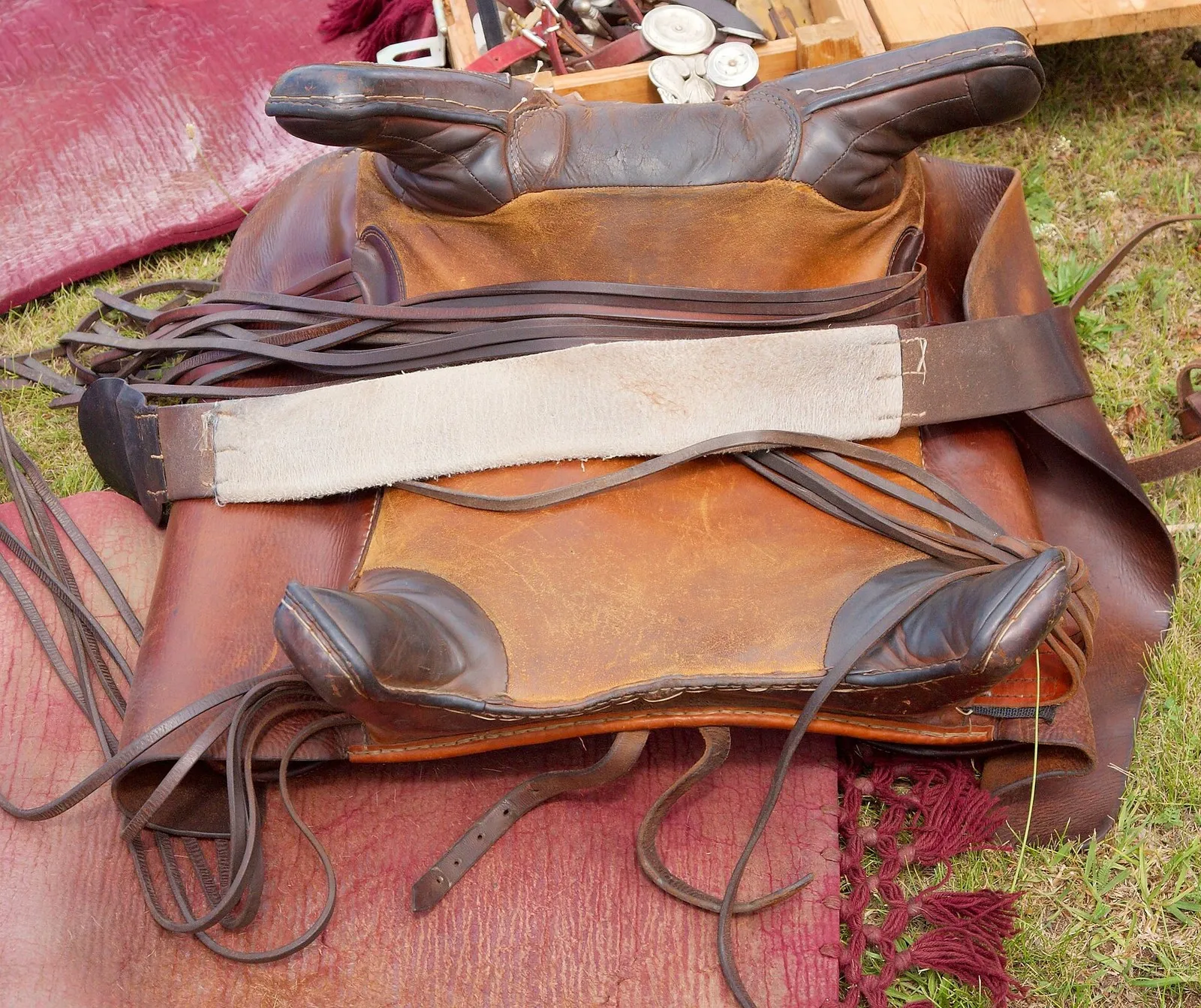
The first riders probably sat on a cloth or pad strapped around the horse. Assyrian cavalry of about 700 BC used fringed saddle cloths held on with a girth, a breastplate and a crupper. The oldest saddle yet dated, a cushioned leather saddle from a woman’s grave at Yanghai in western China, was made between about 727 and 396 BC. Saddles built on a solid frame came later. Roman cavalry rode on a saddle with a horn at each corner that held the rider firmly without stirrups; it has been rebuilt from surviving leather covers. Stirrups came from Asia, and the earliest reliable evidence of a pair comes from a Chinese tomb dated to AD 322. See our history of stirrups and antique saddles.
Related tack
Under every saddle goes a saddle pad; a girth or cinch holds it on, stirrups hang from it, and a breastplate or crupper stops it sliding back or forward.
Top image from Karl Thomas Moore under the CC BY-SA 4.0 license

Image from Montanabw under the CC BY-SA 4.0 license

Image from MatthiasKabel under the CC BY 2.5 license
