Stirrups
A stirrup is the footrest that hangs from each side of the saddle. It helps the rider get on, stay balanced and rise out of the saddle at the trot, over fences or at the gallop. Size matters more than style: a foot that cannot slip free in a fall can leave a rider hung up and dragged.
Irons and leathers
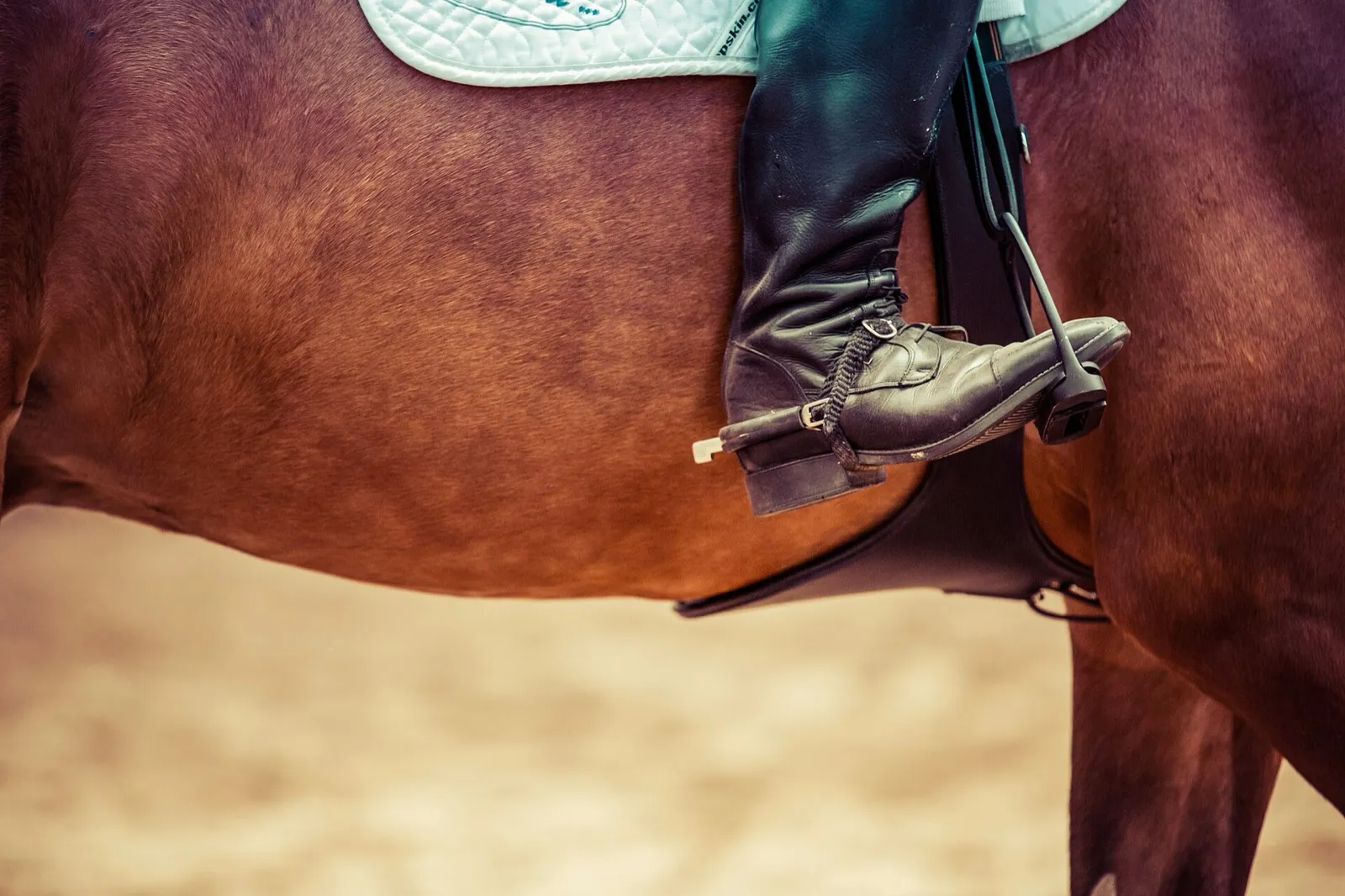
On an English saddle the stirrup is a metal frame called an iron (British riders say stirrup iron; Americans often just say stirrup). It hangs from a stirrup leather, an adjustable strap that loops over the stirrup bar, a short metal bar under the skirt at the front of the saddle. The rider’s foot rests on the flat bottom, the tread, which often has a rubber pad for grip. Most irons today are stainless steel. Our English tack terminology page names the other parts of the saddle around them.
Leathers stretch with use, and the one on the near (left) side stretches faster because riders mount from that side. Swapping them from side to side now and then keeps them even.
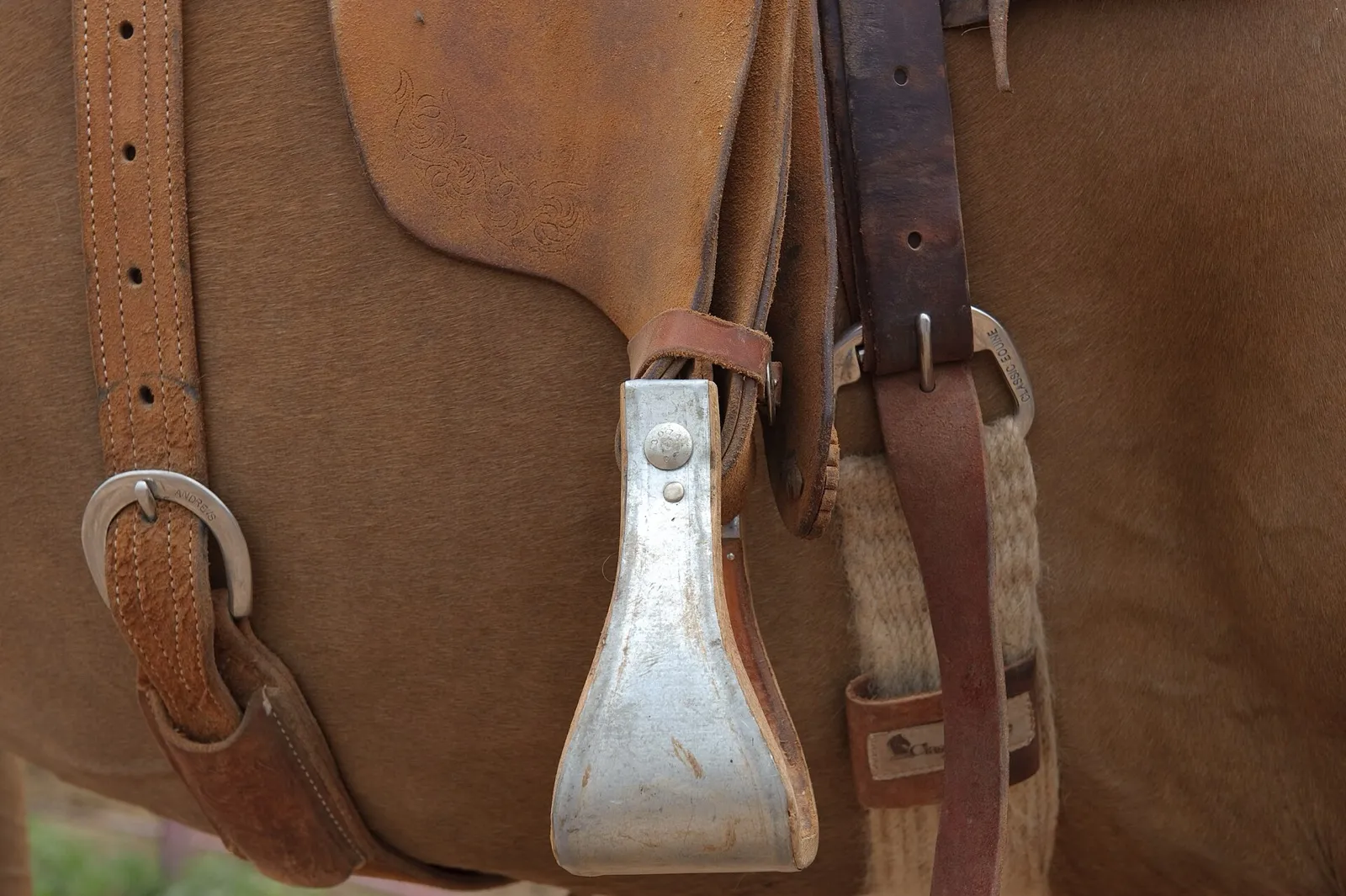
On a western saddle the stirrups hang from fenders, wide leather flaps that also keep the rider’s legs off the horse’s sweaty sides. Western stirrups are usually made of wood, often bound with metal or covered in leather, and have a much broader tread than an English iron.
Types and what they are for
| Type | What it is for |
|---|---|
| Standard English iron | Everyday riding, flatwork and jumping |
| Safety stirrup | Lets the foot out in a fall: a rubber band on the outer side (the peacock stirrup, often used for children), a hinged or breakaway outer branch, or a curved outer side |
| Wide western stirrup | Comfort during long hours in the saddle; bell and flat-bottomed styles |
| Oxbow | A narrow, rounded western stirrup some ropers and ranch riders like; the small tread tires the foot on long rides |
| Tapadero | A leather hood over the front of a western stirrup |
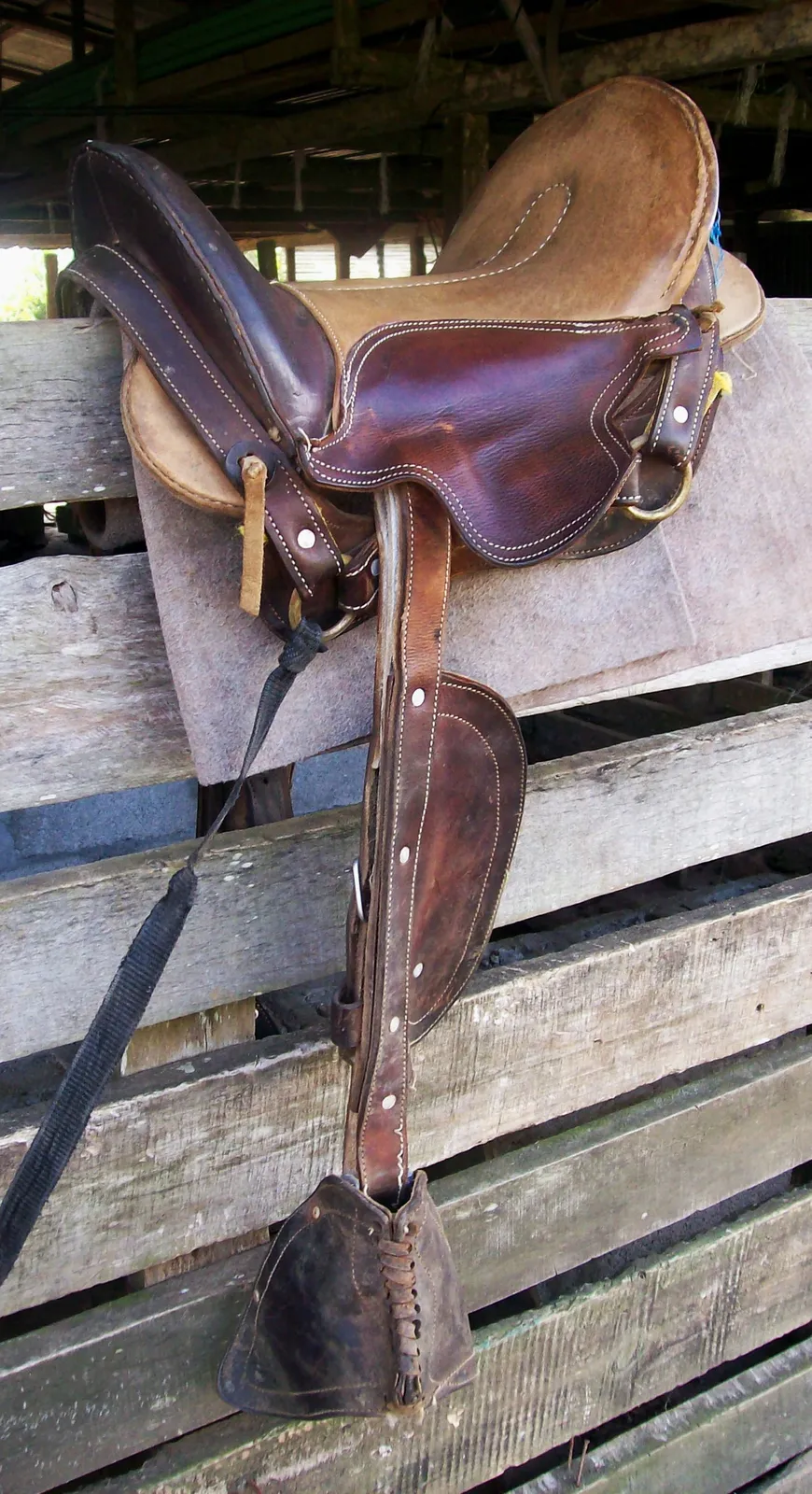
Tapaderos, or taps, close off the front of the stirrup so the foot cannot slide through and get caught. They also shield the rider’s foot from brush, thorns and cactus. They belong to the old Spanish and Mexican saddle tradition and are seen today on working ranches and on parade and trail horses. Most show classes do not allow them.
Getting the size right
A stirrup has to suit the rider’s boot, not just the foot. The usual rule is that the tread should be about an inch wider than the widest part of the boot, which leaves roughly half an inch on each side. Too narrow, and the boot can wedge between the sides. Too wide, and the whole foot can slip through. Either way, a rider who falls can be caught by the foot. Children need stirrups sized for their own boots, not a spare adult pair.
Footwear matters just as much. Ride in boots with a smooth sole and a small, defined heel, which stops the foot sliding forward through the stirrup. Sneakers and hiking boots with chunky treads can jam.
Length
For flatwork in an English saddle, sit deep in the saddle and let your legs hang long. The tread should reach about your ankle bone. Before mounting, many riders put their fingertips on the stirrup bar and check that the iron reaches the armpit; that is only a starting point. Jumping riders shorten their stirrups by a few holes, and dressage riders ride a little longer. Western riders use the same armpit check to start with and fine-tune from the saddle.
Safety points
- An English stirrup bar has a hinged end, the safety catch. Ride with it flat, never turned up, so the leather can slide off the bar if a rider falls with a foot caught.
- Never tie feet to stirrups, or stirrups to the girth or to each other.
- Run the irons up the leathers whenever you lead the horse or leave it tacked up, so they cannot swing, catch on a door frame or bang the horse’s sides.
- Check the stitching on leathers often. A leather that breaks at speed can unseat even a good rider.
Everyday care
Wash mud off irons and treads, and replace pads when they wear smooth. Clean and condition leathers and fenders with the rest of the saddle, as in our guide to cleaning tack, and look closely at the leather where it folds around the stirrup and the buckle, since that is where it cracks first.
Worth knowing
The stirrup is younger than riding. The earliest foot supports were toe loops used in India by the second century BC. The first reliable evidence of riding stirrups on both sides of the saddle comes from a Chinese tomb near Nanjing dated to AD 322, and the oldest surviving pair from a tomb of AD 415. Stirrups reached Europe with the Avars by around AD 600. Read the whole story in the history of stirrups.
Related tack
Stirrups work with the rest of the saddle: see saddles, English saddles and western saddles, the girths that hold them in place, and the single stirrup of the sidesaddle.
Top image from Markus Spiske, public domain

Image from USDA NRCS Texas, public domain

Image from Green Mostaza under the CC BY 4.0 license
