Why Do Horses Roll? 5 Reasons (and When It Signals Trouble)
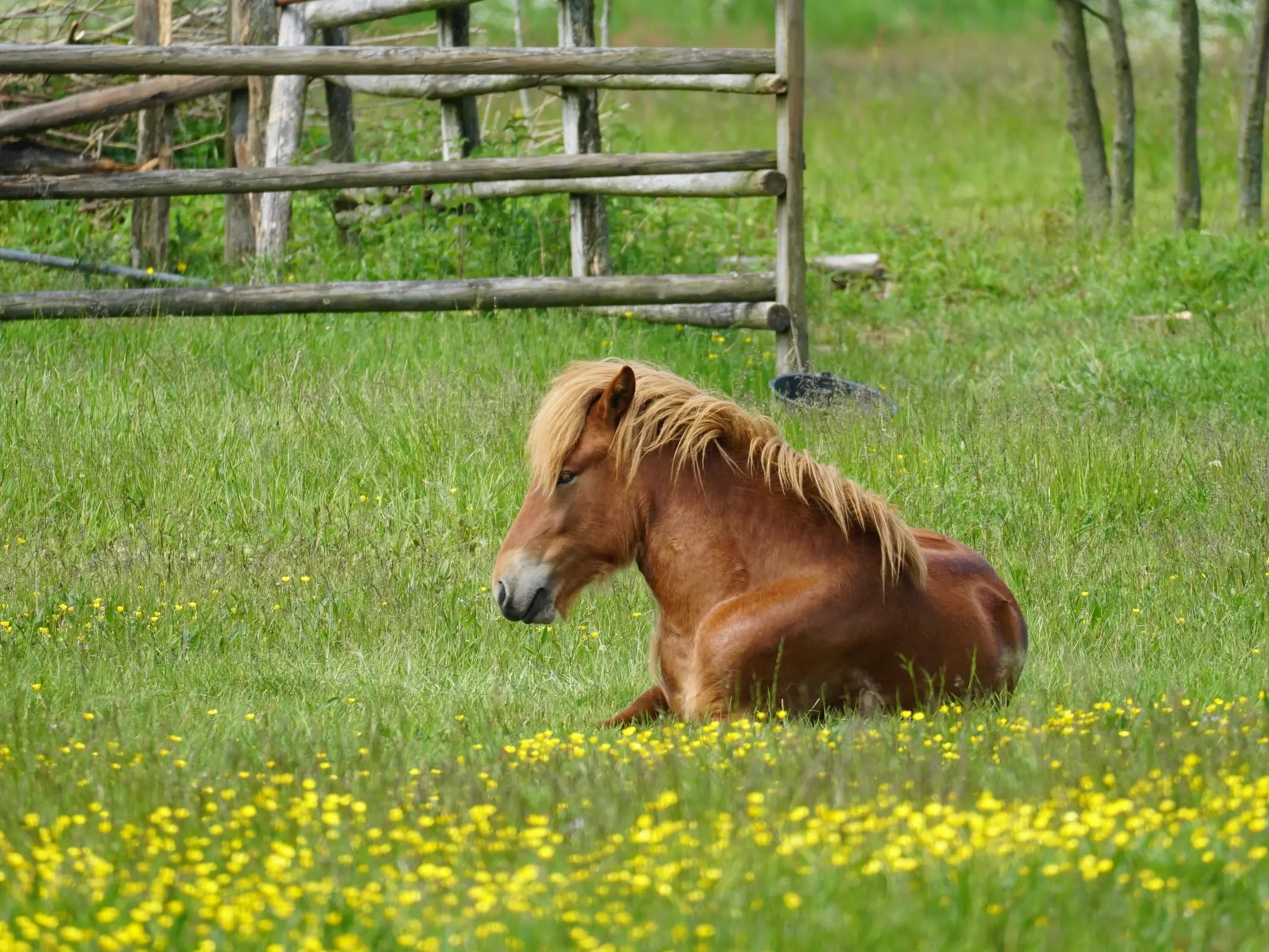
Most of the time a horse rolls because it feels good. It scratches the itches a horse can’t reach, dries a sweaty coat, adds a layer of dust and stretches the back. A normal roll ends with the horse standing up, shaking like a wet dog and wandering off to eat. When that ending is missing, pay attention.
What a Normal Roll Looks Like
There is a ritual to it. The horse picks a spot, usually a soft, dusty or sandy one, and often one it has used before. It sniffs the ground, circles, perhaps paws once or twice, then buckles at the knees and goes down. It rubs one side into the ground, legs waving, and may flip right over to do the other side or get up and lie down again to finish the job.
Then comes the important part. The horse gets up, plants its feet and shakes from nose to tail, sending up a cloud of dust. After that it carries on with its day as though nothing happened.
1. To Scratch What It Can’t Reach
A horse can reach a fair amount of itself with its teeth and a hind foot, but not its back, withers or the top of its rump. The ground does that job. Rolling is at its most frequent when the coat is changing in spring and loose winter hair is driving the horse mad, and it leaves the evidence behind in a horse-shaped mat of hair.
2. To Deal With Sweat
Take the saddle off a horse that has worked and there is a good chance it will roll at the first opportunity. Sweat dries itchy, and the saddle and girth area has been under pressure for an hour. Rolling rubs the coat dry and gets at the places the tack sat.
The same goes for bath time. Any owner who has turned out a freshly shampooed grey has watched it walk straight to the muddiest corner of the field and undo the entire afternoon. The horse is not being spiteful. It is drying itself and getting its coat back to how it likes it.
3. To Put On a Layer of Dust or Mud
Rolling is also the horse’s own coat care. A coating of dust or dried mud is thought to give some protection against biting insects and strong sun, and to help the coat keep out the weather. This is why horses seek out bare, dusty patches in summer and seem so pleased with themselves when caked in mud.
They are not the only ones in the family to do it.


Zebras and donkeys roll for the same reasons horses do.
4. To Stretch and Unwind
Rolling works the back, neck and belly muscles in ways that standing and walking don’t. Horses often roll when they are turned out after being stabled, or after work, and the whole performance has the look of someone kicking their shoes off after a long day. A horse generally only rolls where it feels safe, since on its back with its legs in the air is about as vulnerable as a prey animal gets, so regular rolling in the field is a reasonable sign of a relaxed horse.
5. Because Everyone Else Is
Rolling is catching. One horse goes down, and before long the next one is sniffing the same patch. Groups of horses tend to share rolling spots and take turns in them. They come away carrying the same dust and the same smell, which may well help mark them as a group.
When Rolling Signals Trouble
Rolling is also one of the classic signs of colic, which means abdominal pain. The veterinary manuals list it alongside pawing, looking at the flank, lying down, sweating and curling the upper lip. A horse in pain goes down and rolls to try to get away from the ache in its belly.
The difference is nearly always obvious once you know what to look for.
| A happy roll | A worrying roll | |
|---|---|---|
| How often | Once or twice, then finished | Again and again, up and down |
| Manner | Relaxed and deliberate | Restless, sudden, sometimes violent |
| Afterwards | Gets up, shakes, goes back to eating | No shake. Stands looking uncomfortable or lies down again |
| Between rolls | Normal behaviour | Pawing, looking round at the flank, kicking at the belly, stretching out |
| Appetite | Interested in food | Not interested in food |
| Other signs | None | Sweating without work, few or no droppings, a fast pulse |
A resting horse’s heart beats about 28 to 44 times a minute. If yours is rolling oddly and you know how to take a pulse, a rate well above that is useful information for the vet.
What to Do If You Suspect Colic
- Call your vet. Do it now, not after an hour of watching. Describe what the horse is doing, how long it has been going on and whether it has passed droppings. Colic ranges from a mild bout of gas to a surgical emergency and you can’t tell which from the outside.
- Take the feed away, and ask the vet whether to leave water.
- Don’t give any medication unless the vet tells you to. Painkillers can hide the signs the vet needs to see.
- Keep the horse, and yourself, safe. A horse standing or lying quietly can be left to do so. If it is trying to throw itself down and thrash, move it to somewhere with room and a soft surface, such as an arena or a paddock, where it is less likely to get hurt or wedged against a wall. Gentle walking in hand can help settle a horse that keeps trying to go down, but don’t march it for hours and don’t put yourself in the way of a horse in violent pain.
Does rolling twist the gut? Generations of horse people were taught that a colicky horse must be kept on its feet at all costs because rolling causes a twisted bowel. Vets now generally see it the other way round: the twist or blockage comes first and the rolling is the horse’s reaction to it. The real reason to discourage violent rolling is injury. As it happens, vets sometimes roll a horse on purpose, under anaesthetic, to shift a displaced section of colon back to where it belongs.
Why colic can turn so serious so quickly has a lot to do with the fact that horses can’t vomit.
Other Times to Take Notice
- A horse that gets cast. Now and then a horse rolls over in the stable and ends up with its legs folded against the wall, unable to get its feet under it. A cast horse can panic and injure itself, and it is a strong animal in a small space, so get experienced help and stay clear of the legs. A stable with enough room and a good deep bed makes it less likely.
- A horse that rolls under saddle. Usually in water, sand or deep snow, and usually announced by pawing and a sudden sagging of the knees. Keep its head up and ride forward. It is more often itchiness or temptation than illness, but it can break a saddle tree and it is no fun for the rider.
- Constant rubbing and rolling. A horse that rolls and rubs far more than its companions may have a skin problem such as lice, mites or an insect-bite allergy. Ask your vet.
- An old horse that has stopped rolling, or that goes down with obvious difficulty. Stiffness and joint pain make getting down and up hard work, and such a horse may also have stopped lying down to sleep. More on that in do horses sleep standing up?
The Short Version
Rolling followed by a good shake is a healthy horse looking after itself, and no cause for concern beyond the state of your clean saddle pad. Rolling over and over, with no shake, pawing, sweating or no interest in food, is a reason to ring the vet. If you are unsure which you are looking at, ring anyway.
There is more on everyday management in general horse care tips.