Can Horses Throw Up? Why Your Horse Physically Can’t Puke
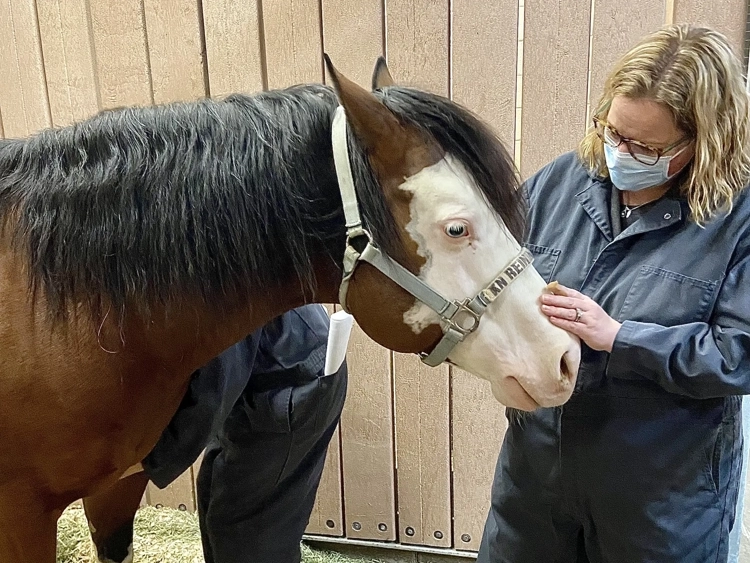
No. For all practical purposes a horse cannot vomit. What goes down stays down, and the plumbing is built to make sure of it. That sounds like a neat party fact until you realise what it means: when something goes wrong in a horse’s stomach, there is no emergency exit.
Why It Can’t Happen
Vomiting is a coordinated reflex. The brain gives the order, a valve at the top of the stomach opens, and the abdominal muscles squeeze the stomach hard enough to send everything back the way it came. A horse falls down at every step.
- The valve is too strong. The ring of muscle where the gullet meets the stomach (the lower oesophageal sphincter) is much more powerful in horses than in most animals. It works as a one-way valve: food and gas go in, and nothing comes back.
- The angle is wrong. The gullet joins the stomach at a low, slanting angle. When the stomach swells, with gas for instance, it presses against the valve and holds it even more tightly shut. The fuller the stomach, the firmer the seal.
- The stomach can’t be squeezed. A horse’s stomach sits deep inside the rib cage, where the abdominal muscles can’t get a grip on it.
- The reflex is barely there. The nerve pathways that trigger vomiting in other animals are poorly developed in horses, if they exist at all.
That explanation comes from veterinary internal medicine specialist Joe Bertone, writing in EQUUS. Horses are not alone, incidentally. Rats, mice and rabbits can’t vomit either.
A horse’s stomach holds only about 8 to 10 litres, roughly two to two and a half US gallons. That is small for an animal weighing half a ton.
Nobody knows for certain why horses ended up like this. The usual suggestions are that an animal built to nibble small amounts of grass all day, and fussy about what it eats, rarely needed to bring anything back up, and that a tightly sealed stomach is useful when your survival plan is to gallop flat out with your intestines bouncing against it. Both are educated guesses.
“But I’ve Seen Feed Come Out of a Horse’s Nose”
You probably have, and it wasn’t vomit. It was almost certainly choke.
Choke in horses is not what it is in people. The windpipe is clear and the horse can breathe. What is blocked is the gullet, usually by a wad of feed that was swallowed too fast or not chewed properly. Because the blockage sits above that one-way valve, feed and saliva back up and come out of the nostrils.
The Merck Veterinary Manual lists the signs:
- feed and saliva coming from the nostrils
- coughing and heavy drooling
- stretching or arching the neck, and looking anxious
- repeated attempts to swallow, eat or drink
What to do: take away all feed and water, keep the horse quiet, and call your vet. Many chokes clear on their own, but the longer one lasts the more damage it can do to the gullet, and feed that goes down the windpipe can cause aspiration pneumonia. Don’t try to flush it yourself with a hose or syringe, and don’t offer anything to “wash it down”.
Common causes are dry pellets or unsoaked beet pulp eaten in a hurry, hay bolted by a greedy horse, and bad teeth that make proper chewing impossible. So soak the feeds that need soaking, slow down the gobblers, and have teeth checked regularly.
Why This Makes Colic So Dangerous
Colic simply means belly pain, and most cases are mild and pass with treatment. The inability to vomit is what makes the bad ones frightening.
If the gut is blocked further down, fluid and gas back up into that small stomach. In a dog or a person the pressure would be relieved the unpleasant way. In a horse the valve holds, the pressure keeps climbing, and in the worst cases the stomach ruptures. A ruptured stomach is fatal.
This is why one of the first things a vet does with a colicky horse is pass a tube up the nostril and down into the stomach. It is the exit the horse doesn’t have. If fluid comes pouring back up the tube, that tells the vet a good deal about what is going on, and draining it can save the horse’s life.
Signs of colic include:
- pawing at the ground
- turning to look at the flank, or kicking at the belly
- lying down and getting up repeatedly, or rolling
- curling the upper lip
- sweating without having worked
- stretching out as if to urinate
- going off feed, looking dull, passing fewer droppings
Horses seldom show all of them. If yours shows any, call your vet and take the feed away while you wait. Don’t give any medication unless the vet tells you to, because painkillers can hide the signs they need to see. Rolling has its own article: why horses roll, and when it signals trouble.
No Second Chances With Poisons Either
A dog that eats something terrible can often be made to bring it back up. A horse can’t, so whatever is swallowed has to go the whole way through.
That makes prevention most of the job:
- Know your pasture. Our toxic plants guide lists the plants that are dangerous to horses, with pictures.
- Lock the feed room. A horse that breaks into the grain bin can eat enough to distend its stomach and set off colic and laminitis. If it happens, call your vet straight away, even if the horse looks pleased with itself. Waiting for symptoms wastes the time in which treatment works best.
- Be careful with clippings and garden waste. Lawn mowings and hedge trimmings over the fence are a classic cause of trouble.
Feeding a Horse That Can’t Vomit
The whole system is designed for small amounts, often. A few habits follow from that:
- Base the diet on forage and let the horse eat it slowly over many hours. Our hay page covers the types.
- Split grain and concentrates into several small meals instead of one large one.
- Make any change of feed gradually, over a week or two.
- Keep clean water available at all times.
- Work out how much your horse actually needs with the Feed Calculator, and what it weighs with the Weight Calculator.
There is more on the basics in feeding your horse and general horse care. And if you would like to see what else a horse does with its top lip besides announce a bellyache, read about the flehmen response.