What Can Horses Eat? The Safe and Toxic Foods List
Horses can safely eat most common fruit and vegetables as treats: apples, carrots, bananas, grapes, watermelon, celery, peas and squash are all fine in small amounts. They should never be given chocolate, anything with caffeine, avocado, potato or tomato plants, rhubarb leaves, fruit stones, lawn clippings or mouldy feed. The tables below sort the rest.
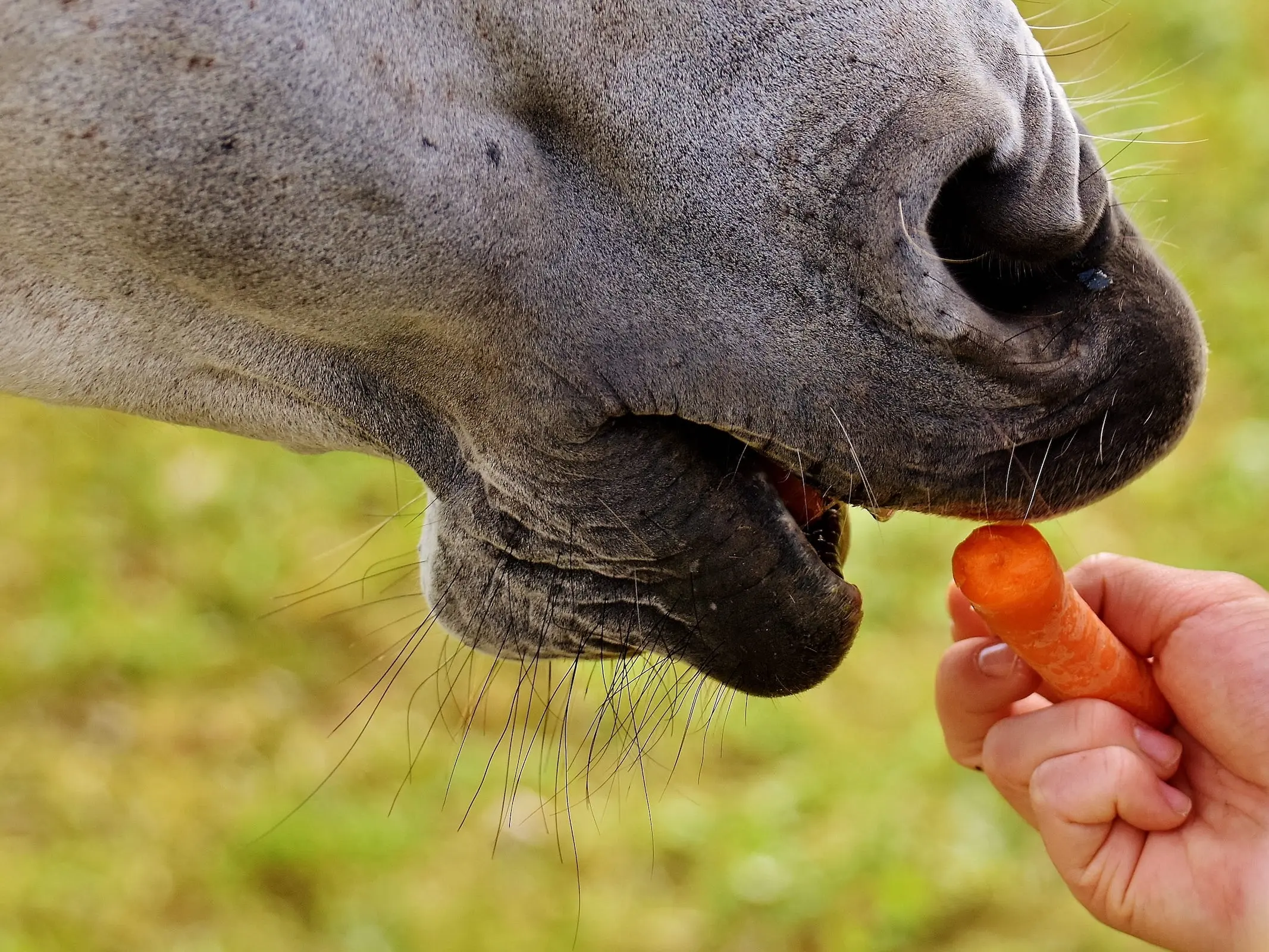
Two things explain most of this list. A horse’s gut is built for a slow, steady supply of grass and hay, so anything rich, sugary or sudden can upset it. And a horse cannot vomit, so whatever goes down has to go the whole way through. That is why a treat is a mouthful, not a meal, and why the real diet is forage.
Safe as treats
These are fine for a healthy horse in small amounts. As an upper limit, the Rutgers Equine Science Center suggests no more than a pound or two (roughly half a kilo to a kilo) of treats at a feeding; a carrot or an apple is plenty.
| Food | How to feed it |
|---|---|
| Carrots | Cut lengthways into fingers, not round coins, which are the right size to lodge in the throat |
| Apples | Sliced or cored. The seeds, stems and leaves are the toxic parts, and a bucketful of windfalls can cause colic |
| Bananas | Peeled, in pieces |
| Grapes and raisins | Safe for horses, unlike dogs |
| Watermelon | Flesh and rind |
| Pears | Sliced, cored |
| Celery, lettuce | Chopped |
| Peas and green beans | Fresh |
| Squash and pumpkin | Flesh, cut up |
| Mango | Flesh only, never the stone |
| Mint | A long-standing favourite; see plants your horse can eat |
| Hay cubes or pellets | The treat that is most like dinner |
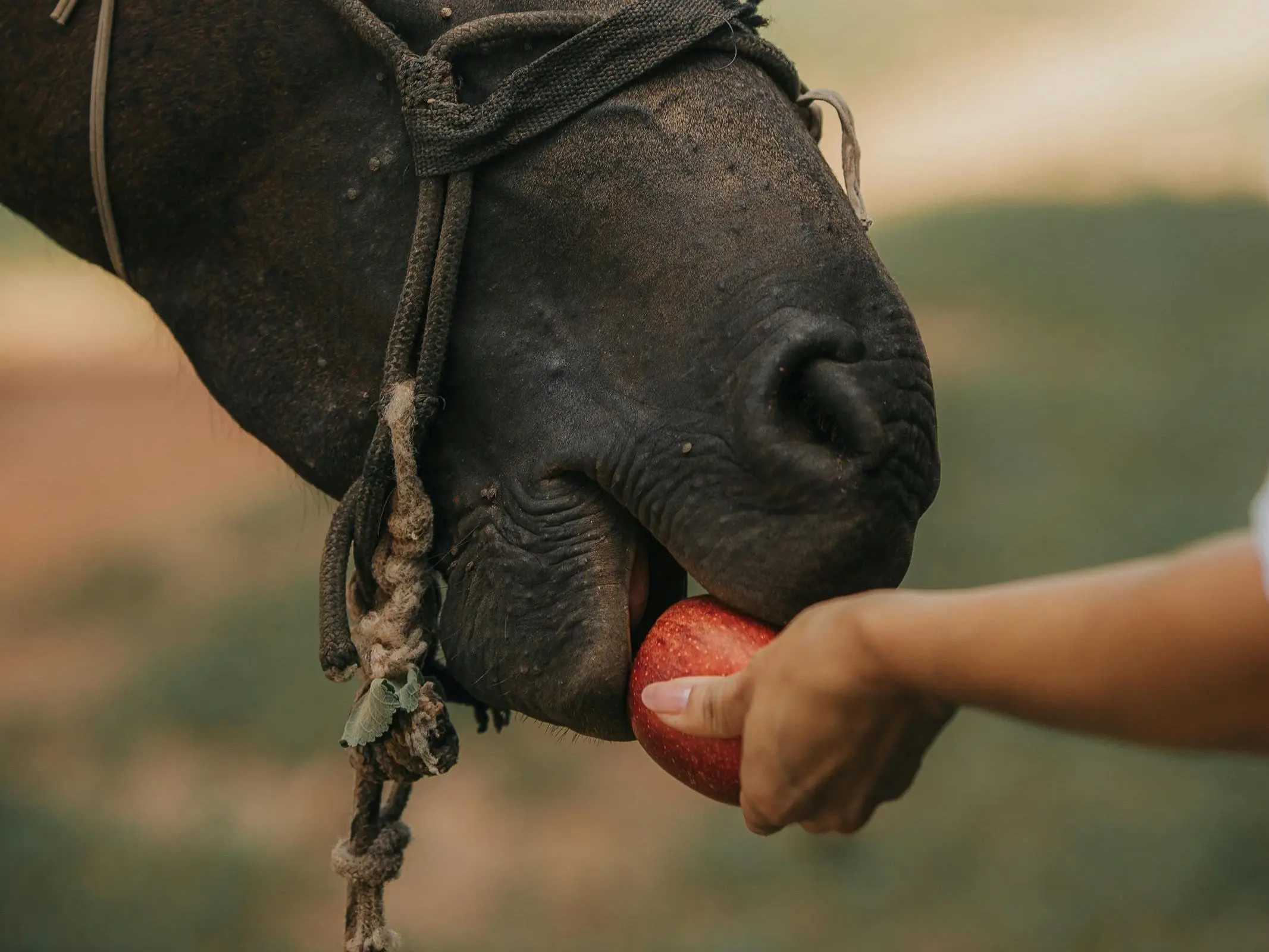
Only a little, or with care
| Food | The catch |
|---|---|
| Sugar cubes, peppermints, sweets | One or two. They are pure sugar |
| Molasses and sweet feeds | Sugar again; not for horses with insulin problems |
| Peaches, plums, apricots, cherries | Flesh only. The stones are toxic and a choking hazard, so remove them first |
| Citrus | Harmless; most horses decide for themselves |
| Cabbage, broccoli, cauliflower, kale, Brussels sprouts | A mouthful at most. They produce gas, and a gassy horse is an uncomfortable one. Many owners simply skip them |
| Turnips, radishes, spinach | Very small amounts |
| Bread | Not poisonous, but it has no place in the diet. A crust, not a loaf |
| Wheat bran | High in phosphorus, so a regular bran mash can unbalance the diet’s calcium. An occasional feed only |
| Carrots and apples by the bucket | Safe foods stop being safe in bulk |
If your horse is overweight, has had laminitis, or has equine metabolic syndrome, insulin dysregulation or Cushing’s disease (PPID), the sugar in fruit, carrots and sweets matters much more. Ask your vet what, if anything, it can have. Body condition scoring will tell you whether this applies to you.
Never feed
| Food | Why |
|---|---|
| Chocolate, coffee, tea, cola | Caffeine and the related compounds in chocolate are stimulants a horse does not need, and they show up in competition drug tests |
| Avocado | The leaves, skin and stone are the most dangerous parts; keep the whole plant and fruit away from horses |
| Potato and tomato plants, green or raw potatoes | Members of the nightshade family |
| Rhubarb | The leaves are toxic; simplest to feed none of it |
| Onions, garlic, leeks, chives | In quantity they damage red blood cells and cause anaemia. A trace is unlikely to hurt, but there is no reason to offer them |
| Fruit stones and pits | Cherry, peach, apricot and plum stones contain cyanide compounds and are just the size to cause choke |
| Persimmons | The seeds can cause an impaction in the gut |
| Acorns and oak leaves | The tannins are poisonous to horses and can be fatal, and some horses develop a taste for them |
| Lawn clippings | They ferment quickly, in the heap and in the horse, and can cause colic and laminitis. They may also contain garden plants you did not notice |
| Mouldy or dusty hay and feed | Mould toxins and dust cause colic and lasting lung trouble. If in doubt, throw it out |
| Cattle feed | Some contains monensin or similar additives, which are safe for cattle and can kill a horse in very small amounts |
| Meat and dairy | Horses are herbivores. A stolen bite of sandwich is not an emergency, but these are not horse food |
| Garden and hedge trimmings | Yew, oleander, privet, rhododendron and many others are deadly. See the toxic plants guide |
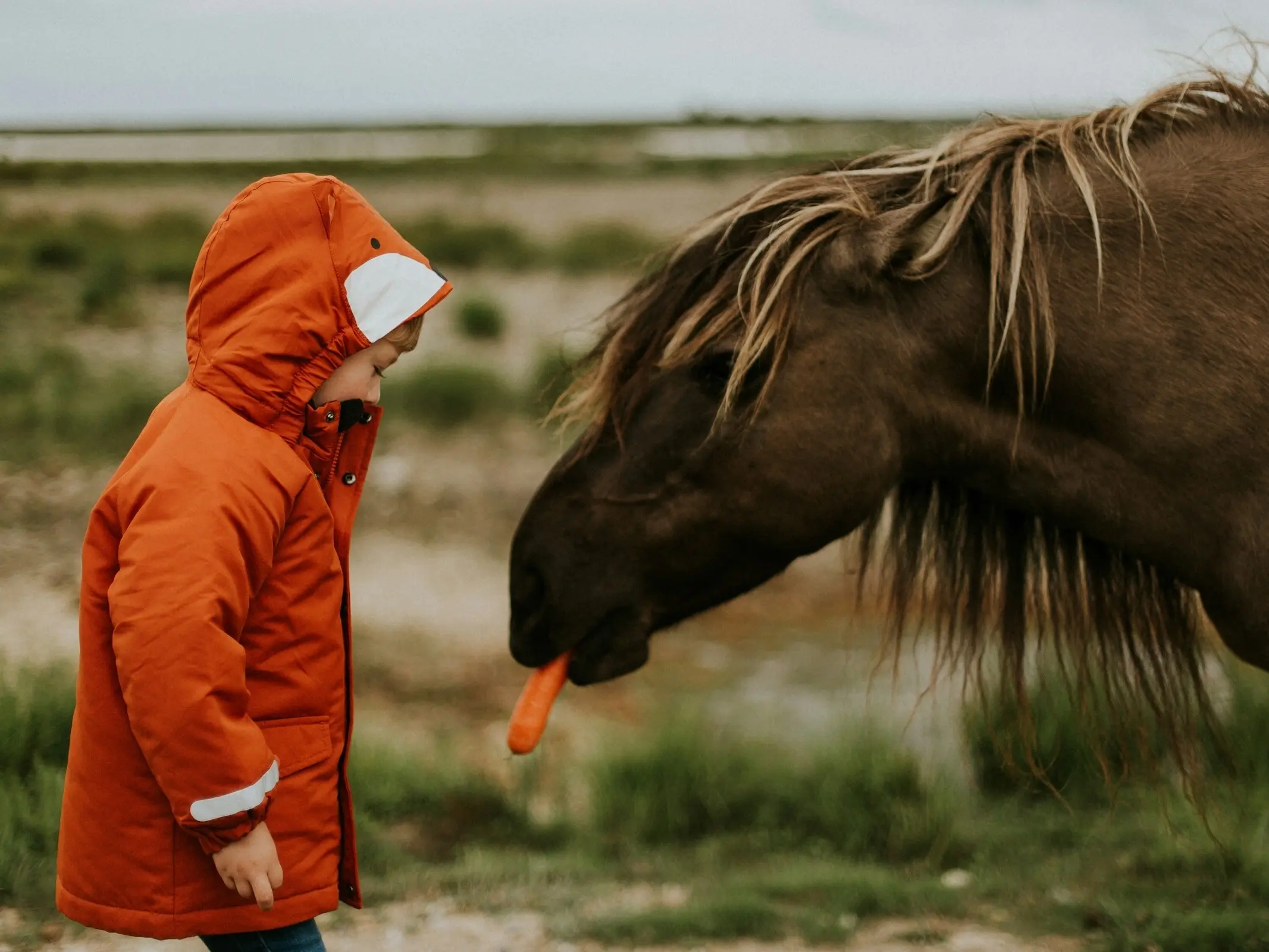
How to feed a treat
- Small pieces, flat hand. Fingers together, thumb in, palm flat. We have a short piece on feeding treats from the hand.
- Cut hard foods lengthways so they cannot plug the gullet. A horse with choke stretches its neck, coughs and dribbles feed or saliva from the nose; that is a call to the vet.
- Introduce anything new a little at a time. Sudden changes are what upset a horse’s gut.
- Ask before you feed someone else’s horse. It may be on a diet, on medication or inclined to bite. Feeding horses over a fence is how many of the poisonings on the list above happen.
- Skip treats altogether if they make the horse pushy. A scratch on the withers costs no calories.
What should a horse eat, then?
Grass and hay, mostly. A horse eats roughly 1.5 to 2.5 percent of its body weight a day, nearly all of which should be forage, with hard feed added only when the work calls for it. These pages go into the detail:
- Types of horse food, including hay, grain and treats
- The feeding calculator and the nutrition calculator
- Horse treat recipes, for when you want to bake
If your horse has eaten something it should not
Call your vet, and say what it ate, how much and when. Do not wait for symptoms, and do not try to make the horse sick; it cannot be. Signs to report include colic (pawing, rolling, looking at the flanks), drooling, diarrhoea, stumbling, trembling, dark urine and laboured breathing.
For plants rather than foods, our toxic plants guide lists well over a hundred, with pictures, and the plant identifier can help you put a name to something growing in the field.
We are not veterinarians. This list is a general reference; your own vet knows your horse.