Hairy Horses: Breeds With the Best Feathers, Manes and Mustaches
The hairiest horse breeds are the feathered cobs and drafts (Gypsy Vanner, Shire, Clydesdale, Friesian), the long-maned Iberians and Black Forest horses, the curly-coated American Curly, and the Yakut, which grows a winter coat fit for Siberia because it lives there. And yes: some horses grow a mustache. It is real hair, on the top lip, and nobody had to stick it on.
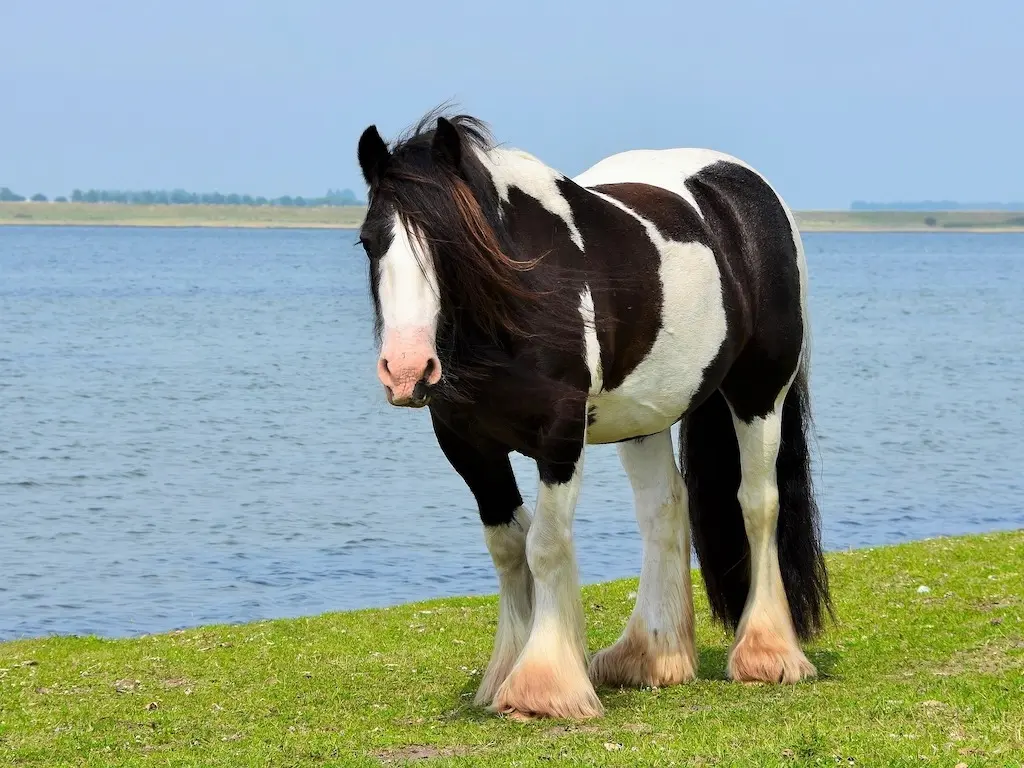
Can horses really grow mustaches?
They can. It looks like a joke photo, which is why fact-checkers at Snopes and Africa Check have both gone to the trouble of confirming it: some horses grow a tuft or a full handlebar of long hair on the upper lip, separate from the stiff feeler whiskers that every horse has around its muzzle.
It is seen most often in the Gypsy Vanner (the Gypsy Cob), and also in Shires and Clydesdales. Our own page on the Abyssinian horse of Ethiopia notes the same tendency.
Why? Here the honest answer is that nobody has studied it. There is no identified “mustache gene” and no published research on the trait. What can be said is that it appears in the same families that grow heavy feather and thick manes, and it runs in bloodlines, so it is almost certainly inherited along with a general tendency to grow a lot of long hair everywhere. Owners report that it comes and goes with age and season. Anything more specific than that is a guess, including the popular one that it helps the horse feel for grass.
A horse’s mustache is not the same thing as its whiskers. Whiskers are sense organs, and every horse has them. The mustache is just extra hair, and only the lucky few get one.
Feathers
“Feather” is the long hair on the lower legs that starts below the knee and hock and, in the best-endowed breeds, covers the hoof entirely.

Shire
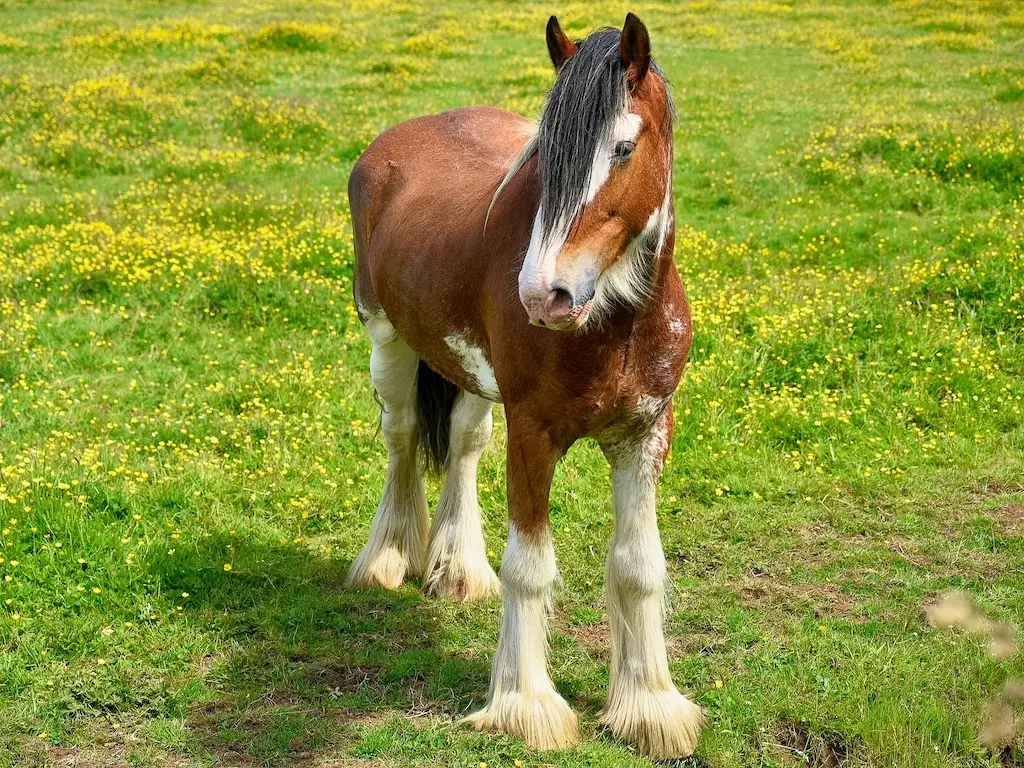
Clydesdale
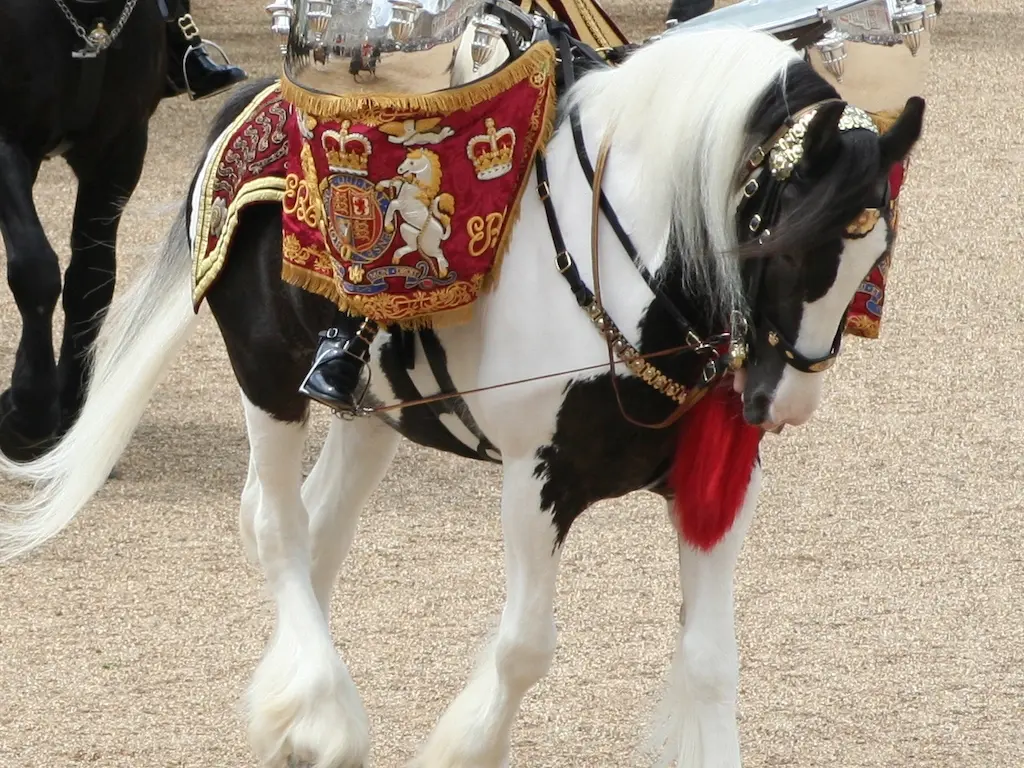
Drum Horse
- Gypsy Vanner (13–15 hands): the champion. Bred by Traveller families from Shire, Clydesdale, Friesian and Dales blood, with as much feather, mane and tail as could be packed onto a compact cob.
- Shire and Clydesdale: the big British heavies, both with long silky feather, usually white. They are also two of the biggest horse breeds on earth.
- Drum Horse: Shire and Clydesdale size with cob hair, which is a lot of hair.
- Friesian: all black, with a mane that can reach the shoulder, a tail to the ground and neat black feather.
- Fell and Dales ponies: the north of England’s hairy black ponies, cousins of the Friesian.
- Poitevin: the French mule-breeding draft, with shaggy legs and a thick, often wavy mane.

Friesian

Fell pony
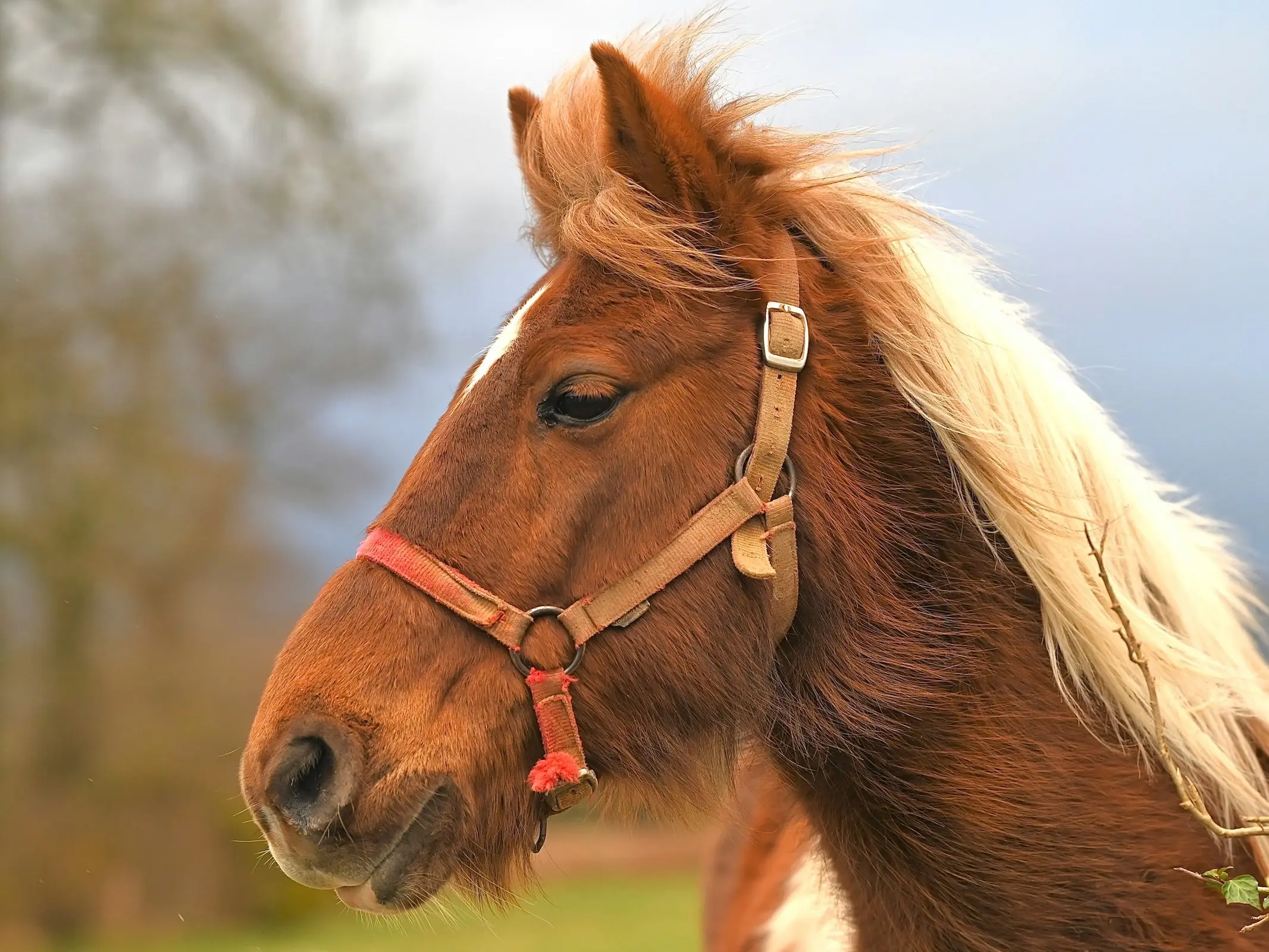
Poitevin
What is feather for? The traditional explanation is that it sheds water and protects the pasterns from mud and cold, and the breeds that carry it do mostly come from wet, cold places. That has never actually been tested, and neither has the genetics: no gene for feathering has been published. A good deal of it is simply taste. The people who bred Shires, Clydesdales and Vanners liked feather, so they bred for more of it.
Manes and tails

Black Forest Horse

Andalusian

Belgian Draft
- Black Forest Horse: a small German draft with one of the best color schemes in the horse world, dark chestnut under a thick mane and tail of pale flaxen.
- Andalusian and Lusitano: the Iberian horses, whose long, thick, wavy manes are a point of pride.
- Haflinger: chestnut with a blond mane generous enough to hide the neck.
- Icelandic: a thick mane and a heavy forelock, on a horse built to stand out in the weather all year.
- Comtois and Belgian Draft: flaxen-maned heavy horses from France and Belgium.
- Highland and Shetland ponies: Scotland’s contribution, with manes and tails made for horizontal rain.
The longest tail on record belongs to an American Saddlebred mare from Ohio registered as Mountjoy’s Ice Princess, known as Jenny. Guinness World Records announced in September 2026 that her tail measured 412.62 cm, about 13 feet 6 inches. That beat a record of 381 cm that had stood since 2007, held by a mare from Kansas called JJS Summer Breeze.
Curls
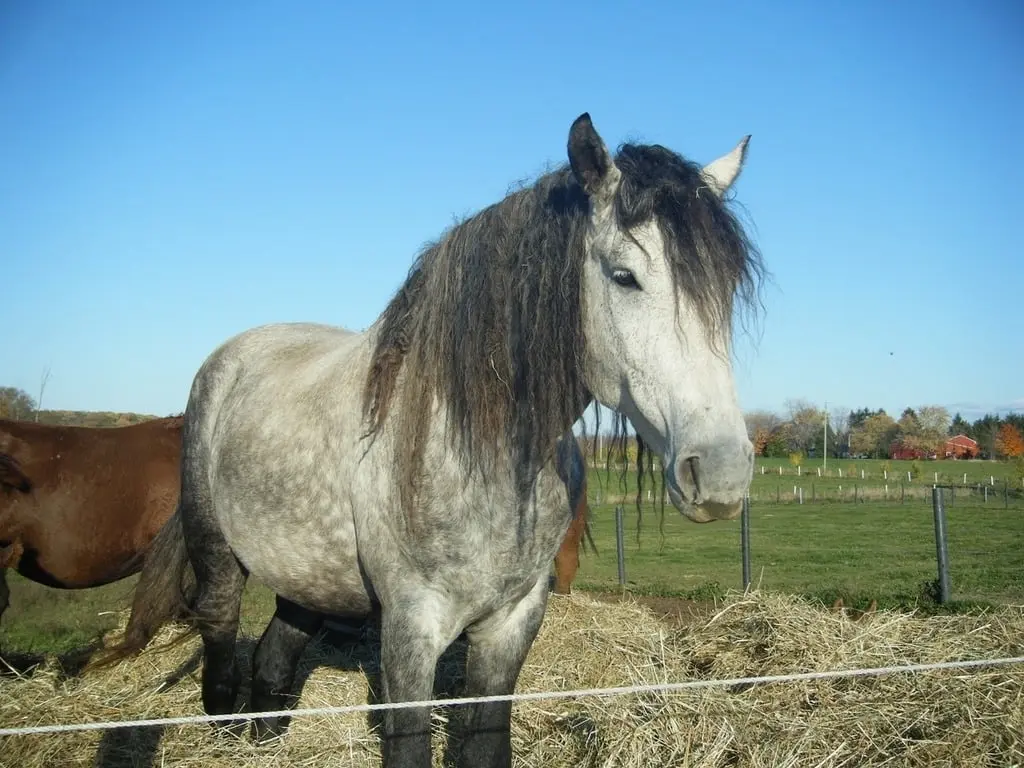
The American Curly (13.3–16 hands) grows a winter coat of ringlets, waves or tight crushed-velvet curls, with a curly mane and even curly eyelashes; many shed the curls for a smooth coat in summer. The breed used to be called the American Bashkir Curly, after the tough, thick-coated Bashkir horse of the southern Urals, though whether the two are actually related is disputed. There is also a Curly Haired Fox Trotter.
The genetics here have been worked out. A 2018 study in Scientific Reports traced curly coats in horses to variants in two genes, KRT25 and SP6. One gives curls with a normal mane and tail; the other gives curls along with a sparse mane and tail, which is why some Curlies look a little moth-eaten in spring.
Curlies have a reputation, repeated on our own breed page, as the horse for people with horse allergies. Treat that with care. In a German study, most of 40 horse-allergic riders coped well with Curly horses, but a later laboratory study found Curly hair carried no less allergen than other breeds’. If you are allergic and hopeful, spend time with the actual horse before you commit, and talk to your doctor.
The winter champion
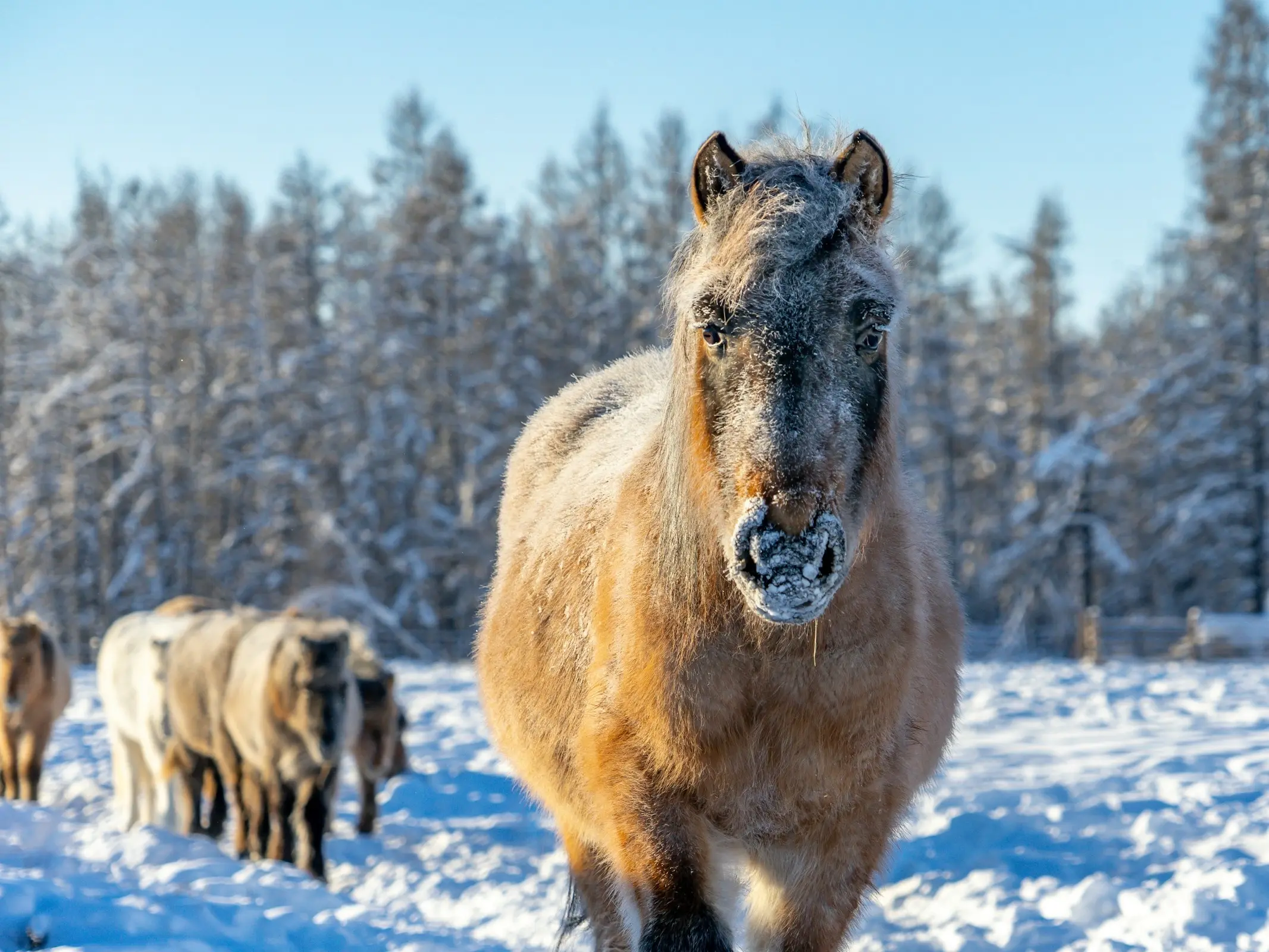
The Yakut horse (13.2–14 hands) lives in Yakutia, in the Siberian far north, where winter temperatures fall far below anything other domestic horses put up with, and it lives outside. Its answer is hair: a winter coat so dense and long that the horse looks upholstered.
The surprising part is how quickly it got that way. A 2015 genetic study in PNAS found that Yakut horses are not descended from the ancient wild horses of the region. They arrived with the Yakut people only a few centuries ago and adapted in that time, which the authors call one of the fastest cases of adaptation to the extreme temperatures of the Arctic. Genes for hair growth were among those involved.
Living with all that hair
Hair is work. Long manes and tails are washed, conditioned, detangled by hand and often kept in loose plaits or bags to stop them breaking. Feather is harder, because it holds mud and damp against the skin.
Heavily feathered horses are prone to two problems worth knowing about. The first is feather mites: in a 2025 study of Belgian draft horses, more than nine in ten carried the mite that causes leg mange. Stamping, rubbing and scabby skin under the feather are the signs. The second is chronic progressive lymphedema, a swelling and thickening of the lower legs seen in Shires, Clydesdales, Belgians, Gypsy Vanners, Friesians and other feathered breeds. Its cause is not known, it cannot be cured, and it is managed far better when it is caught early. Either way, if your horse’s legs are itchy, lumpy or sore under the hair, part the feather, have a proper look, and call your vet.
For everything else there is a brush, patience and a good vacuum cleaner. If hair is your thing, you may also like the breeds that look like they escaped from a fantasy film, most of which are on this page too.