First Horse Checklist: Everything You Need Before Bringing Them Home
Before a first horse comes home you need five things settled: a vet's opinion of the horse, the paperwork, somewhere safe for it to live, the same feed it is eating now, and a vet and farrier who already know your name. Everything else on this list makes life easier, but those five are the ones that hurt when they are missing.

Work through the list in order. The early items can still change your mind; the later ones are shopping.
1. Before you pay: the vetting
- Book a pre-purchase examination with a vet you have chosen yourself, never the seller’s. In the UK this is the two-stage or five-stage vetting; elsewhere it is simply a pre-purchase exam. The vet is not passing or failing the horse. They are telling you what they found and whether it matters for the job you have in mind.
- Tell the vet what you want to do with the horse. A quiet hack and a jumping prospect are held to different standards.
- Ask about X-rays and bloods. Many vets take a blood sample at the exam that can be tested later if a problem appears. Whether to add imaging is a conversation about the horse’s price, age and intended work.
- Try the horse more than once, in the place and at the pace you will actually ride. Take your instructor. See it caught, tacked up, loaded and ridden away from home if you can.
- Do the sums first. The purchase price is the small number. Our cost breakdown covers the big ones.
2. Paperwork
- A written bill of sale, signed by both parties, with the horse’s description, the price, the date and anything the seller has stated about health, age and behaviour.
- Identity documents. In the UK and the EU a horse must have a passport, and in almost all cases a microchip, and the passport travels with the horse; the new owner has to update the ownership details promptly. In the US, expect a current negative Coggins test (for equine infectious anaemia) and, if the horse is crossing a state line, a health certificate.
- Breed registration papers and a signed transfer form, if the horse is registered.
- Health records: vaccination dates, the last worming or worm egg count, the last dental visit and the last farrier visit. If the seller cannot tell you any of these, that is information too.
3. Where it will live
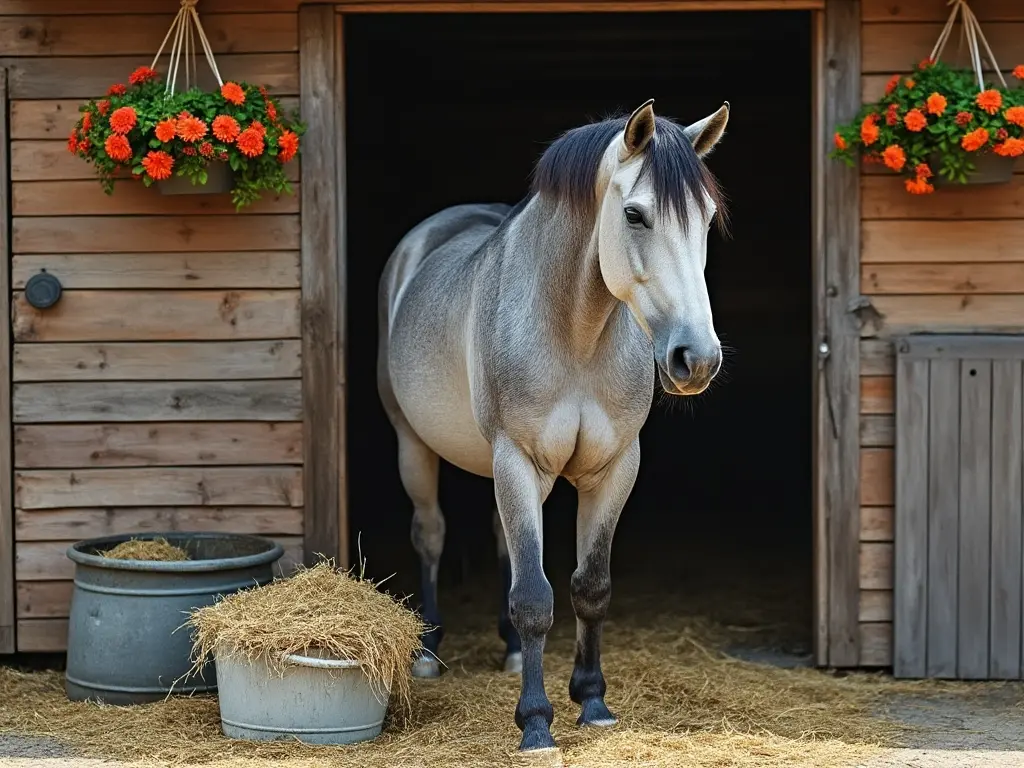
- Decide between livery or boarding and keeping the horse at home before you buy. A good yard with experienced people around is worth a great deal to a first-time owner. Our page on choosing a stable lists what to look for.
- Company. Horses are herd animals and do badly alone. Another horse is best.
- Safe fencing. Post and rail, or properly tensioned electric tape. No barbed wire, no sagging stock netting, no gaps a hoof fits through.
- Shelter and water. A field shelter or stable, and clean water that is always there. A horse drinks something like 20 to 45 litres (5 to 12 gallons) a day, and more in heat or hard work.
- Walk the field. Pull out rubbish and wire, check gates and latches, and learn what is growing there. Our toxic plants guide has pictures of the ones to remove.
- Somewhere dry for hay and feed, with feed bins a horse (or a rat) cannot open.
4. Feed
- Buy what the horse is already eating. Ask the seller for the exact hay, feed and amounts, and take a few days’ supply with you. Any change should be made gradually over a week or two, because a horse’s gut does not take surprises well.
- Forage first. Most horses eat roughly 1.5 to 2.5 percent of their body weight a day, nearly all of which should be hay or grass, and many leisure horses need little else. The feeding calculator will give you a starting figure once you know the horse’s weight.
- A salt lick, buckets, a haynet or feeder, and a feed scoop you have actually weighed.
- Read up on types of horse food and on what horses can and cannot eat before the neighbours start offering treats.
5. Tack and equipment

- Headcollar and lead rope (two of each; one will vanish).
- A saddle that fits this horse, checked by a qualified saddle fitter, plus girth, pad or numnah, and a bridle with the bit the horse already goes well in. Do not buy the saddle before the horse. A badly fitting saddle causes more “behaviour problems” than bad behaviour does.
- For you: a riding helmet that meets a current safety standard, boots with a heel, and gloves.
- A grooming kit: hoof pick, dandy brush, body brush, curry comb, mane comb, sponges. Our grooming guide explains what each is for.
- Rugs or blankets suited to your climate and to whether the horse is clipped. Not every horse needs one.
- Yard tools: wheelbarrow, fork, shovel, broom.
- If you are wondering whether you and your saddle are a fair load for the horse you have in mind, see how much weight a horse can carry.
6. A first-aid kit
Keep it in a clean, labelled box, and put the vet’s number on the lid.
- Digital thermometer
- Clean bandages, gamgee or cotton wool, and self-adhesive wrap
- Sterile wound dressings and saline for flushing
- Antiseptic wash recommended by your vet
- Round-ended scissors, tweezers and a torch
- Poultice dressing for hoof abscesses
- Disposable gloves and a clean bucket kept only for this
Learn the horse’s normal resting temperature, pulse and breathing rate in its first weeks, and write them inside the lid. Ask your vet to show you how to take them and what range is normal; a vet on the phone will ask for all three. More in maintaining a first-aid kit.
7. People to book before the horse arrives

- A vet. Register with an equine practice now, and ask them to set up vaccinations and a worming plan for your area. You do not want to be looking for a vet at night with a horse that has colic.
- A farrier. Feet need attention every six to eight weeks, shod or not. Good farriers have full books, so ask early.
- An equine dentist or dental vet. Teeth should be checked at least once a year, and more often in young and old horses. (Teeth also tell you something about a horse’s age.)
- An instructor. Regular lessons on your own horse in the first months are the best money you will spend.
- Transport for the day itself, and a plan for emergencies if you have no trailer.
8. Insurance
Ask for quotes before you buy; some cover can start from the moment of purchase. The main kinds are:
- Third-party or public liability, in case your horse injures someone or damages property. If you buy only one, buy this.
- Vet fees (major medical or surgical), with an excess and limits you have read.
- Mortality and theft.
- Loss of use, mostly relevant to competition horses.
Insurers usually want the vetting certificate, and will exclude anything it flagged.
9. The first week
- Keep everything dull. Same feed, same routine, quiet handling. Let the horse look around and settle before you ask anything of it.
- Introduce companions gradually, over a fence first. Many yards keep a new arrival apart for two to three weeks to protect the resident horses from anything it may be carrying; ask what your yard’s rule is.
- Watch the basics every day: eating, drinking, droppings, and how the horse moves and stands. A horse that stops eating, or keeps lying down and getting up, needs the vet.
- Ride lightly at first, somewhere enclosed, ideally with your instructor. A horse in a new place is not yet the horse you tried.
- Start a notebook: weight, body condition score, feed, farrier and vet dates. In a year it will be the most useful thing you own.
- Learn to read the horse. Ears, eyes and tail will tell you how it is coping long before anything goes wrong; here is how to read them.
There is more general advice in our horse care section and the care tips page. None of it replaces a good vet, a good farrier and an experienced friend on the yard, so collect those first.