Christmas Horse Treats You Can Make at Home

You can make a good horse treat from five things you probably have already: oats, a carrot, an apple, a spoonful of molasses and a little flour. It takes half an hour, costs next to nothing and comes with no ingredients you cannot pronounce. Here are four recipes, and the short list of horses who should not have the sweet ones.
Before You Start: Who Should Skip the Sugar
Read this part even if you skip everything else.
Horses and ponies that are prone to laminitis, are insulin resistant or have equine metabolic syndrome, or have PPID (Cushing’s disease), should not be given sugary treats. That includes molasses, apples and carrots in any quantity your vet has not agreed to.
For these animals a small amount of sugar is not a small matter, and a few Christmas cookies from each kind visitor at the yard adds up quickly. If your horse is on a restricted diet, ask your vet what is allowed and stick to it. The hay biscuits further down have no added sugar, but they still need your vet’s approval for a horse with a metabolic condition. If you keep your horse at a shared yard, a note on the stable door saying “no treats please” saves a lot of worry.
For every other horse, treats are just that. They should be a tiny part of the diet: one or two cookies a day, not a bucketful, and no more because it is Christmas. A horse’s digestion does not take holidays, and sudden feed changes are a classic cause of colic.
Carrot and Oat Christmas Cookies
Our everyday baked treat, adapted from the Easy Horse Cookies in our older treat recipes post with the molasses cut back. Makes about two dozen.
- 1 cup grated carrot (about 2 medium carrots)
- 1 apple, cored and grated
- 2 tablespoons vegetable oil
- 2 tablespoons molasses
- 1 cup rolled oats
- 1 cup flour (wholemeal is fine)
- 1 teaspoon cinnamon and a pinch of salt
Heat the oven to 350°F (175°C). Mix the carrot, apple, oil and molasses. Stir in the oats, flour, cinnamon and salt until you have a stiff dough, adding a splash of water if it will not hold together. Roll into walnut-sized balls, flatten them onto a greased or lined baking sheet and bake for 20 to 25 minutes, until firm and golden at the edges. Cool completely before feeding.
If you want them festive, press an oat or a sliver of carrot into the top before baking. Leave the icing and sprinkles for the humans.

No-Bake Peppermint Oat Bites
Horses are famously fond of mint. This recipe gets the flavour from the leaf, not from candy, so there is far less sugar involved. Makes about 20.
- 2 cups rolled oats
- 1/2 cup unsweetened applesauce
- 1 tablespoon molasses
- 1 tablespoon dried peppermint leaves, or a small handful of fresh mint, finely chopped
Mix everything in a bowl and let it stand for ten minutes so the oats soften. Roll into small balls, about the size of a large grape, and chill until firm. Keep them in the fridge and use them within three or four days. If the mixture is too wet to roll, add oats; if too dry, add applesauce a spoonful at a time.
No-Added-Sugar Hay Biscuits
Not much to look at, and horses do not care. These are made from what the horse eats anyway.
- 2 cups plain hay pellets or hay cubes (check the label: no added molasses)
- Warm water
- 1/4 cup ground flaxseed
- 1 teaspoon dried mint or cinnamon
Soak the pellets in warm water until they break down into a soft mash, then drain off any standing water. Stir in the flaxseed and mint. Press spoonfuls into small flat biscuits on a lined baking sheet and bake at 300°F (150°C) for about 45 minutes, turning once, until dry on the outside. They will be crumbly, which is fine.
The Christmas Morning Bucket
The safest holiday meal is the one your horse already eats, dressed up. Take the normal feed, dampen it with warm water and top it with a sliced carrot and a few slices of cored apple. That is the whole recipe. Nothing new has entered the diet, the horse thinks something wonderful has happened, and you get the photograph.
Resist the old tradition of a big hot bran mash as a once-a-year treat. A sudden bucket of something the horse does not normally eat is exactly the kind of abrupt change the gut dislikes.
What to Leave Out of Any Recipe
- Chocolate and cocoa, in any form. They contain theobromine, which is toxic to horses in quantity and can cause a positive drug test in a competition horse.
- Coffee, tea and cola. Caffeine is a problem for the same two reasons.
- Sugar-free sweeteners. They have not been shown to be safe for horses, so do not experiment.
- Onion, garlic, leek and chives. The onion family can damage red blood cells when eaten in quantity; chives are in our toxic plants guide for that reason.
- Avocado.
- Apple cores and fruit stones. Core apples and stone any fruit before it goes in the bowl.
- Anything mouldy or past its best. If you would not eat it, the horse should not either.
Our holiday treat safety guide goes through the Christmas table food by food, and What Can Horses Eat? covers the rest of the year.
Storing and Feeding
Homemade treats have no preservatives. Keep baked cookies in an airtight tin for up to a week or freeze them, keep no-bake treats in the fridge, and throw out anything that smells off or shows a spot of mould. Mouldy feed is a real hazard to horses, not a matter of taste.
Break hard cookies in half for small ponies and for old horses with worn teeth, or soften them in a little water first. A horse that bolts its food can choke on a hard, dry lump.
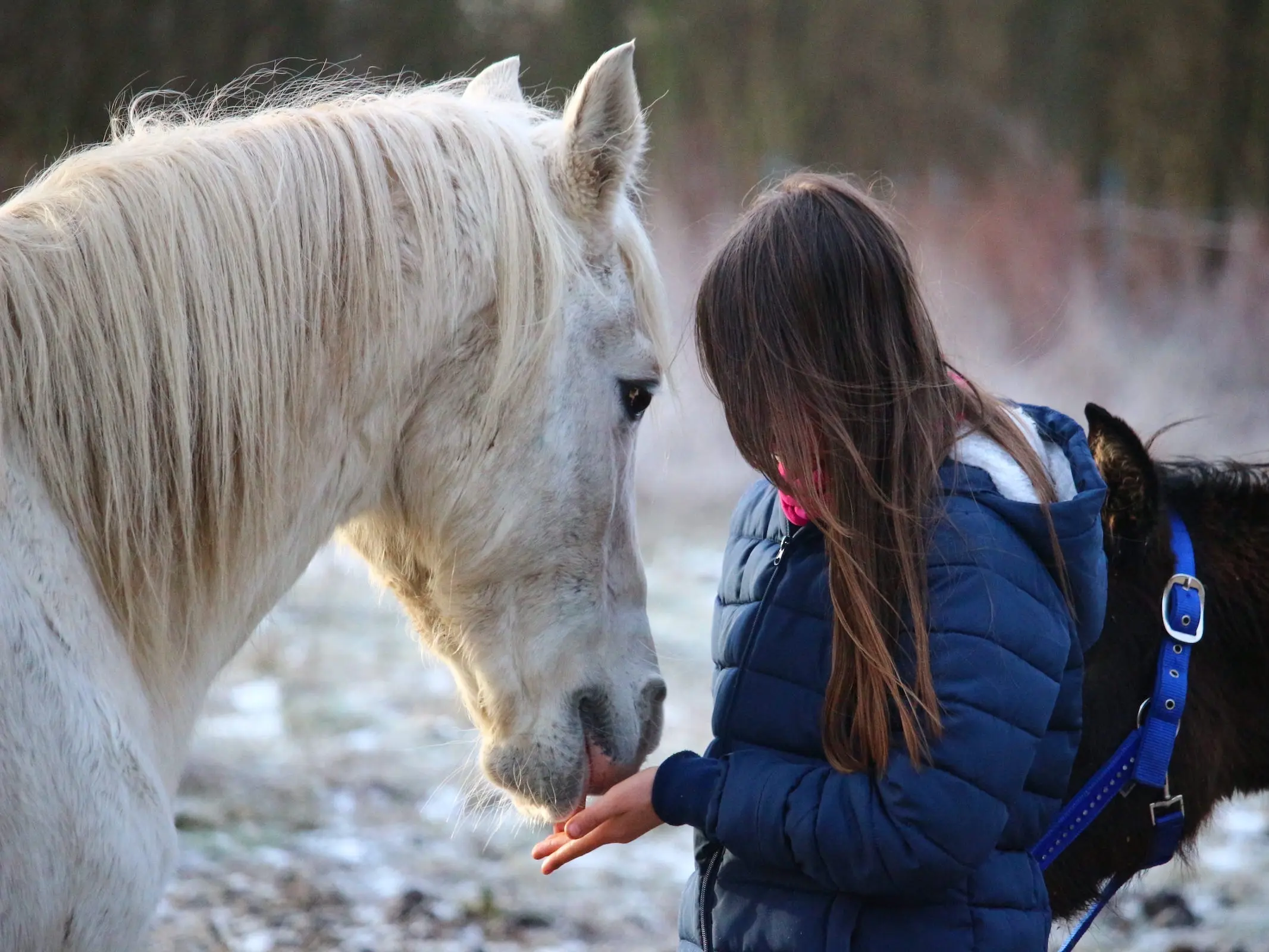
Feed from a flat palm with your fingers together, as shown in our post on feeding your horse treats, or drop the treat in a feed bucket if your horse gets pushy. A horse that mugs every pocket for cookies has been taught to, and January is a good time to un-teach it.
More on Feeding
- Types of horse treats – what the everyday options are and how they compare.
- Horse feed types – hay, grain and the rest of the diet.
- Feeding calculator and nutrition calculator – how much your horse actually needs each day.
- Horse treat recipes – our original collection of readers’ recipes, some of them a good deal sweeter than these.
We are not veterinarians. If your horse has a metabolic condition, a history of laminitis or any special diet, check new treats with your vet first.