What Your Horse’s Color Says About Their Personality

Short answer: almost nothing. The one decent study of the “fiery chestnut” found chestnuts no harder to train than bays, only a little bolder. But the horse world has run on colour stereotypes for centuries and it would be rude not to enjoy them first. Horoscopes up top, science underneath.
The Coat Colour Horoscope
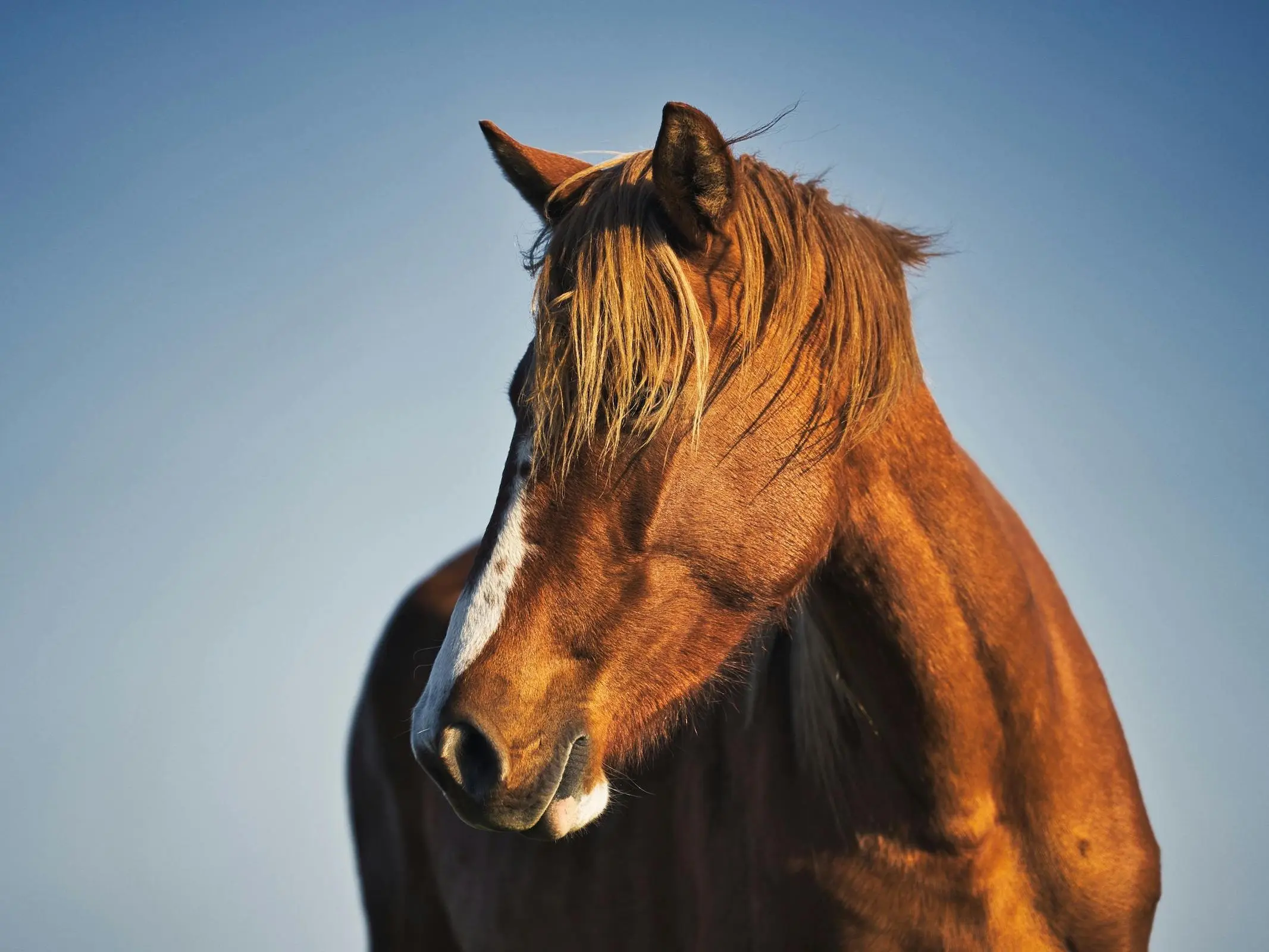
Chestnut
Element: fire. Ruling planet: whichever one is in retrograde.
Feels everything, announces it immediately. Loves you by Tuesday, has reported you to the authorities by Thursday. If a mare, speaks to the manager. Lucky object: the exact brush she liked last week, and no other.
Bay
Element: earth.
The horse a child draws when asked to draw a horse. Dependable, unremarkable in a crowd, and privately convinced it does all the work around here. Has never once been the subject of a rumour. Lucky object: a hay net at eye level.
Black
Element: night.
Has known it was the main character since birth. Looks magnificent for the forty minutes between a bath and the first roll, and like a neglected sofa for the rest of the summer once the sun gets at the coat. Lucky object: shade.
Grey
Element: mud.
Born dark, getting paler every year, and devoted to reversing the process by hand. Can locate the only wet manure patch in ten acres within a minute of a show-morning bath. Sleeps on it, cheek first. Lucky object: a stain you will not get out.
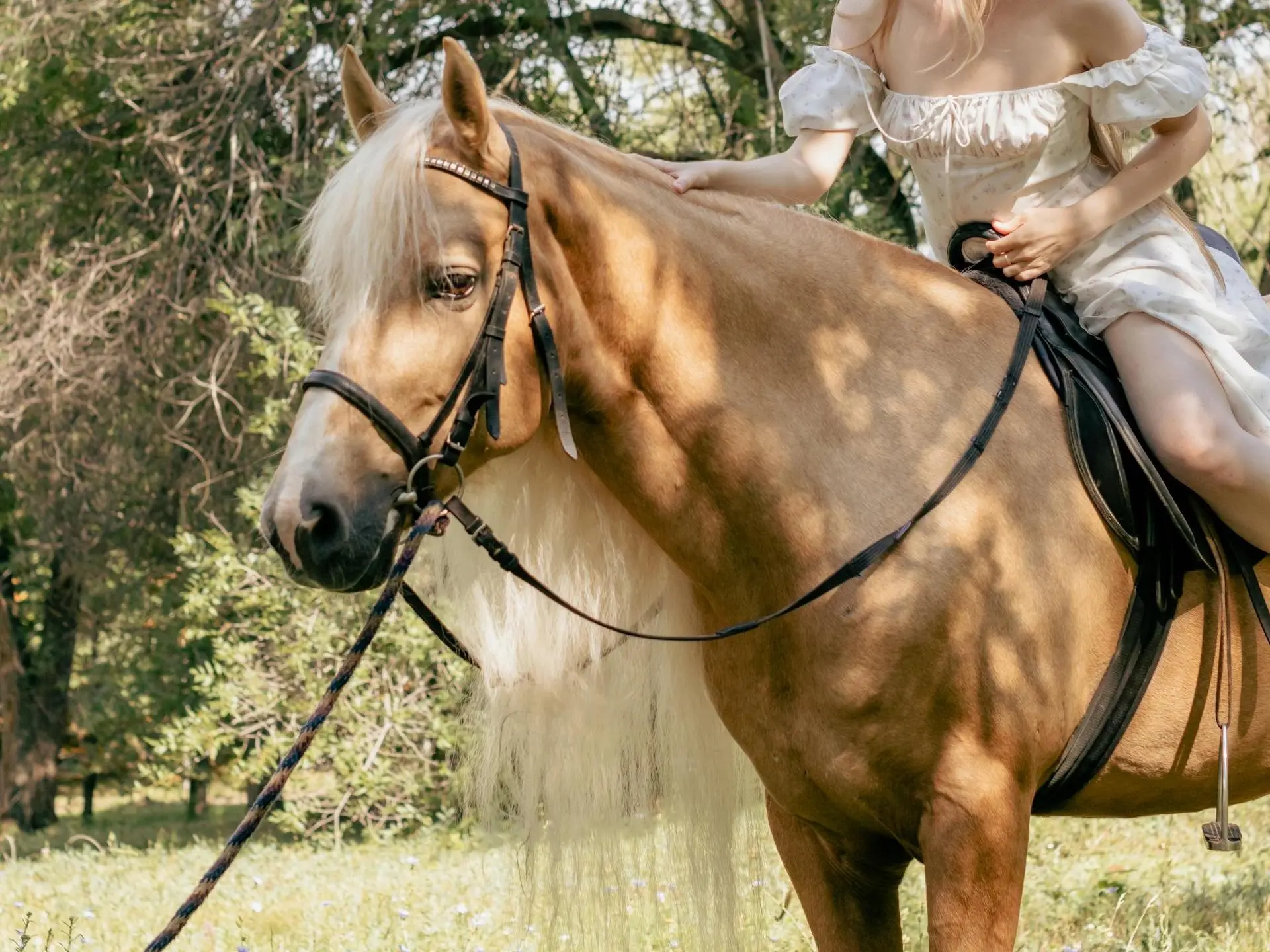
Palomino
Element: sunshine.
Gets away with it. Whatever “it” was, the judge, the farrier and your mother have all already forgiven it. Photographs well from every angle and knows this. Lucky object: golden hour.
Buckskin
Element: dust.
Believes it is in a Western. Stands on ridgelines for no reason. Reliable, slightly smug, and has opinions about cattle whether or not it has ever met one. Lucky object: a horizon.
Dun
Element: time.
Comes with a dorsal stripe and the general air of having been here before the fences. Considers your arena a recent and probably temporary development. Cannot be hurried. Lucky object: a hill to look at you from.
Roan
Element: weather.
Changes shade with the season and stays exactly the same underneath. Steady, sensible, low on drama. Has been described as “no trouble” in every sale advert ever written about it. Lucky object: a job.
Pinto
Element: chaos, but organised.
A class clown with a map on one side. The white patches are for collecting grass stains and the dark patches are for hiding them, and it uses both. Recognisable from half a mile away, which it considers the point. Lucky object: an audience.
Appaloosa
Element: independent thought.
Has heard your suggestion and will get back to you. Loyal to one person and politely sceptical of the rest. Considers a full tail optional. Lucky object: the last word.
Cremello
Element: SPF 50.
Looks like a unicorn, lives like a redhead on a beach holiday. Blue-eyed, pink-skinned and well aware that you will follow it around with sun cream. Lucky object: a fly mask with a nose flap.



Now the Truth: What Colour Really Is
A horse’s colour is the result of a small number of genes that control pigment: which pigment is made, where on the body it goes, and how much it is diluted. They are among the best-understood genes in the horse. Our guide to horse colours goes through them one at a time.
Chestnut is the simplest of the lot. It is a recessive version of a single gene, known as Extension or MC1R, and a horse is chestnut only if it inherits that version from both parents. That is why two chestnuts bred together give you a red-based foal every time. (You can try any pairing in our foal colour calculator, or play it as a game in Foal Forecast.) It is a pigment switch. It is not a temper switch.
The Chestnut Mare, Examined
In 2016 a research team put the stereotype to the test. Owners answered a detailed behaviour questionnaire, and the team compared the chestnuts with the bays: 477 horses in all, across a range of breeds, ages and disciplines.
There was no evidence that chestnut horses were more likely than bays to show the behaviours people associate with being difficult to train.
The one difference that did turn up points the other way from “crazy”. Chestnuts were more likely to approach objects and animals, familiar or not. Call that bold or call it nosy, it is not the same as flighty. The authors called it a pilot study and were cautious about it. What clearly did affect behaviour in their data was breed, sex and age.
That hints at where the legend comes from. Chestnut is common in some of the hotter-blooded breeds, such as the Thoroughbred and the Arabian, and people have always been inclined to blame the paintwork for what the engine does. Meanwhile the Suffolk Punch is chestnut by definition, every one of them, and so is the Haflinger, and nobody has ever accused either of being fiery.
The rest is memory. A bay mare has a bad day and she is having a bad day. A chestnut mare has a bad day and three people at the rail nod and say “well, chestnut mare.” The bays never get counted.
What About the Other Colours?
A few studies have looked, and they are worth knowing mainly for how modest they are.
- Black and bay. A 2016 study of Tennessee Walking Horses compared handlers’ temperament ratings with the horses’ colour genes. Black mares were rated more independent than bay mares. That is one breed, one questionnaire and one trait, and the authors’ own title says the genes “may” affect behaviour.
- Silver. A Swedish study of 27 Icelandic horses found that silver horses were more hesitant to approach a test set-up, though no more reactive once a plastic bag was moved at them. The silver gene is also associated with eye abnormalities, which could be all the explanation needed.
Nothing in any of it supports choosing, pricing or forgiving a horse by its colour.
Where Colour Really Does Matter
Coat colour genes do have real effects on a horse. They are just medical, not moral.
- Grey and melanoma. The gene that turns a horse grey also raises the risk of melanoma. The UC Davis Veterinary Genetics Laboratory puts it at more than 70 percent of grey horses over the age of 15. Many of these tumours grow slowly, but any lump under the tail or around the head of a grey horse is worth showing to your vet.
- Leopard spotting and night vision. Horses with two copies of the appaloosa leopard complex gene, typically the few-spot and snowcap patterns, have congenital stationary night blindness: they see normally by day and poorly in the dark. If any colour has an excuse for being odd at dusk, it is this one.
- Frame overo. One copy of the frame gene gives a striking pinto pattern. Two copies produce a white foal that cannot survive, a condition called lethal white overo syndrome. A simple genetic test before breeding two possible carriers avoids it entirely.
- Splashed white. Some splashed white horses are deaf. A horse that “ignores” you may not be making a point.
- Pink skin. Cremellos, which are not albinos, and any horse with a white face or pink nose can sunburn. Shade, fly masks and a horse-safe sunscreen recommended by your vet are the usual answer.
So What Does Your Horse’s Colour Say?
It says which versions of a handful of pigment genes its parents passed on, and nothing about whether it will load. For that, look at how the horse was bred, how it was started, how it is kept and who is riding it.
The horoscopes are still accurate, though. Everyone’s is.
Sources
- Finn and colleagues (2016), The relationship between coat colour phenotype and equine behaviour: a pilot study, Applied Animal Behaviour Science.
- Jacobs, Staiger, Albright & Brooks (2016), The MC1R and ASIP coat color loci may impact behavior in the horse, Journal of Heredity.
- Brunberg and colleagues (2013), Icelandic horses with the Silver coat colour show altered behaviour in a fear reaction test, Applied Animal Behaviour Science.
- Bellone and colleagues (2013), TRPM1, leopard complex spotting and congenital stationary night blindness, PLoS ONE.
- UC Davis Veterinary Genetics Laboratory, Gray and Lethal White Overo.