The Most Expensive Horse Breeds (and the $70 Million Racehorse)
The most expensive horse breed in the world is the Thoroughbred, and nothing else is close. The famous “$70 million horse” is Fusaichi Pegasus, winner of the 2000 Kentucky Derby. But that figure was never an auction price, and it was never confirmed: it is the top of a range that the racing press reported when he was sold privately to stand at stud. The highest price ever actually paid for a horse in a sale ring is $16 million.

There are two different questions hiding in “most expensive breed”. One is what the very best individuals sell for, which is where the headlines come from. The other is what an ordinary, nice horse of that breed costs, which is what matters if you are shopping. This article keeps them apart.
The $70 million horse
Thoroughbred colt Fusaichi Pegasus was already expensive as a baby: he sold as a yearling at Keeneland in July 1998 for $4 million. He then did the thing expensive yearlings almost never do and won the Kentucky Derby.
A few weeks later his owner sold him outright to Coolmore, the Irish breeding operation, to stand at its Ashford Stud in Kentucky. The price was not announced. Daily Racing Form reported at the time that it was believed to be $60 million to $70 million, and Coolmore would neither confirm nor deny it. Other outlets have printed “more than $60 million” and “more than $70 million” ever since. Whatever the exact number, it beat the previous record for a stallion prospect, the $40 million valuation put on Shareef Dancer in 1983.
So the honest version is: a private sale, of a racehorse as a future stallion, for a reported $60–70 million.
Was he worth it? A stallion is priced on the foals he is expected to sire, and that is a bet. Fusaichi Pegasus started at stud in 2001 at $150,000 per mare. By his last season, in 2020, the fee was $7,500. He sired good horses, but not enough great ones. He died at Ashford in May 2023, aged 26, and is still the highest-priced sale yearling ever to win the Derby.
The real auction records
Prices bid in public are the ones you can check. These are the Thoroughbred records.
| Record | Horse | Price | Where and when |
|---|---|---|---|
| Any horse at auction | The Green Monkey | $16 million | Fasig-Tipton Calder two-year-old sale, Florida, February 2006 |
| Broodmare | Better Than Honour | $14 million | Fasig-Tipton November sale, Kentucky, 2008 |
| Yearling | Seattle Dancer | $13.1 million | Keeneland July sale, Kentucky, 1985 |
| Any horse in Europe | Marsha | 6 million guineas (about £6.3 million) | Tattersalls December Mare Sale, Newmarket, 2017 |
The Green Monkey is the cautionary tale people tell at sales. Two of the richest operations in racing bid against each other for a two-year-old who had never run a race. He ran three times, never won, and earned about $10,000.
Seattle Dancer’s yearling record has stood for more than forty years. For comparison, the top yearling at Keeneland’s September sale in 2025 made $3.3 million. And an asterisk on Better Than Honour: the bid bought out a partner in the mare, so not all of the $14 million changed hands.
Where the money really is: stud fees
A top stallion can cover well over a hundred mares a year, which is why colts are worth more than they could ever win. For 2026 the highest advertised fees in the world are £350,000 per mare, for Dubawi and for Frankel in England; in America, Into Mischief and Gun Runner stand at $250,000. Frankel was valued by the press at around £100 million when he retired unbeaten in 2012, though he was never sold, so that number is an estimate too. The great Northern Dancer’s fee reached $500,000 in 1984 with no guarantee of a live foal.
Sport horses: the Totilas price
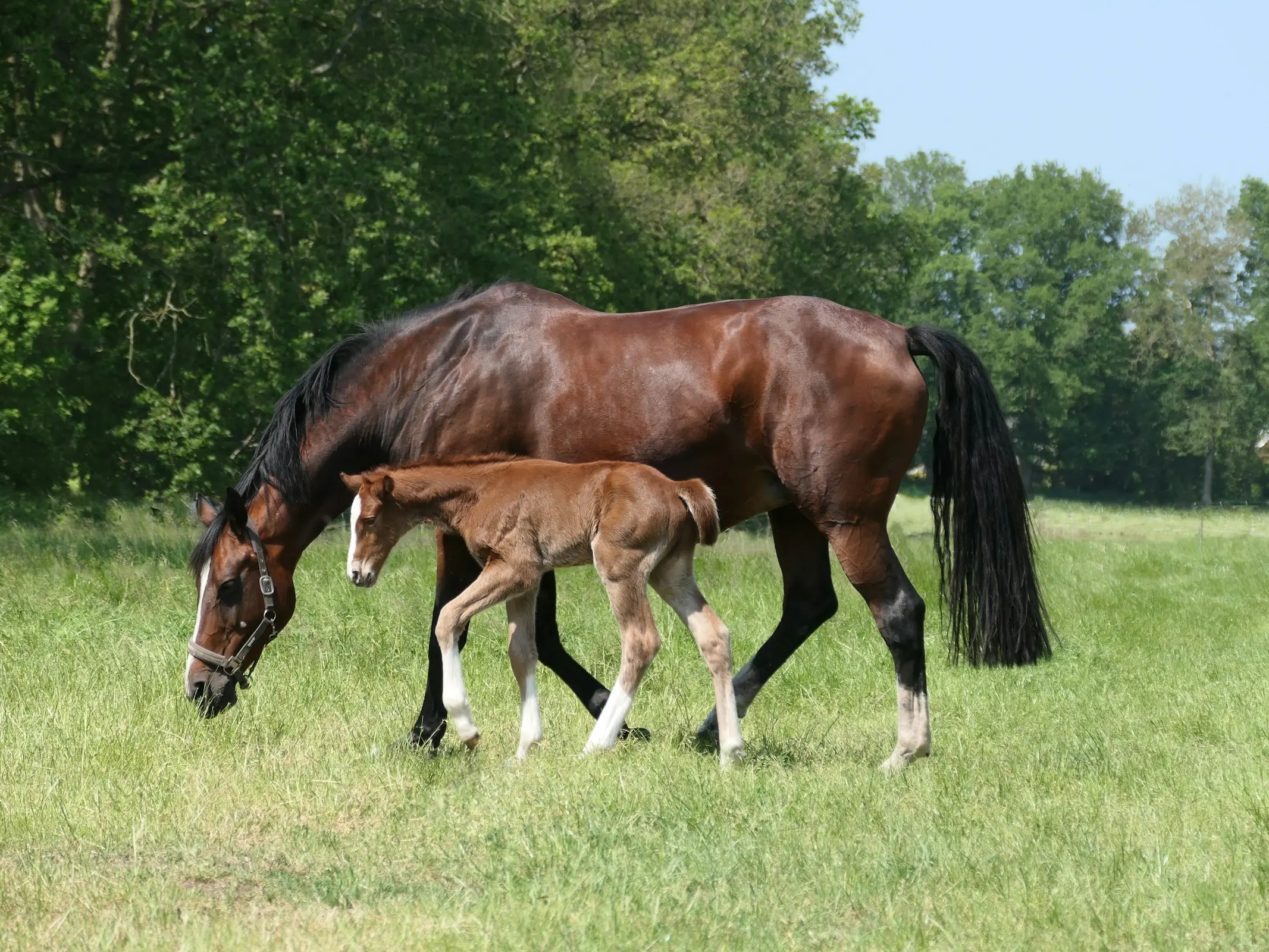
Outside racing, the most valuable horses are the warmbloods bred for Olympic dressage and show jumping: Dutch Warmbloods, Hanoverians, Holsteiners, Oldenburgs and the Selle Français. Nearly all the big deals are private, and so nearly all the big numbers are rumors.
One is not. The black Dutch Warmblood stallion Totilas, who rewrote the dressage record book in 2009 and 2010, was sold in October 2010 with the price kept secret. Guesses ran from €10 million to €15 million. In 2021, documents in a German court case put the figure at €9.5 million.
In show jumping, the Selle Français gelding Palloubet d’Halong was reported to have changed hands for about €11 million in 2013. Neither side ever confirmed it.
At public auction, the record for a warmblood is €4 million, paid for the six-year-old jumping mare Chyazint at the PSI Auction in Germany in December 2022.
Arabians

The Arabian is the breed with the longest history of being expensive: people were paying silly money for them long before the Thoroughbred existed. The best-documented modern prices come from the Pride of Poland sale at the Janów Podlaski state stud, where the mare Pepita made €1.4 million in 2015, beating the €1.125 million paid for Kwestura in 2008. In the United States the stallion Baske Afire sold for $2.8 million at Scottsdale in 2008.
Quarter Horses and Standardbreds
America’s own breeds have their own markets. The auction record for a racing Quarter Horse is $1.7 million, for the champion Tempting Dash in Oklahoma City in 2013. The cutting-horse world went well past that in September 2025, when the stallion Third Edge was reported sold for $5.6 million at a dispersal in Texas. Among Standardbreds, the harness racers, the record yearling is Maverick, at $1.1 million in Lexington in 2019.
The breeds with a reputation for being pricey

Friesian
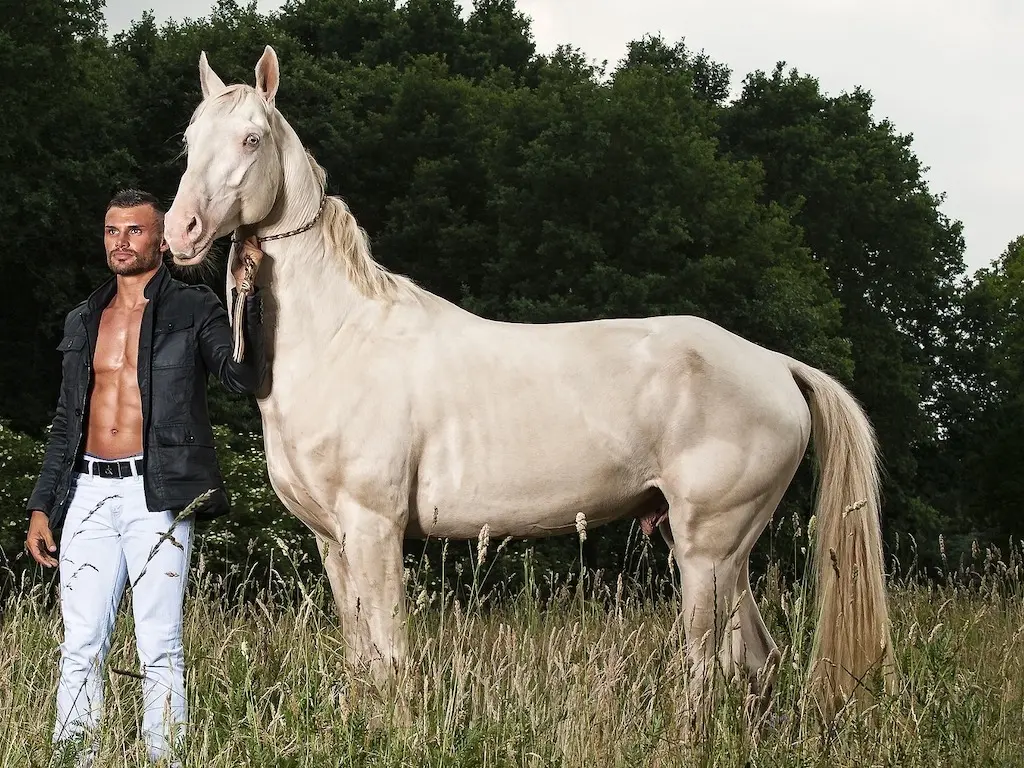
Akhal-Teke

Andalusian
You will see lists online giving a price range for each breed: so much for a Friesian, so much for an Akhal-Teke, so much for an Andalusian or a Gypsy Vanner. We looked for a source behind those numbers, such as a registry or a sales survey, and could not find one, so we are not going to repeat them.
What can be said is why these breeds cost more than average. They are scarce outside their home countries, so buyers pay for import and for a small gene pool. They are bought for their looks, which sellers know. And many are sold as trained adults, which is where most of the price of any horse comes from.
That last point is the useful one. For an ordinary riding horse, breed is a small part of the price. Age, soundness, training and what the horse has actually done are most of it. A well-schooled crossbred of no known parentage will usually cost more than a registered, unbroken three-year-old of a fashionable breed, and for a new rider it is the better buy (see breeds for beginners).
The cheap part is buying it
The purchase price is the smallest check you will write for a horse.
Whatever a horse costs to buy, it costs the same to keep as its neighbor. A University of Maine survey of horse owners put the average at $3,876 a year per horse in 2012, before boarding, and the university notes that feed costs have risen sharply since. Board, a farrier every six to eight weeks, vaccinations, teeth, tack and the occasional emergency vet visit do not care about pedigree.
We keep a running guide to what a horse costs, and the feeding calculator will give you a start on the hay bill. If you would rather own a $16 million horse in spirit, the breed pages are free, and so is Stable Days.