How Much Does a Horse Cost Per Month? A Brutally Honest Breakdown

In the United States, keeping one horse costs somewhere between about $700 and $2,200 a month once everything is counted. A horse at home on your own land can be fed and trimmed for a few hundred dollars. A horse in full board near a city, shod and insured, passes $1,000 without trying. The purchase price is the cheap part.
A note on the numbers. Everything below is in US dollars and comes from US sources published in 2023 and 2024. Prices vary enormously by region, and they vary between countries even more, so treat these as a framework and get local quotes for every line before you buy. The categories are the same wherever you live.
The Headline Figure
The best recent survey is the Equine Lifetime of Care study published by the finance company Synchrony in 2023, based on 1,231 American horse owners and a panel of equine vets. It put the all-in cost of a horse at roughly $8,600 to $26,000 a year, from backyard horses at the bottom to competition horses at the top, and that is before entry fees and other event costs.
Divide by twelve and you get about $720 to $2,170 a month.
The study’s least comfortable finding: the real lifetime cost of a horse is three to four times what owners expect it to be.
The Monthly Budget, Line by Line
| Cost | Per month (US$) | Notes |
|---|---|---|
| Board | $150 – $500 pasture $500 – $1,200+ full | Zero if the horse lives at home, though then you pay for the land, fencing and shelter instead. Full board near big cities runs higher still. |
| Hay | $50 – $300 | If not included in board. About 12 fifty-pound bales a month for a 1,200 lb horse eating 20 lb a day, at $4 to $25 a bale. |
| Grain or concentrate | $30 – $60 | Only if the horse needs it. Many don’t. |
| Supplements | $20 – $115 | A basic vitamin and mineral balancer at the low end. |
| Bedding | $50 – $85 | For a stabled horse, if not included in board. |
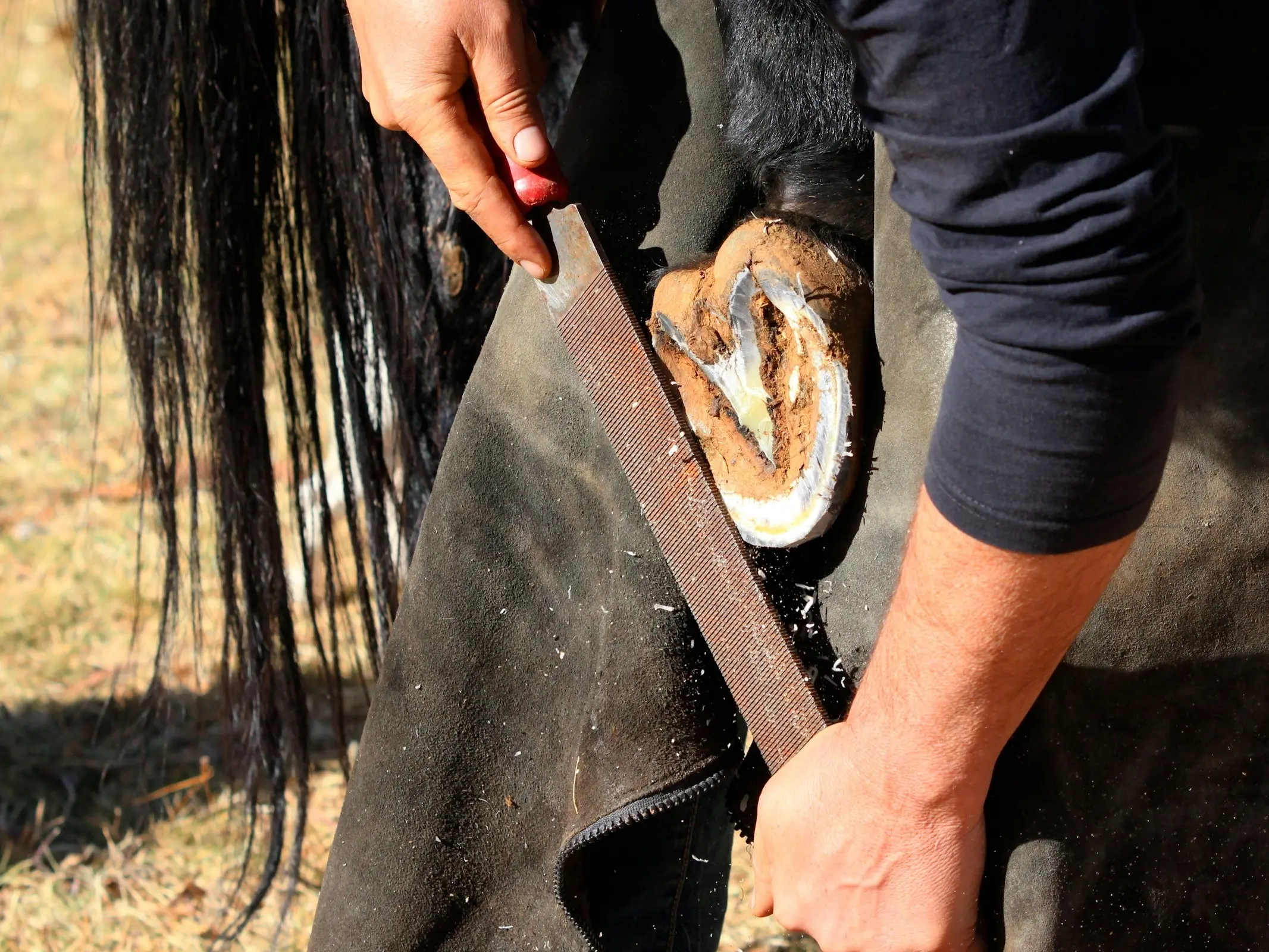
| Farrier | $30 – $45 barefoot $95 – $130 shod | Every six to eight weeks, shoes or no shoes. |
| Routine vet and dental | $30 – $60 | The yearly exam, vaccines, Coggins test, parasite control and dental work, spread over twelve months. Call-out fees are extra. |
| Insurance | $25 – $85+ | Optional. Depends on the horse’s value, age and use. |
| Emergency fund | Whatever you can | Not optional. See below. |
Where the figures come from: the hay, grain, supplement, bedding, vet and insurance ranges are from the 2023 cost guide published by EQUUS magazine’s My New Horse, turned into monthly amounts. That guide puts board at $500 to $800 or more a month; the wider ranges here reflect what US boarding guides currently quote for pasture board at one end and suburban full board at the other. Farrier prices are from the American Farriers Journal’s 2024 business survey, in which full-time farriers charged a national average of about $60 for a trim and about $179 for a trim and four ordinary shoes, with the Northeast well above that.
Three Realistic Totals
The horse at home, barefoot, living on hay and grass: roughly $150 to $500 a month in direct costs. This is the cheapest way to keep a horse and it is only cheap if you already own suitable land. Fencing, a field shelter, water, a tractor or a muck heap arrangement and your own labour twice a day don’t appear on the bill, but you pay for them.
The horse in full board, shod, insured: roughly $650 to $1,500 a month. This is the usual situation for a rider who doesn’t live on a farm, and the range is mostly down to where you live.
The competition horse: $2,000 a month and up, before a single entry fee. Training board, lessons, more frequent shoeing, joint care, transport and show costs stack on top of everything above.
The Costs People Forget
This is where budgets go wrong. None of these is exotic and every owner meets most of them in the first year.
- The vet’s call-out fee. Charged every time the vet drives to you, on top of whatever is done. Sharing a visit with other owners at the yard cuts it.
- Teeth. An annual dental exam runs about $110 to $250 and is not a luxury. A horse that can’t chew wastes the feed you are paying for.
- Tack that doesn’t fit. A saddle costs anything from $150 to $5,000 and beyond, and the one that fitted your last horse won’t necessarily fit this one.
- Blankets. $50 to $750 each, and horses are creative about destroying them. Whether yours needs one at all is a separate question: see how to tell if your horse is cold.
- Manure. Around $300 a year to have it hauled away if you can’t spread it.
- Lessons and training. Many boarding barns expect them. Even if yours doesn’t, a green horse or a green rider needs help, and it is money well spent.
- Transport. Either a truck and trailer, with their insurance and maintenance, or paying someone each time the horse has to go anywhere, including to the vet hospital at 2 a.m.
- Fly spray, wormers, hoof oil, salt, a new hose, another lead rope. Individually nothing. Annually, a surprising sum.
- Joint care for the older or harder-working horse. Joint injections run $400 to $700 a time, once or twice a year.
- The end. Horses live 25 to 30 years, often long past their working life, and retirement costs exactly as much per month as work did. Euthanasia and disposal of the body cost money too. Synchrony counted all of this and arrived at a lifetime cost of roughly $300,000 to $924,000.
The Emergency You Should Assume Is Coming
Horses are large, fast, fragile and inventive. The Synchrony study found that a serious problem such as colic, a fracture or an eye injury can cost as much as $10,000 to treat, and that owners start to feel financial stress when an unexpected bill reaches $1,500.
EQUUS suggests keeping at least $2,000 aside. That is a floor. If your horse ever needs colic surgery, $2,000 will not cover it, so decide in advance, calmly, how far you could go and whether insurance makes sense. Mortality cover typically costs 2.5 to 4 percent of the horse’s insured value per year, with medical and surgical cover as an add-on.
Having that conversation with yourself on a quiet Sunday is much better than having it in a clinic car park.
Saving Money Without Short-Changing the Horse
- Feed forage first, and weigh it. Most pleasure horses need good hay, a balancer and little else. Our Feed Calculator works out the daily amount from your horse’s weight and workload, and the Weight Calculator gives you the weight without a scale. People who feed by the scoop and the armful almost always overfeed.
- Buy hay by the ton in summer if you have somewhere dry to store it. Our hay guide explains what you are looking at.
- Ask your farrier whether your horse needs shoes. Many horses in light work on kind ground do well barefoot. That is the farrier’s call, not a budgeting decision.
- Share. Split vet call-outs, hay deliveries and trailer trips with other owners.
- Buy used tack, and have the fit checked.
- Consider a part-lease first. Half a horse costs about half as much and teaches you what the whole one will.
What you should never trim: feet, teeth, vaccinations, parasite control and feed quality. Every one of those is cheaper than the problem it prevents.
So, Can You Afford One?
Add up your own version of the table with local prices. Add 20 percent for the things you haven’t thought of. Then ask whether you could pay it every month for the next twenty years, including the months when you are not riding because the horse is lame, you are busy, or it is February.
If the answer is yes, there is more on what each category involves on our costs of owning a horse page, and on the daily routine in horse care. If the answer is “not yet”, lessons and a part-lease will give you most of the fun and none of the vet’s home number on speed dial.