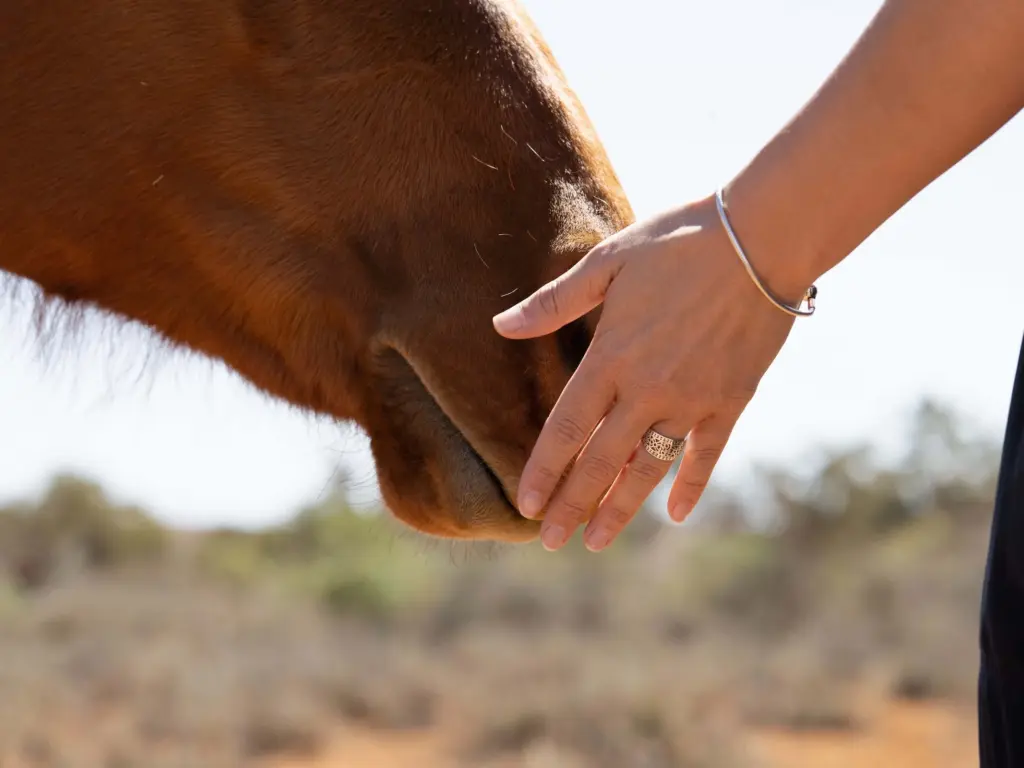
Horses are beautiful, powerful animals and spending time around them can be incredibly rewarding.
Safety First
At the same time, they’re big, strong and easily startled, so knowing how to approach and handle them safely is essential. Whether you’re new to horses or just brushing up on the basics. Don’t worry, you don’t need to be an expert. A little awareness and calm confidence go a long way.
Animals of Prey
Always remember that horses are prey animals, their instincts are built around staying alive. Which means sudden movements, loud noises or surprises can make them jump or bolt. When approaching a horse, move slowly and speak softly so they know you’re there. Try to approach from the side, ideally near the shoulder, rather than directly from the front or behind. Horses eyes are placed on the side, they cannot see directly in front of or behind them, avoid approaching from these blind spots.
You Don’t Have to Say It
Body language matters a lot around horses. Keep your movements smooth and relaxed, and avoid waving your arms or rushing. Horses are excellent at reading energy, so if you’re tense or anxious, they’ll likely pick up on it. Take a deep breath, stay calm and move with purpose. Think confident, not aggressive.
Once you’re close, let the horse see and smell you. Gently extend your hand, palm down, so they can investigate. When you touch them, start at the shoulder or neck instead of the face. Most horses are more comfortable being handled in these areas, especially if they don’t know you well.
Stay Aware
Handling horses safely also means being aware of where you’re standing. Avoid standing directly behind a horse, as they can kick with incredible force. If you do need to move behind them, stay close and keep a hand on their body so they know where you are. Or walk far enough away that you’re out of kicking range. When leading a horse, walk beside their shoulder, not in front or too far behind and keep a safe amount of space between you and their head.
Another key safety tip is paying attention to the horse’s mood. Ears pinned back, swishing tails, or tense muscles can signal irritation or discomfort. If a horse seems agitated, give them space and take a moment to reassess the situation. Sometimes they’re reacting to something you can’t see, like a strange noise or unfamiliar object.
Dress Appropriately & Be Kind
Finally, always wear appropriate gear. Closed-toe shoes or boots are a must—hooves are heavy and accidents happen. Gloves can help when leading or grooming and a helmet is strongly recommended when riding.
At the end of the day, safe horse handling is about respect, patience and awareness. Treat horses kindly, stay alert and take your time. Build trust slowly and you’ll find that horses are not only safer to handle, but also wonderful companions to be around.